Build one clear theme from two safety topics
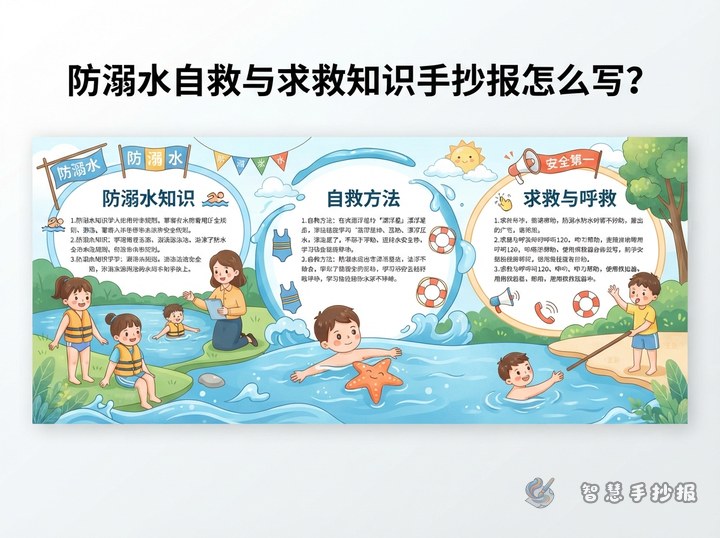
This kind of handwritten newspaper works best when it connects dangerous water awareness with disaster response under one shared theme. Instead of writing only general slogans, students can show common risks people may meet in daily life. A balanced layout could place drowning prevention on the left, disaster safety on the right, and the main title in the center.
For younger students, short and direct sentences are more effective than long explanations. It helps to focus on two ideas: what not to do and what to do in an emergency.
Ready-to-use key content
Main points for drowning prevention
- Do not go to rivers, ponds, or reservoirs alone.
- Do not play near water without safety protection.
- Stay away from rivers and ditches after heavy rain or rising water.
- If someone falls into water, do not jump in blindly. Call for help and find an adult.
- Swim only in safe places with adult supervision.
Main points for disaster preparedness
- During heavy rain, avoid low-lying areas and deep water on roads.
- During thunderstorms, do not stand under trees or near power poles.
- In an earthquake, protect your head and move to a safer place quickly.
- In a fire, do not use the elevator. Cover your mouth and leave in an orderly way.
- Remember family phone numbers and emergency help methods.
Section ideas that fit a school poster
Instead of using equal boxes, students can create a card-style page with several small sections. These section ideas work especially well:
- Unsafe actions list: a quick list of behaviors to avoid.
- Correct steps in danger: simple step-by-step emergency actions.
- Safety rhymes or slogans: short lines that are easy to remember.
- Daily life reminders: after-school routes, holidays, and rainy days.
This structure makes the page easier to read and helps teachers and parents see the key points quickly.
Strong title lines and slogan materials
- Protect life, stay away from dangerous water.
- Learn safety skills and grow up safely.
- Prevention comes first, safety every day.
- Know danger, avoid risk, stay prepared.
- A little caution brings more peace.
The main title should be large and eye-catching. A subtitle such as “Drowning Prevention and Disaster Safety” can make the topic even clearer. If there is extra space, add a short message calling for careful and responsible behavior.
Layout and color tips for younger students
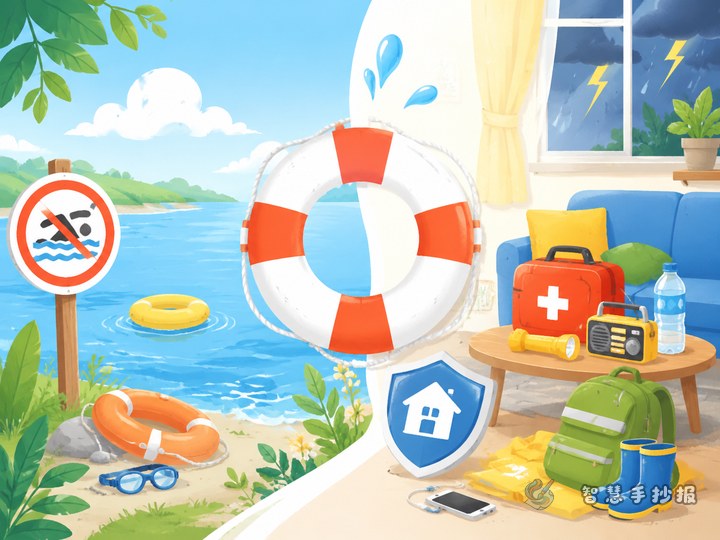
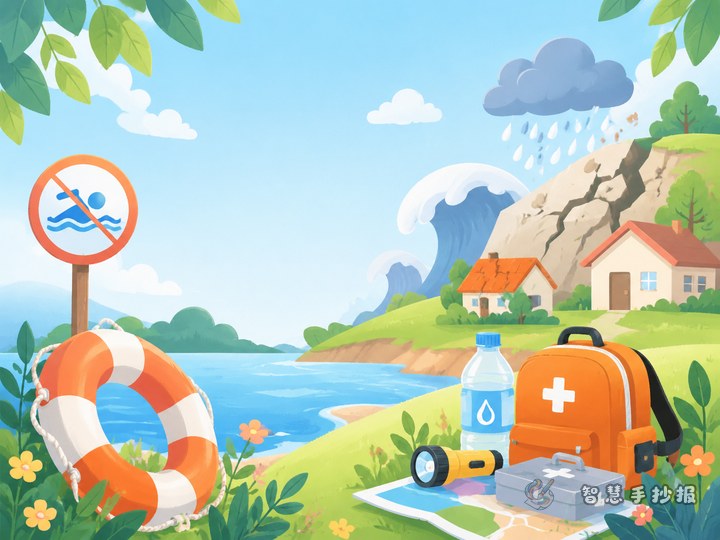
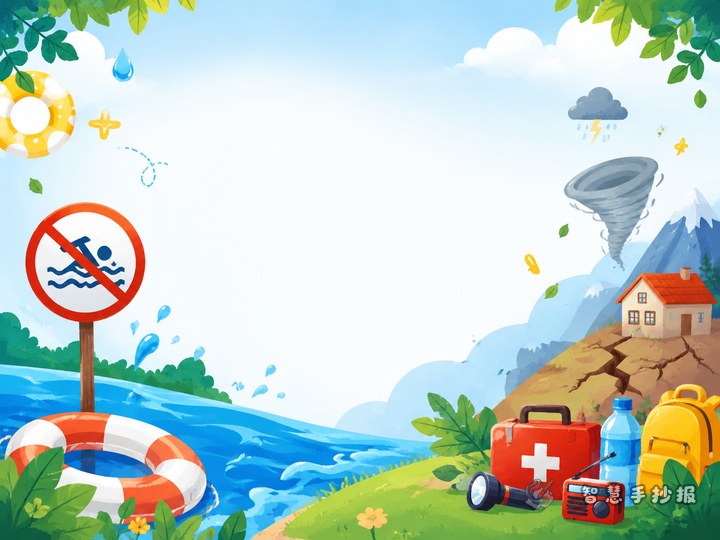
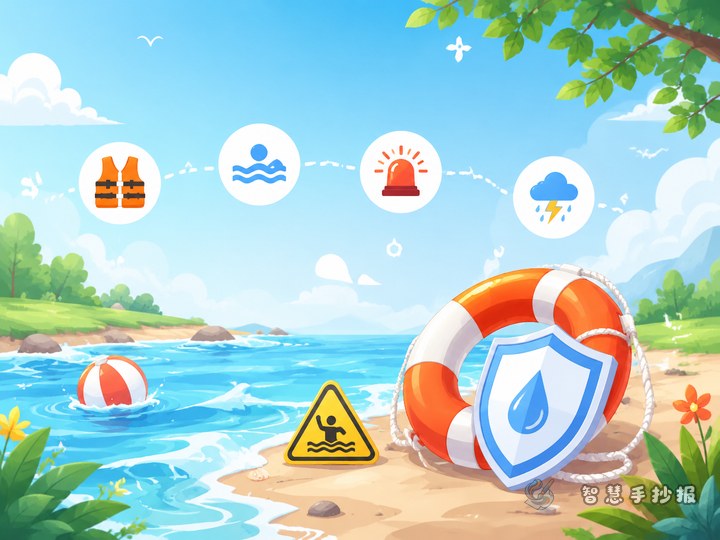
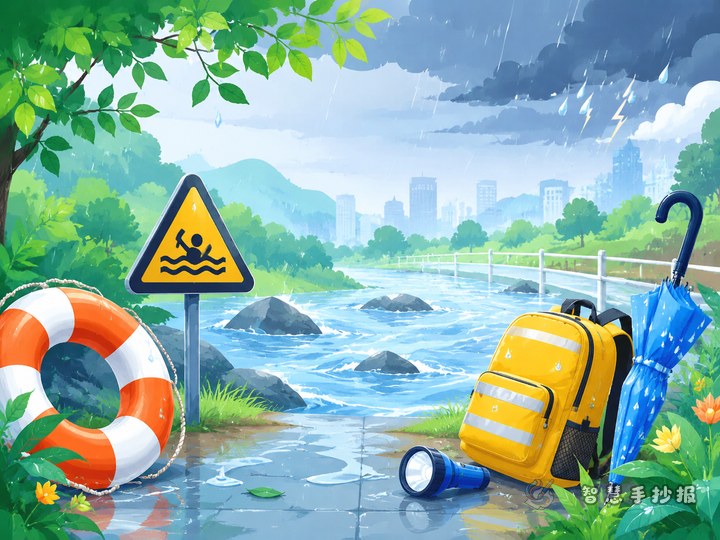
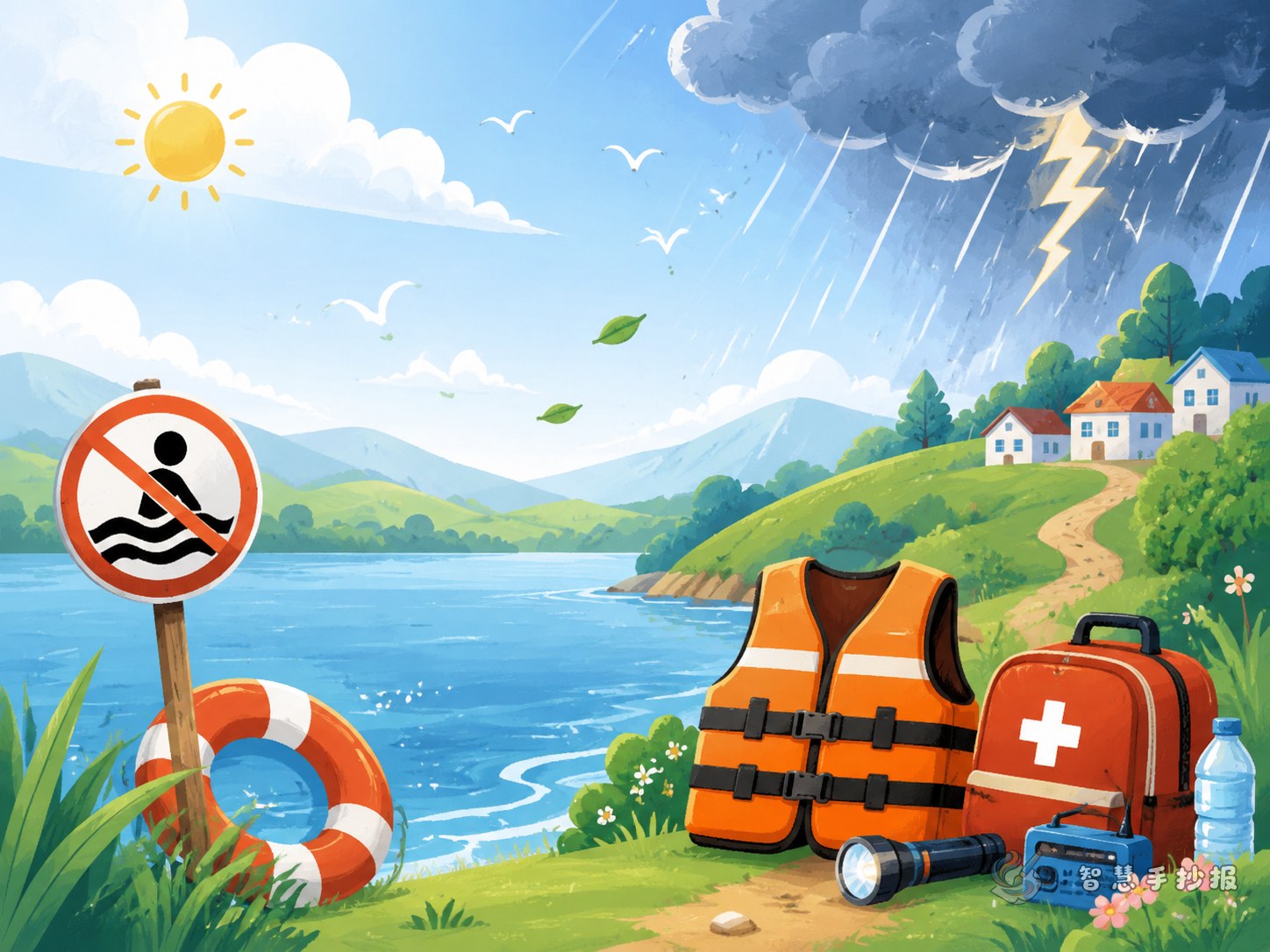
Blue, green, and orange work well for this topic. Blue matches water safety, orange highlights warnings, and green keeps the page fresh and friendly. Decorations can be simple: lifebuoys, raindrops, umbrellas, lightning, houses, or safety shields.
When arranging the page, remember this rule: big title, short text, bold key words. Keep each section to a few lines so the page does not look crowded. Borders with wave lines or warning stripes can also make the theme stand out.
Final checklist before finishing
Before turning it in, check whether the page has a clear title, includes drowning prevention, includes disaster safety, and gives practical action tips. A poster is stronger when it offers real guidance, not just general slogans.
If students want to keep improving the layout, replace headings, or add more safety materials, they can continue creating in the Zhihui Shouchaobao WeChat mini program for a cleaner and more complete final work.