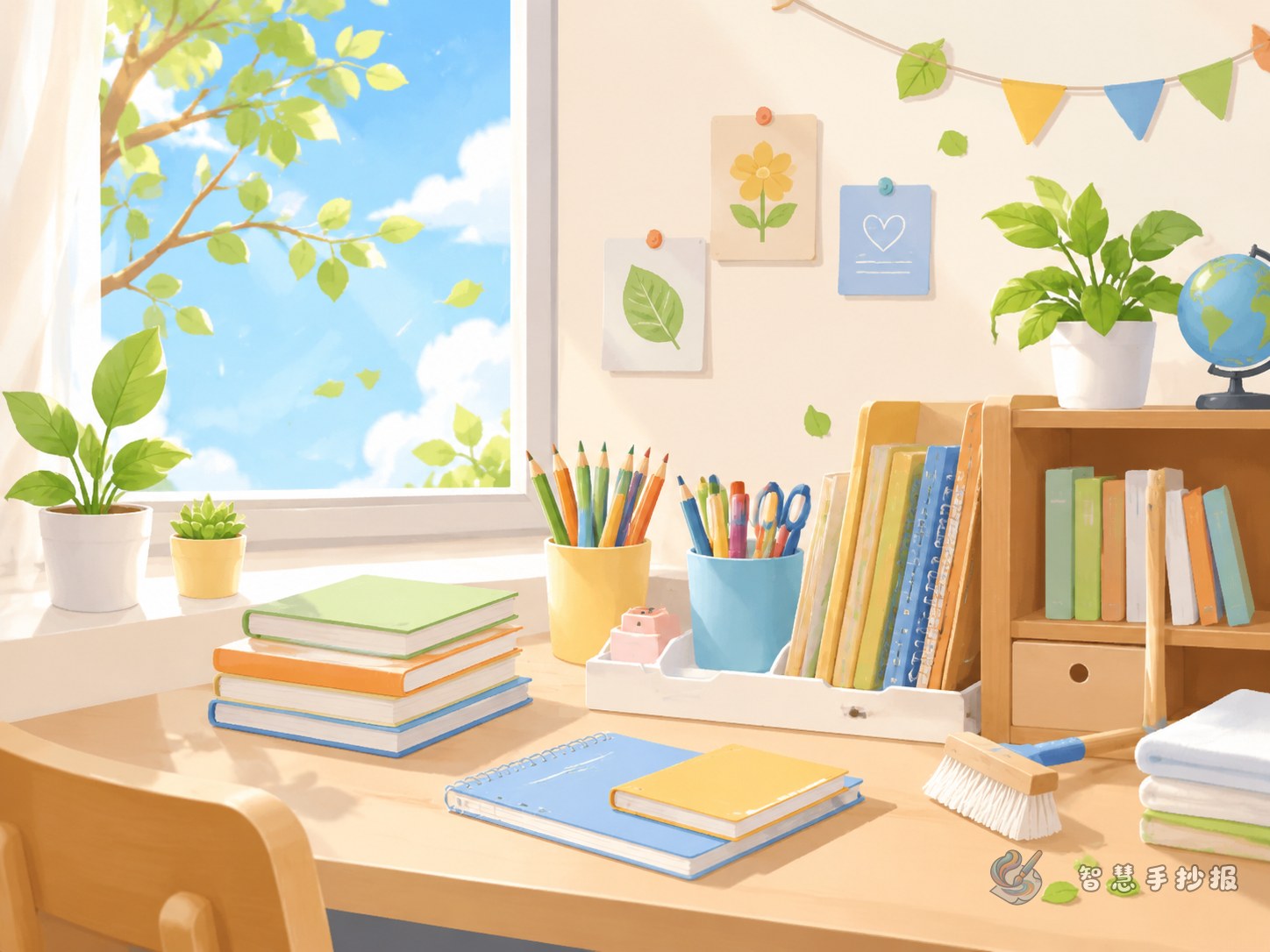
Start with a clear angle: turn desk organizing into a labor education topic
A desk organization poster should not only say, “I made my desk neat.” A stronger angle is to show self-management, sorting skills, responsibility, and respect for school supplies. That makes the theme fit labor education and gives students more meaningful content to write.
You can begin with a short introduction: organizing a desk may seem simple, but it is an everyday form of labor that helps children build independence, orderliness, and better study habits.
A simple four-part layout works best
This topic looks best in a neat and tidy layout because the design should match the idea of organization. A four-section page is practical and easy for elementary students to draw.
- What I noticed after organizing: a cleaner desk, faster access to books, and better focus while studying.
- Step-by-step organizing method: clear the desk, sort items, wipe the surface, and assign fixed places.
- Good habits list: put stationery back after use, spend five minutes organizing each day, and remove waste paper in time.
- My labor reflection: write about achievement, responsibility, and understanding the value of daily work.
Decorations can include books, pencils, rulers, storage boxes, sticky notes, and stars. These are easy to draw and match the topic naturally.
Ready-to-use writing material
Short opening paragraph
Organizing a desk is a small task, but it is also a valuable habit. Keeping things in order makes the study space more comfortable and helps us learn to sort items, manage time, and take care of our belongings. Doing small things well is a real part of labor education.
Steps to include
- Look at everything on the desk and separate textbooks, notebooks, stationery, and miscellaneous items.
- Place commonly used items within easy reach and put less-used things into drawers or storage boxes.
- Wipe the desk surface clean and remove paper scraps or dust.
- Give each item a fixed place so it can be returned after use.
- Spend a few minutes each day keeping the desk neat.
What I learned from labor
By organizing my desk, I learned that labor does not always mean big work. Doing small daily tasks carefully is also meaningful. A clean desk helps me find books quickly and study with better concentration. I also understand that I should take care of my own space and build responsibility through action.
How to make it feel educational, not just descriptive
Many students only describe what they did. To make the poster stronger, add the meaning behind the activity.
- Labor awareness: take care of your own study area.
- Habit building: consistency matters more than one-time cleaning.
- Respect for belongings: protect books and stationery and reduce waste.
- Better learning: a tidy environment supports focus and efficiency.
If there is extra space, add a small section called “My organizing promises,” such as “I will tidy my desk after school every day” or “I will clean my drawer once a week.”
Color and drawing ideas
Use clean and cheerful colors such as blue, green, and yellow. Keep the title lively, but make the body text easy to read. Simple drawings like a desk corner before and after organizing, a storage box, or grouped stationery can make the page more vivid.
If layout feels difficult, place the main title at the top, draw a small desk illustration in the center, and arrange text blocks around it. If you want to keep improving the layout and wording, you can continue creating in the Zhihui Handwritten Newspaper WeChat mini program.