A Small Mailbox for Feelings That Are Hard to Say
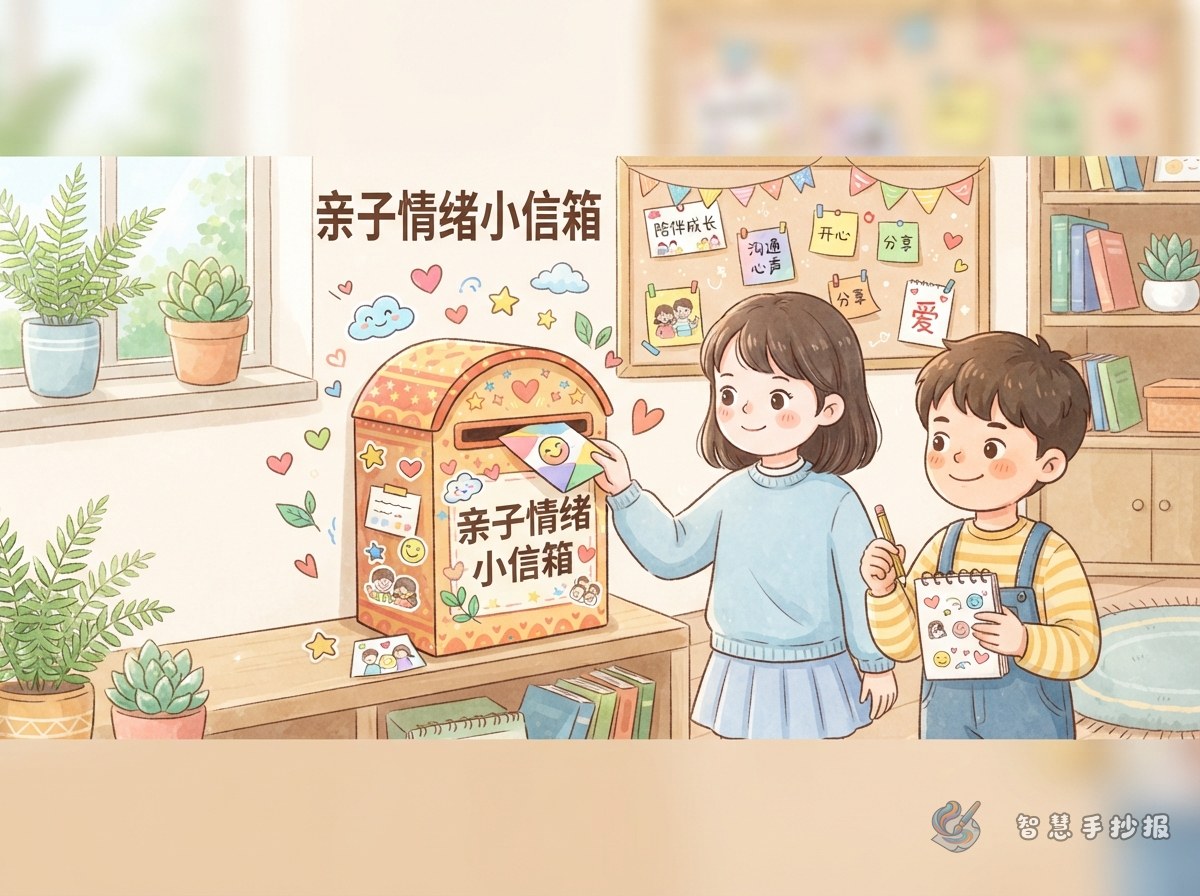
The main idea of this handwritten poster is not to list many rules, but to show that feelings can be expressed, worries can be heard, and family members can talk in a warmer way. Start the page with a mailbox full of little letters to show children and parents writing to each other and learning to understand one another.
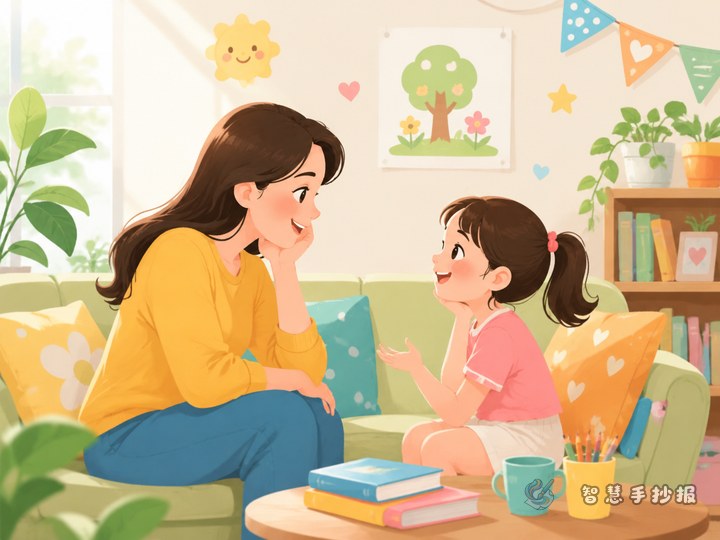
You may begin with this short passage: Some words feel shy to say face to face, and some sadness can turn into arguments when we are in a hurry. A parent-child emotion mailbox is like a warm corner at home. It lets us write down our thoughts, read slowly, listen carefully, and reply with kindness.
Turn Each Section into a Family Letter
What I Want to Say Today
This section can include a child’s true feelings, such as “I hope you praise my effort, not only my scores,” “When I am angry, I want a little quiet time first,” or “I want to help with something at home too.” Simple and real sentences are the most touching.
A Reply from Mom and Dad
Write gentle responses from parents, such as “Thank you for telling us how you feel,” “We will listen before giving advice,” or “If our tone is too sharp, we are willing to say sorry.” This makes the poster feel interactive and warm.
Emotion Color Cards
Use colors to show feelings: red for anger, blue for sadness, yellow for happiness, and green for calmness. Next to each color, write a helpful action such as taking deep breaths, drinking water, drawing, asking for a hug, or writing a small note.
Short Sentences You Can Use
- Speak gently: I say how I feel first, then explain why, without shouting.
- Listen carefully: When my family speaks, I look at them, do not interrupt, and do not rush to argue.
- Say sorry bravely: If I say something hurtful, I can apologize and try to do better.
- Give a warm hug: A hug cannot solve every problem, but it can tell us that we still love each other.
- Make a family promise: We leave a little time every day to share both happy things and worries.
Layout Idea: Let the Envelopes Guide the Reading
Divide the paper into a central mailbox area and four surrounding letter areas. Draw a mailbox with a small flag in the center and place the title near it. Put “What I Want to Say Today” in the upper left, “A Reply from Mom and Dad” in the upper right, “Emotion Color Cards” in the lower left, and “Our Warm Family Promise” in the lower right. Readers can follow the envelopes one by one to understand the story of the poster.
Soft colors such as light blue, creamy yellow, peach orange, and gentle green are suitable for this theme. The borders can look like sticky notes, envelope flaps, speech bubbles, or small clouds. Use a bright color for the title and a dark pen for the main text so the poster is easy to read.
Make It a Real Parent-Child Activity
While making this poster, the child can write a small “feeling letter” first, and the parent can write a “reply letter” after reading it. Then choose a few suitable sentences to place on the poster. In this way, the work is not only beautiful but also records a real moment of family communication.
If you want to organize the title, sections, and layout more quickly, you can continue creating in the 智慧手抄报 WeChat mini program and combine keywords such as emotion mailbox, parent-child communication, and growing together into your own poster plan.