Start by choosing the main focus of the page
When making a Nezha Conquers the Sea handwritten newspaper, you do not need to include every part of the legend. First decide what the page should emphasize: the dramatic conflict, the hero himself, or the lesson behind the story. For primary school use, the best choice is usually a clear plot, a vivid character, and a lively visual style.
A simple structure is to divide the page into four parts: who Nezha is, why the conflict starts, what happens next, and what readers can learn from the story.
Best plot points to include
The legend has many details, but a handwritten newspaper should focus on the most recognizable moments. These are the most useful parts:
- Character introduction: Nezha is a well-known young hero in Chinese mythology.
- Cause of the conflict: the sea-side event that leads to trouble with the Dragon Palace.
- Main action: the dramatic part of the story, which gives the page energy and movement.
- Character spirit: Nezha’s courage, determination, and sense of justice.
If space is limited, write the story in three short parts: beginning, conflict, and ending. This keeps the text neat and easy to understand.
Section titles that make the page more interesting
Good section names can make the page feel more complete and creative. You can try titles like these:
- Hero Profile: who Nezha is and what makes him special.
- Story Timeline: the key events in order.
- Dragon Palace Trouble: the conflict and turning point.
- How I See Nezha: personal understanding of the character.
- Myth Symbols: his famous magical items and visual elements.
Teachers and parents can also add a short box for good words, key phrases, or a reading reflection.
Short text materials that fit well on a poster
Poster text should be brief and vivid. Here are some useful styles:
Character note
Nezha is a famous young hero in Chinese mythology. He is brave, quick-witted, and remembered for standing up against powerful forces.
Plot summary
In the legend, Nezha’s encounter by the sea leads to conflict with the Dragon Palace. He does not retreat and becomes a symbol of courage and justice.
Theme sentence
This story is not only exciting, but also shows the value of bravery, responsibility, and facing difficulties directly.
You can place these short pieces in different boxes instead of writing one long paragraph.
Try a layout that feels like action on the sea
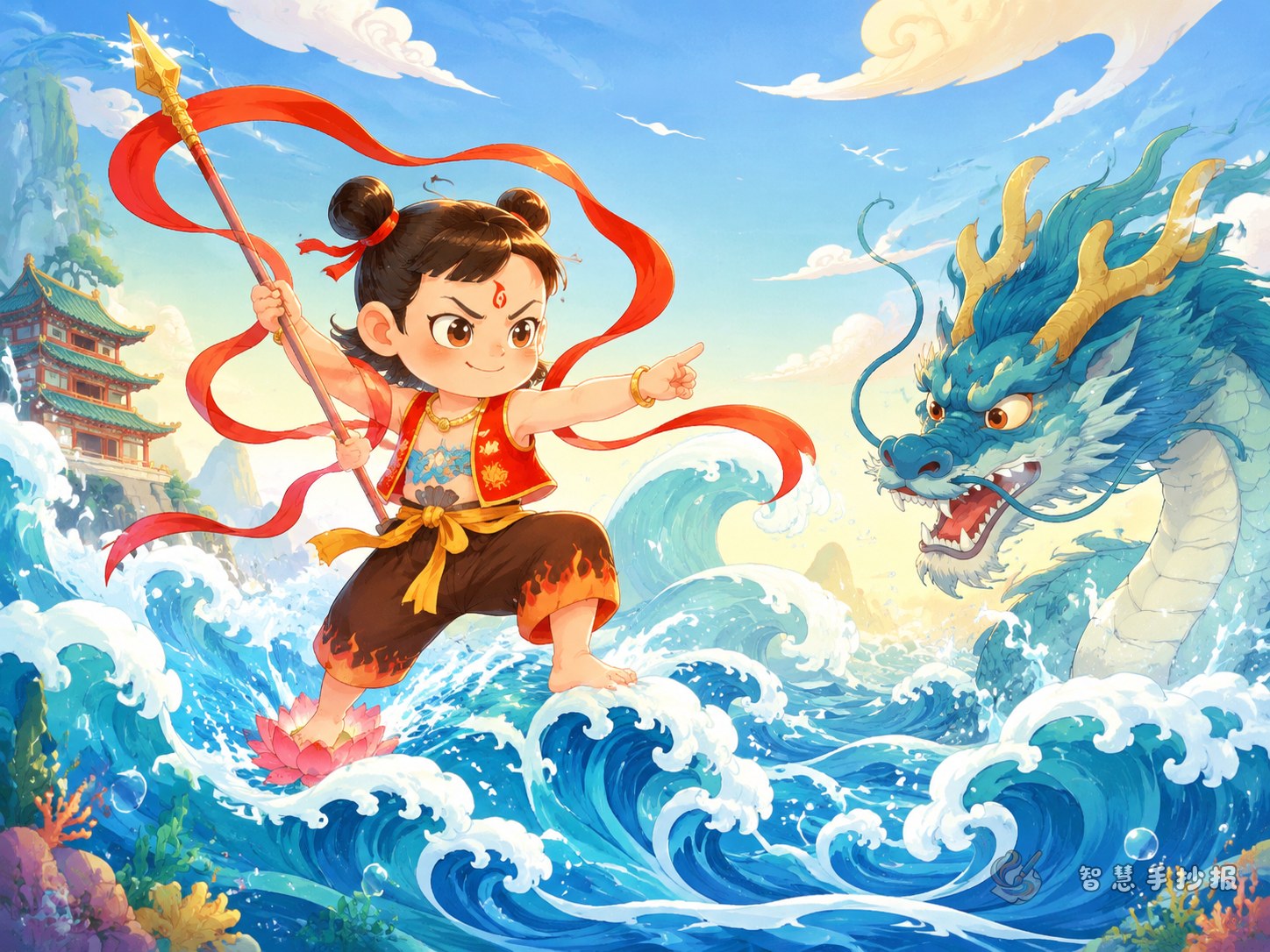
To make the page stand out, design it like a moving scene. Put Nezha in the center, waves and the sea below, and the title across the top. Place story sections on both sides so the whole page feels balanced.
- Color ideas: blue, red, and gold work especially well.
- Decorations: waves, dragon scales, clouds, flames, and magical items.
- Title style: make the main title bold and easy to read.
- Text arrangement: use short paragraphs and small framed boxes.
Even if drawing is difficult, using Nezha’s signature items and a few themed borders can still create a strong mythology feeling.
A simple ending that completes the page
The final section can end with one clear idea: the story of Nezha reminds us to be brave in difficulty and responsible when facing unfairness. This kind of closing sentence helps the handwritten newspaper feel complete and thoughtful.
Once your text and sections are ready, you can continue arranging the full design in the WeChat mini program Zhihui Shouchao Bao for a cleaner final page.