Open with a Sound That Seems to Answer
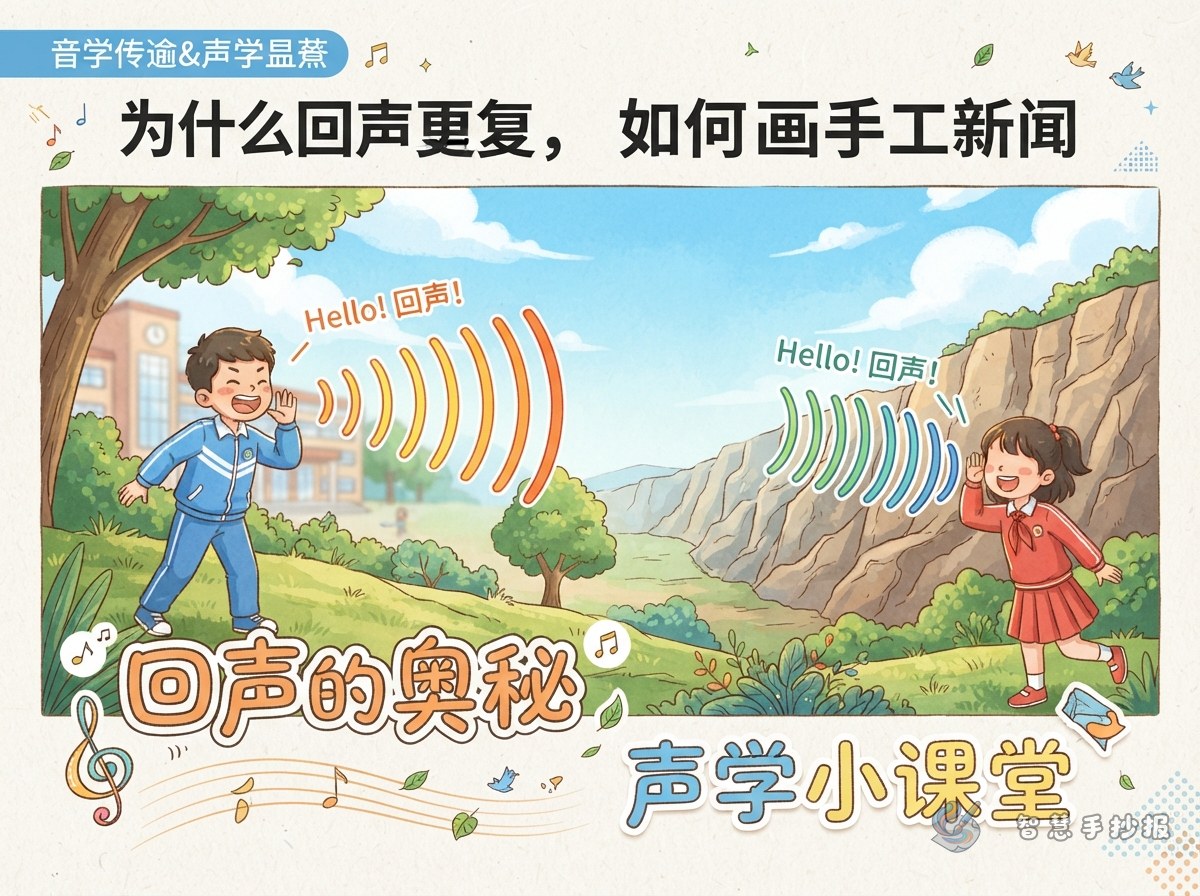
Begin with an intriguing question: when someone calls across a valley, why does a similar sound come back? Beside the title, draw a child calling toward a cliff. Curved lines and arrows can show the sound moving outward, making the theme of echoes and sound reflection clear at first glance.
Follow a Sound Wave on Its Round Trip
Sound begins with vibration and travels through materials such as air. When sound waves reach a large wall, cliff, or another hard surface, some of their energy is reflected. If the reflected sound returns late enough to be distinguished from the original, the listener hears an echo.
- A sound is made: Speaking, clapping, or tapping causes vibrations.
- The sound travels: The vibrations move through the air toward a distant surface.
- The sound reflects: Some sound waves change direction when they reach the surface.
- The sound returns: The reflected waves reach the listener and may be heard as an echo.
A separate echo is easier to hear when the reflecting surface is relatively far away. Under ordinary conditions, it may need to be roughly seventeen meters from the listener, although the setting, surface material, and background noise also affect the result.
Ready-to-Use Notes from Everyday Life
Why Valleys Often Produce Echoes
Cliffs provide large surfaces that can reflect sound. Because a call needs time to reach the rock and return, the reflected sound may be heard once or even several times.
Why Empty Rooms Sound Hollow
Bare walls and floors reflect sound. These reflections often return too quickly to sound like separate repetitions, so they blend with the original and create a louder or hollow effect.
How Soft Materials Change a Room
Curtains, rugs, and soft fabrics absorb part of the sound and reduce strong reflections. A furnished room therefore tends to sound less echoey than an empty one.
Add a Safe Clapping Observation
Create a small “Find the Reflection” record card. With a teacher or parent, clap once in a safe open location away from traffic and listen quietly. Then clap in a furnished room with curtains and compare what you hear.
- Where did I clap?
- Were there large walls or other surfaces nearby?
- Did I hear a clear repetition, a short lingering sound, or almost no change?
- How might the surrounding materials affect reflection?
Never create very loud sounds close to anyone’s ears, and do not enter tunnels, construction areas, or unsafe places to search for echoes.
Design the Page as a Sound Journey
Use a left-to-right round-trip layout. Place the person making the sound on the left, the explanation and activity in the center, and a cliff or wall on the right. Use a warm color for outgoing waves and a cool color for returning waves. Circular wave frames, speech bubbles, and small ear symbols can decorate the sections without covering the text.
After preparing the material, readers can continue in the Zhihui Handwritten Newspaper WeChat Mini Program to choose a template, arrange the sections, and adjust the colors for a clearer echo-themed project.