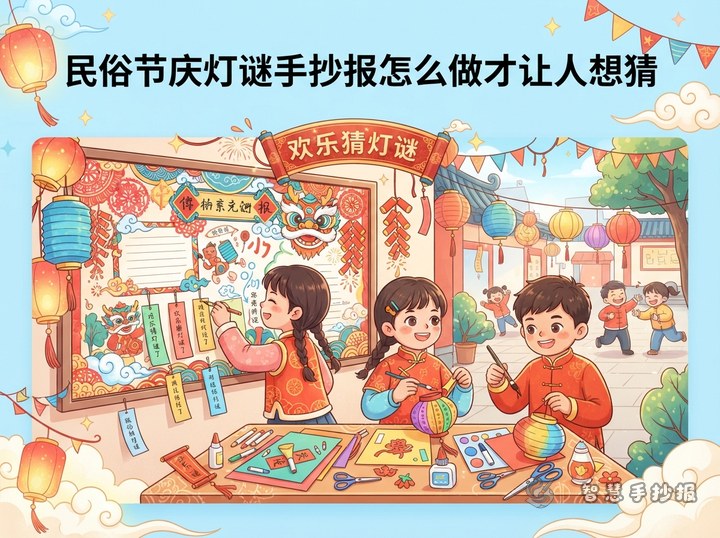
Start With the Reader’s Guessing Path
A lantern riddle poster should not be a wall of riddles. When readers first look at the page, they should quickly understand where to start guessing and where to check the answers. Place a short instruction under the title or in the top-left corner, such as “Read the riddle, check the hint, then find the answer at the end.”
If the riddle text, riddle type, and answer are squeezed into one line, readers may mistake the hint for part of the riddle. Designing a clear guessing path makes the poster feel like a small lantern riddle fair instead of a plain text collection.
Use a Three-Part Riddle Card
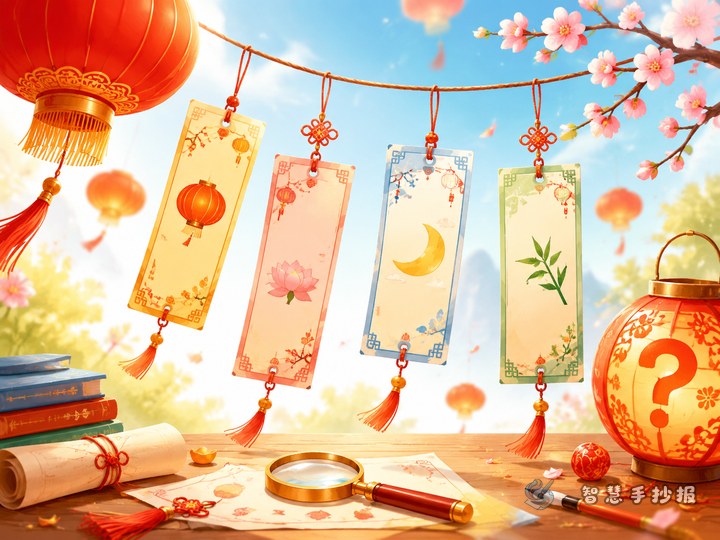
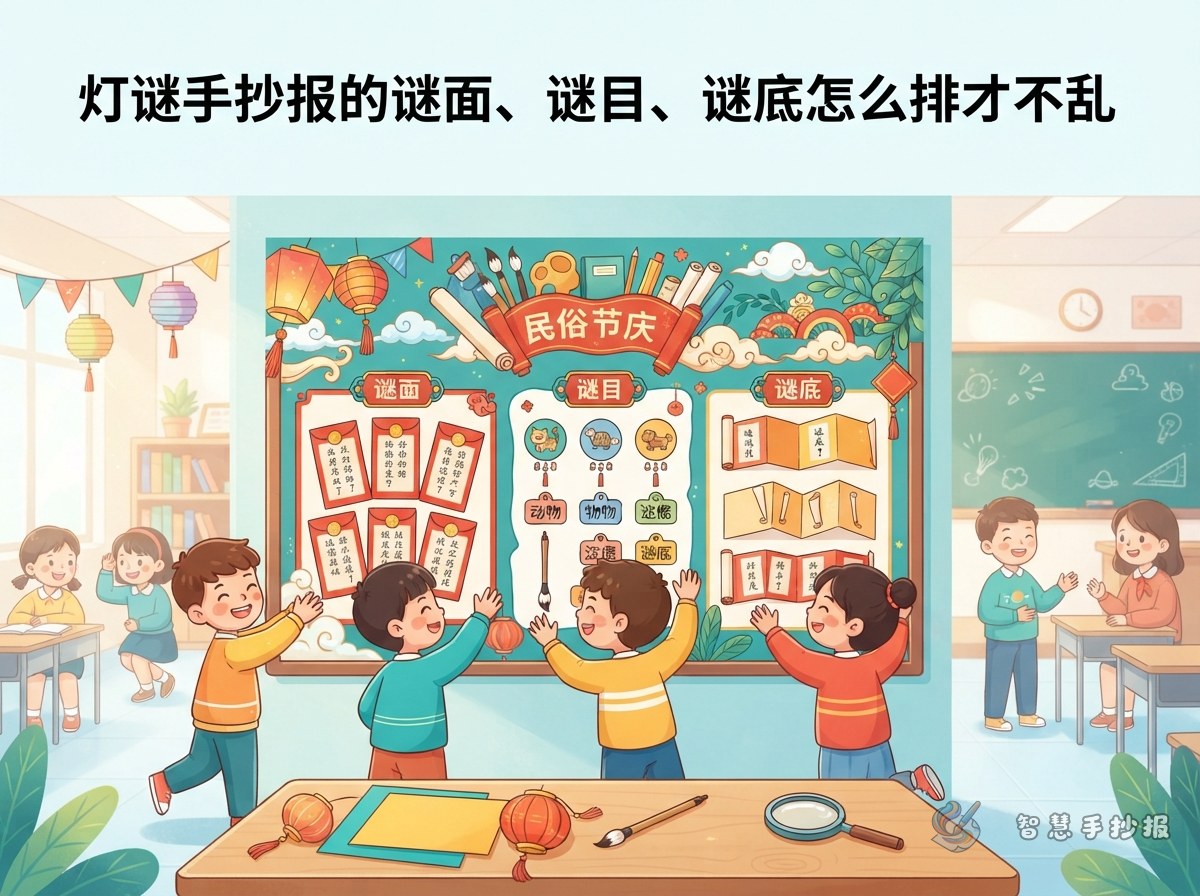
Turn each riddle into a small card with three positions from top to bottom:
- Top: riddle face. Use slightly larger writing and leave some space around the edges.
- Middle: riddle type. Add a small hint such as “guess an object” or “guess a character” so readers know the answer category.
- Bottom: hidden answer. Fold it to the back, cover it with a small paper flap, or publish it in a numbered answer section.
Leave small gaps between cards. A little breathing room looks better than filling every corner. Do not place the answer directly under the riddle face, or readers will lose the fun of guessing.
Divide the Poster Into Clear Sections
A simple structure is “guessing area,” “riddle knowledge,” and “answer area.” Put three to five numbered riddles in the guessing area. In the knowledge area, explain in two or three sentences what the riddle face, riddle type, and answer mean. List the answers by number in a small answer area at the edge or lower-right corner.
If there is extra space, add a “challenge card” where classmates or family members can write an answer on the spot. This interactive section makes the poster more engaging than copied text alone.
Choose Riddles That Keep Readers Interested
Choose short riddles with clear hints and familiar answers. Everyday objects, school supplies, animals, and character riddles all work well, but avoid mixing too many types at once. Each riddle should have only one riddle type, not both “guess an object” and “guess a character.”
Keep the riddle text complete, and make sure the answer section matches the numbering. A quick test run by a parent or teacher can help catch confusing clues before the poster is finished.
Small Details That Make the Layout Work
Title ideas include “Lantern Riddle Challenge,” “Guessing Corner,” or “Riddle, Hint, Answer,” but avoid making every word the same size. Numbers, arrows, and small decorations can guide the eye, but they should not cover the text.
Before finishing, check three things: the riddle face is complete, the hint is clear, and the answer matches. For more column styles and layout references, users can open the “Smart Handwritten Newspaper” WeChat mini program to choose templates and organize text materials.