Start by dividing the page into clear sections
When making a Chinese traditional opera mask handwritten newspaper, many students begin drawing first and then realize they do not know what else to write. A better method is to plan the sections in advance. A strong page can be built around facts, characters, creativity, and reflection, which makes the content complete and the layout easier to handle.
- Section 1: What is an opera mask?
- Section 2: Mask color meanings
- Section 3: Famous opera characters
- Section 4: My favorite mask design
- Section 5: How to draw a mask
- Section 6: Why traditional opera is interesting
If the page is small, four sections are enough. If there is more space, you can expand to five or six.
What content works best on the page
1. What is an opera mask?
Opera masks are a special facial design art used in traditional Chinese opera. Through colors and patterns, they help show a character’s personality, identity, and stage presence, so the audience can quickly understand the role.
2. How to explain colors simply
Use short and easy sentences. For example, red often suggests loyalty and bravery, black gives a sense of uprightness and seriousness, white may represent a clever or complicated character, and blue or green can show bold and distinctive personalities. Keep the explanation simple so it fits a school project well.
3. How to include classic characters
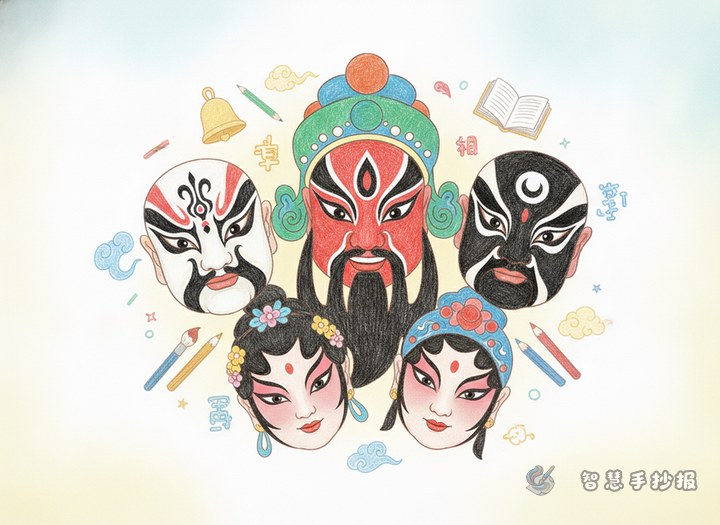
Choose one or two familiar figures, such as Bao Zheng or Guan Yu. Write just two or three sentences for each one, including the name, the mask features, and the impression it gives. This makes the page more specific and interesting.
Layout ideas that keep the page neat
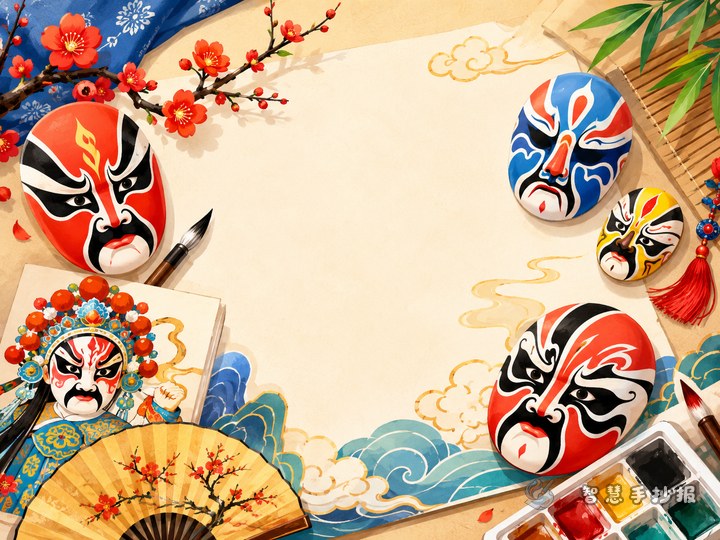
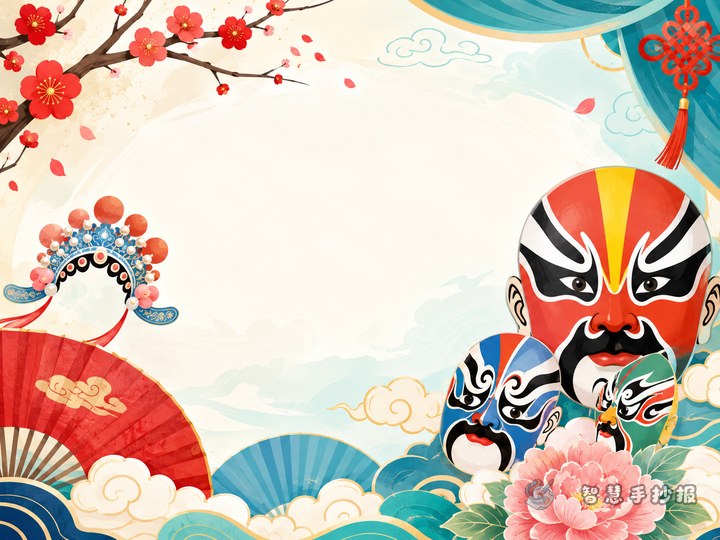
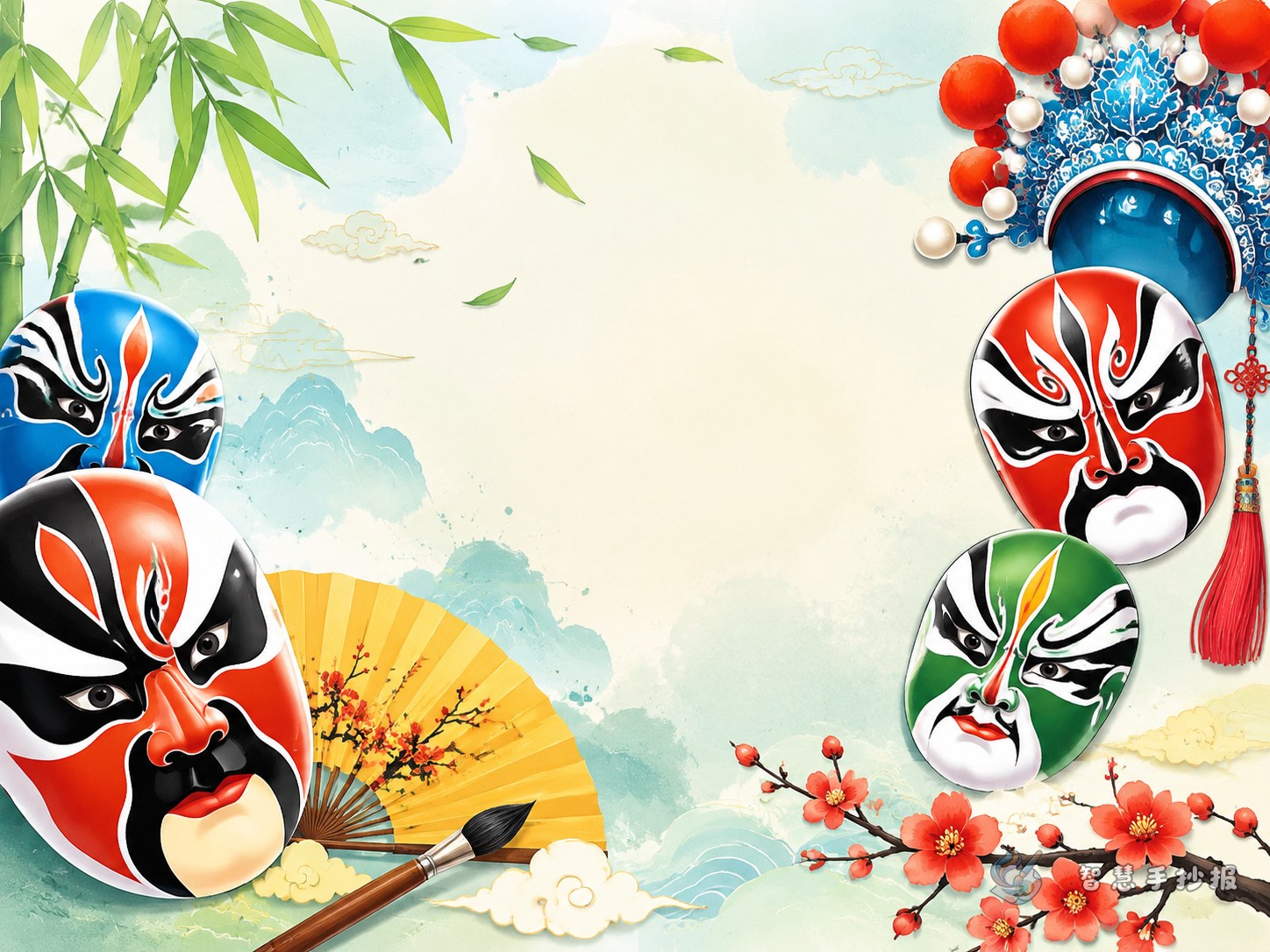
Opera mask themes look great with strong and balanced layouts. Here are three practical choices.
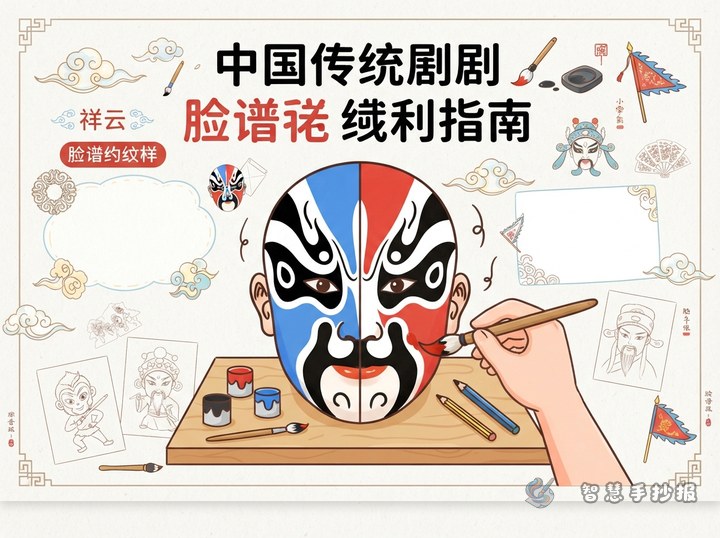
- Center image layout: Draw a large mask in the middle and place the text around it. This creates a clear visual focus and works well for younger students.
- Two-column layout: Put basic facts on one side and characters or drawing tips on the other. This keeps information organized.
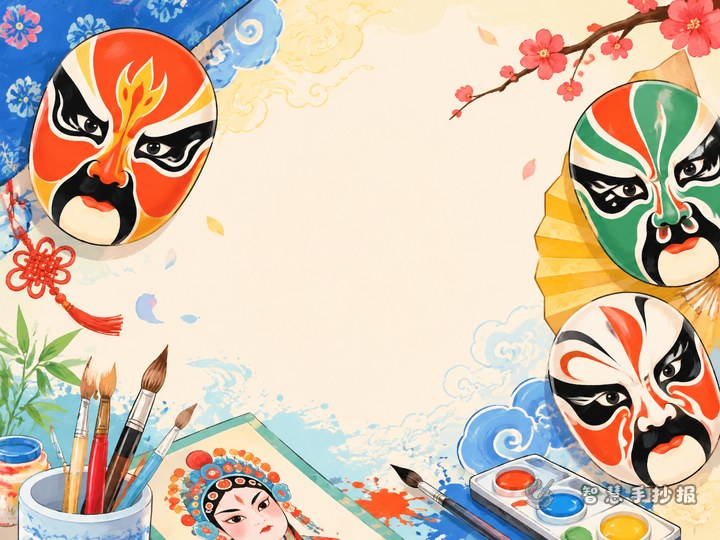
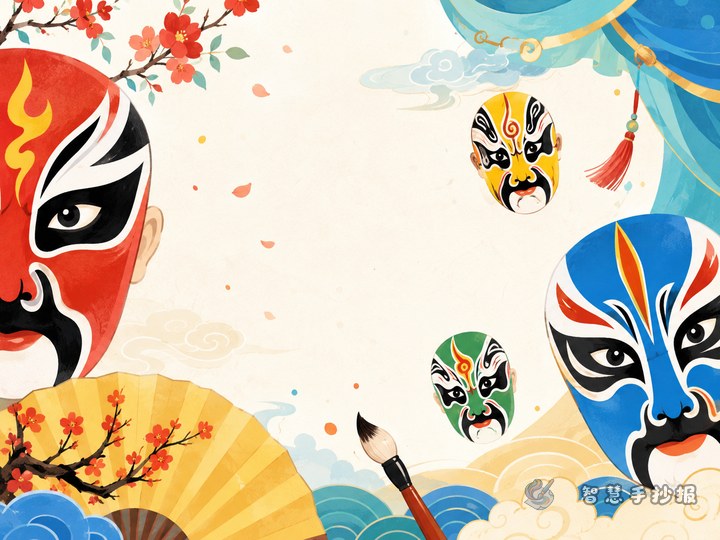
- Four-corner layout: Place small sections in the four corners and keep the title or main image in the center. This style feels lively and decorative.
Possible titles include “Exploring Opera Masks,” “The Beauty of Traditional Opera Masks,” or “Opera Masks I Learned About.” Decorative lines such as clouds, folding fans, or stage curtains can strengthen the traditional mood.
Short text materials you can use directly
If you need quick writing material, these short lines are useful:
- Opera masks are a unique art form in Chinese traditional culture.
- Different colors and patterns help show different character traits.
- Masks are beautiful to look at and meaningful on the stage.
- Learning about opera masks helps us appreciate traditional opera.
- The world of opera masks is full of color, rhythm, and imagination.
You can also add a short personal reflection at the end, such as: I learned that opera masks are more than decorations. They carry culture, stories, and artistic meaning.
How to make the drawing and colors feel traditional
Your decorations do not need to be overly complicated. The key is to capture the main features. Start with a symmetrical face shape, then add patterns on the forehead, eyes, and cheeks. Use red, black, and white as the main colors, with blue, yellow, or gold as accents.
- Use border patterns such as clouds or traditional geometric lines
- Add small drawings like fans, drums, or stage curtains
- Highlight section headings with colored boxes
- Write the main text in a dark pen so it stays clear
If the page looks too full, leave some blank space to help the title and main mask stand out.
Check these points before finishing
Before you finish, check whether the title is clear, the sections are complete, the text is easy to read, the mask drawing looks balanced, and the colors match the theme. If the topic is clear, the layout is organized, and the page is neat, your handwritten newspaper will already look strong.
If you want more layout ideas, color matching help, or extra writing materials, you can continue creating in the Smart Handwritten Newspaper WeChat mini program.