Turn body science into a clear newspaper page
The goal is not to memorize the entire periodic table. Help readers see that the body needs different elements for breathing, movement, and growth. A strong title is Element Friends Protect Our Bodies.
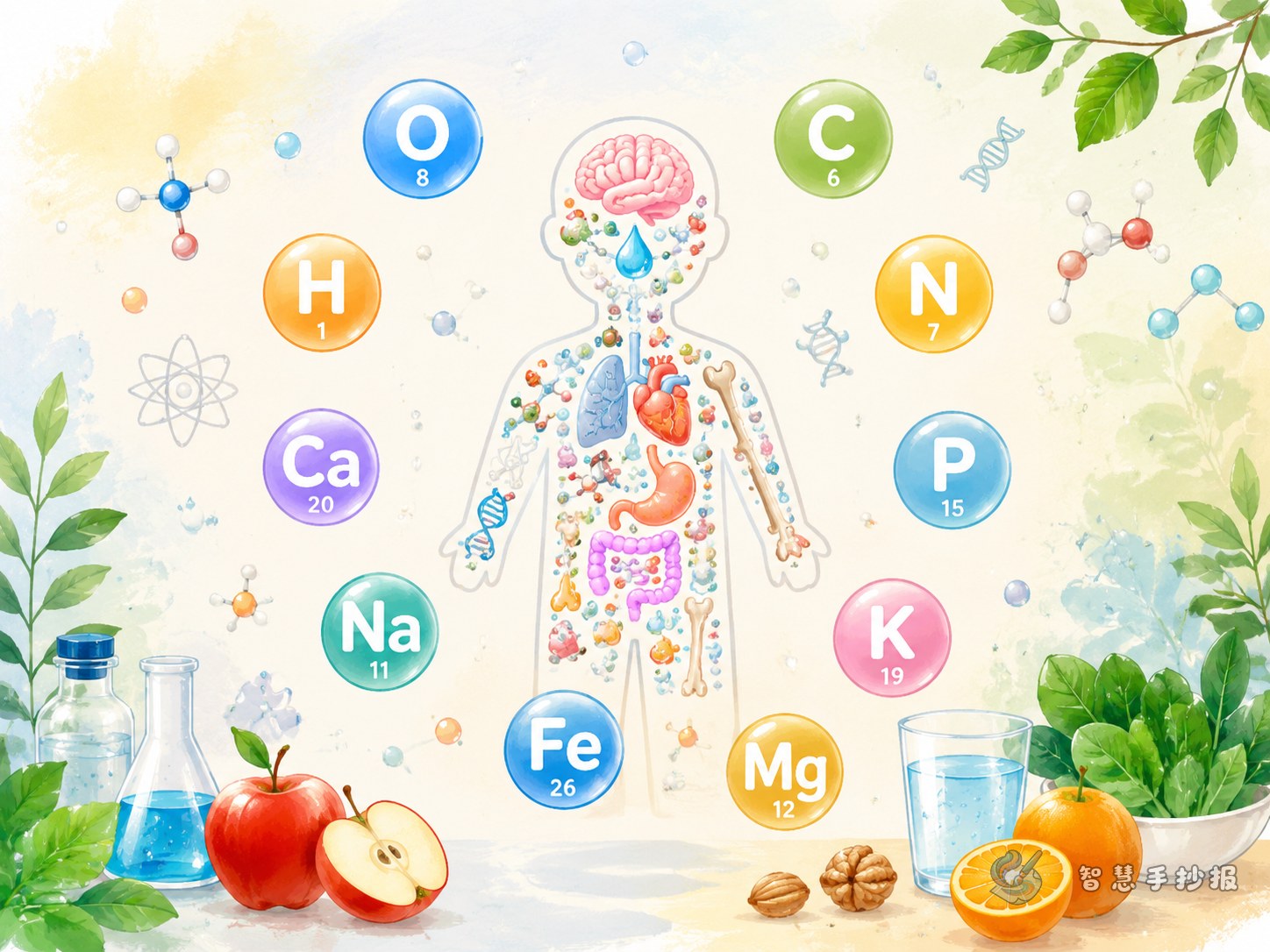
Draw a simple human outline in the center. Mark the head, chest, bones, and limbs to create a clear visual focus for the whole page.
Build five easy element fact cards
- Oxygen O: We get oxygen by breathing. It supports life activities in the body.
- Calcium Ca: Calcium is an important part of bones and teeth.
- Iron Fe: Iron helps hemoglobin carry oxygen in the blood.
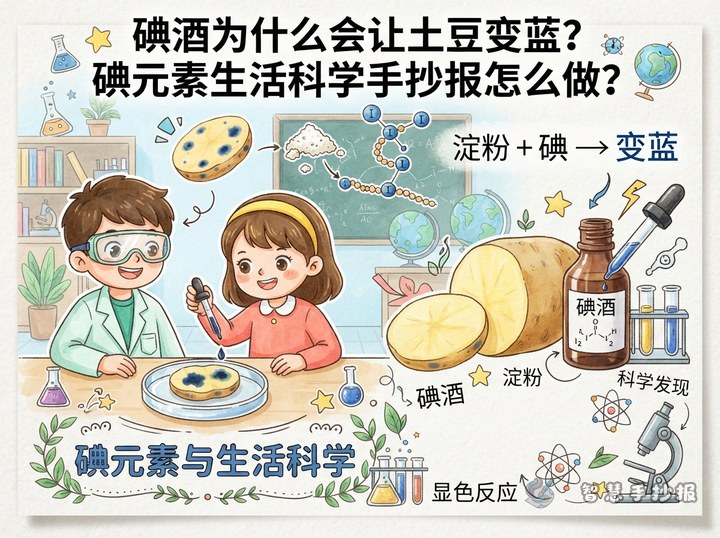
- Iodine I: Iodine is a trace element connected with normal thyroid function.
- Zinc Zn: Zinc is related to growth and the sense of taste.
Use the same three lines on every card: symbol, main role, and a daily-life reminder. Explain that a balanced diet matters more than treating one element as a miracle solution.
Add everyday clues to the page
A food clue corner
Draw small icons such as milk, leafy vegetables, eggs, fish, and beans. Add the sentence: “Eating a variety of foods helps the body get different nutrients.” This is more accurate than linking one food to only one element.
Element detective quiz
- Which element is a helper for bones and teeth? Answer: Calcium.
- Which element helps blood carry oxygen? Answer: Iron.
- How do people mainly get oxygen? Answer: By breathing.
Put this quiz in a magnifying-glass or speech-bubble shape to make the design more interactive.
Color plan and drawing order
Use light blue as the main color for a clean science feeling. Green can mark calcium, red can mark iron, and blue can mark oxygen. Place element symbols inside round badges and use small arrows to connect them with related body parts.
- Sketch the title, body outline, and five card positions in pencil.
- Write the title and element symbols first, then add short explanations.
- Add borders and small icons such as bones, blood drops, and food.
- Check spelling, symbols, punctuation, and overall neatness.
A fitting closing message
Our bodies need many elements, and good health comes from balanced meals, regular rest, and active movement. To explore more layouts, titles, and color ideas for this topic, continue creating in the Wisdom Handwritten Newspaper WeChat mini program.