Turn a Kitchen Question into a Science Trail
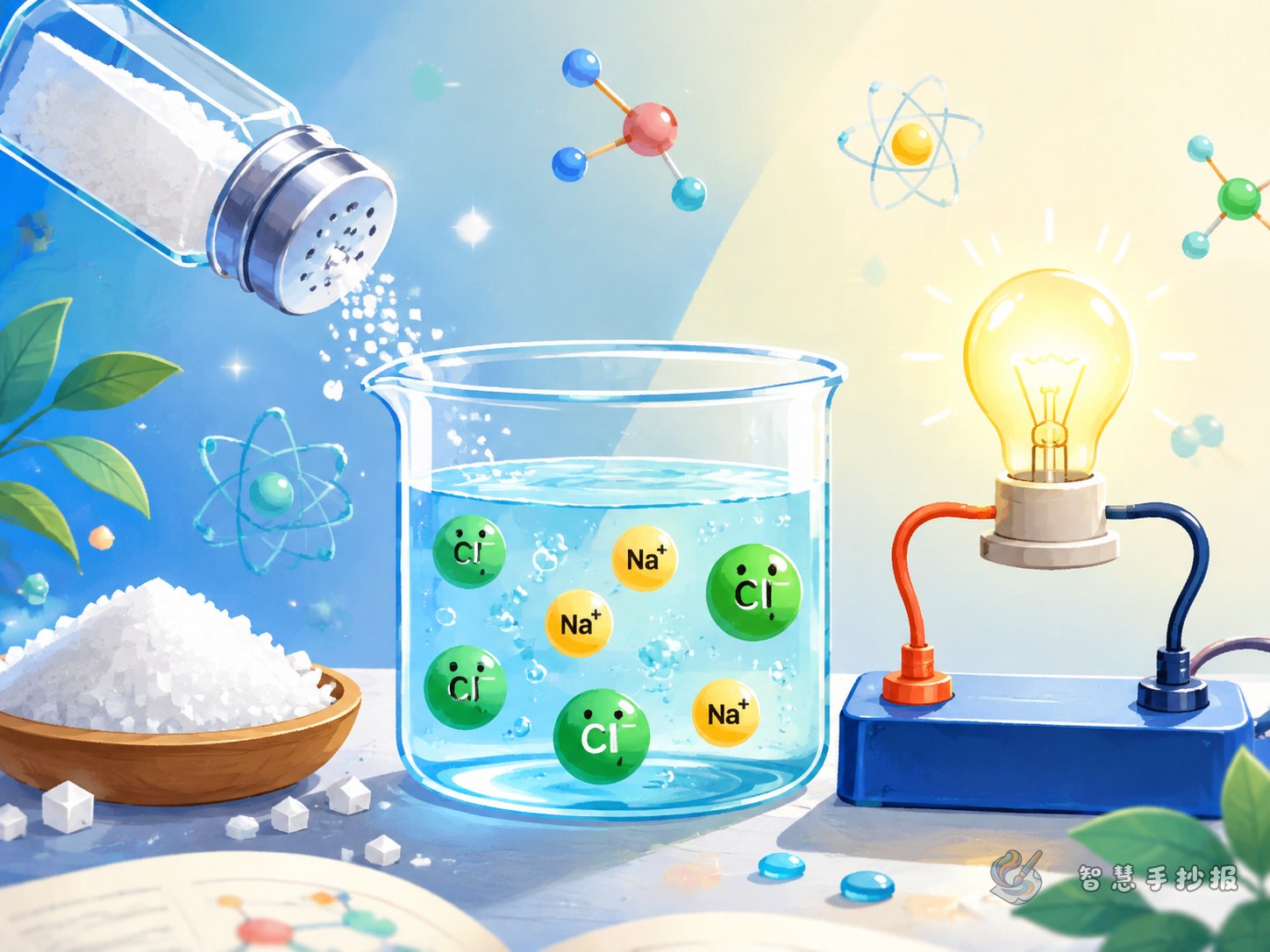
Begin the poster with an easy-to-understand question: Why can salt water conduct electricity better than pure water? Common salt is mainly sodium chloride, a compound made from the elements sodium and chlorine. When salt dissolves in water, it produces charged particles that can move freely. Their movement helps electric current pass through the solution.
Dry salt is different. Its particles are held in a fixed crystal structure, so they cannot move freely and it normally does not conduct electricity well. This contrast makes a strong central question-and-answer section for a handwritten science poster.
Three Element Cards for the Main Illustration
Sodium: An Active Metallic Element
The symbol for sodium is Na. Pure sodium is a very reactive metal and must never be treated as table salt. Table salt is not metallic sodium; it is sodium and chlorine combined as sodium chloride. Add this useful sentence to the poster: Elements can have very different properties after they combine into a new substance.
Chlorine: A Different Form in Table Salt
The symbol for chlorine is Cl. Chlorine as an element is not the same as table salt, but it becomes part of sodium chloride when it combines with sodium. Draw a small green chlorine card and connect it to a cluster of white salt crystals.
Sodium Chloride: A Familiar Chemical Combination
The chemical formula for sodium chloride is NaCl. It shows how elements can form substances used in everyday life and leads naturally to the topic of salt-water conductivity. Make it clear that salt water is not made by mixing metallic sodium with chlorine gas. It is made when sodium chloride dissolves and produces mobile ions.
Build a Small Observation Station
If a teacher or parent supervises an observation activity, show it as a four-step process on the poster. Use only safe low-voltage equipment such as a battery. Never connect salt water to a wall outlet or household electricity.
- Prepare water, a small amount of salt, two similar containers, wires and a low-voltage bulb.
- Observe plain water first, then observe salt dissolved thoroughly in water.
- Record the bulb response or observation without making an exaggerated claim about exact conductivity.
- Add the reason: mobile ions are present in the solution, so current can pass more easily.
Include a safety note at the bottom: do not taste the materials, avoid electrical outlets, wash hands after the activity and follow adult instructions.
Draw an Adventure from Salt Crystal to Electric Current
A horizontal or circular layout works well. Draw a salt jar and enlarged crystals on the left. In the center, use water drops, arrows and small dots to show sodium chloride dissolving. On the right, draw a simple circuit with a battery, wires and a small bulb. A title such as “The Moving Helpers in Salt Water” makes the topic easy to recognize.
- Upper left: Add a question bubble asking why salt water conducts electricity.
- Center: Draw a NaCl breakdown diagram and use separate colors for sodium and chlorine.
- Upper right: Create an observation box comparing plain water, dry salt and salt water.
- Bottom strip: Place element symbols, the chemistry summary and safety reminders.
Use salt white, water blue and lively orange as the main colors. Water drops, lightning marks, dots and tiny test tubes make simple borders. Keep each explanation to two or three sentences and leave open space so the poster remains clear.
End by Bringing Chemistry Back to Everyday Life
Closing text for the poster: An ordinary grain of salt contains a chemical combination of sodium and chlorine. Salt water can conduct electricity because its ions are able to move. When we investigate small questions from daily life, chemistry becomes easier to see and understand.
After preparing the text and sketch, you can continue arranging the sections and adjusting the layout in the Zhihui Shouchaobao WeChat mini program.