A route map shows the order of escape, not a pretty house
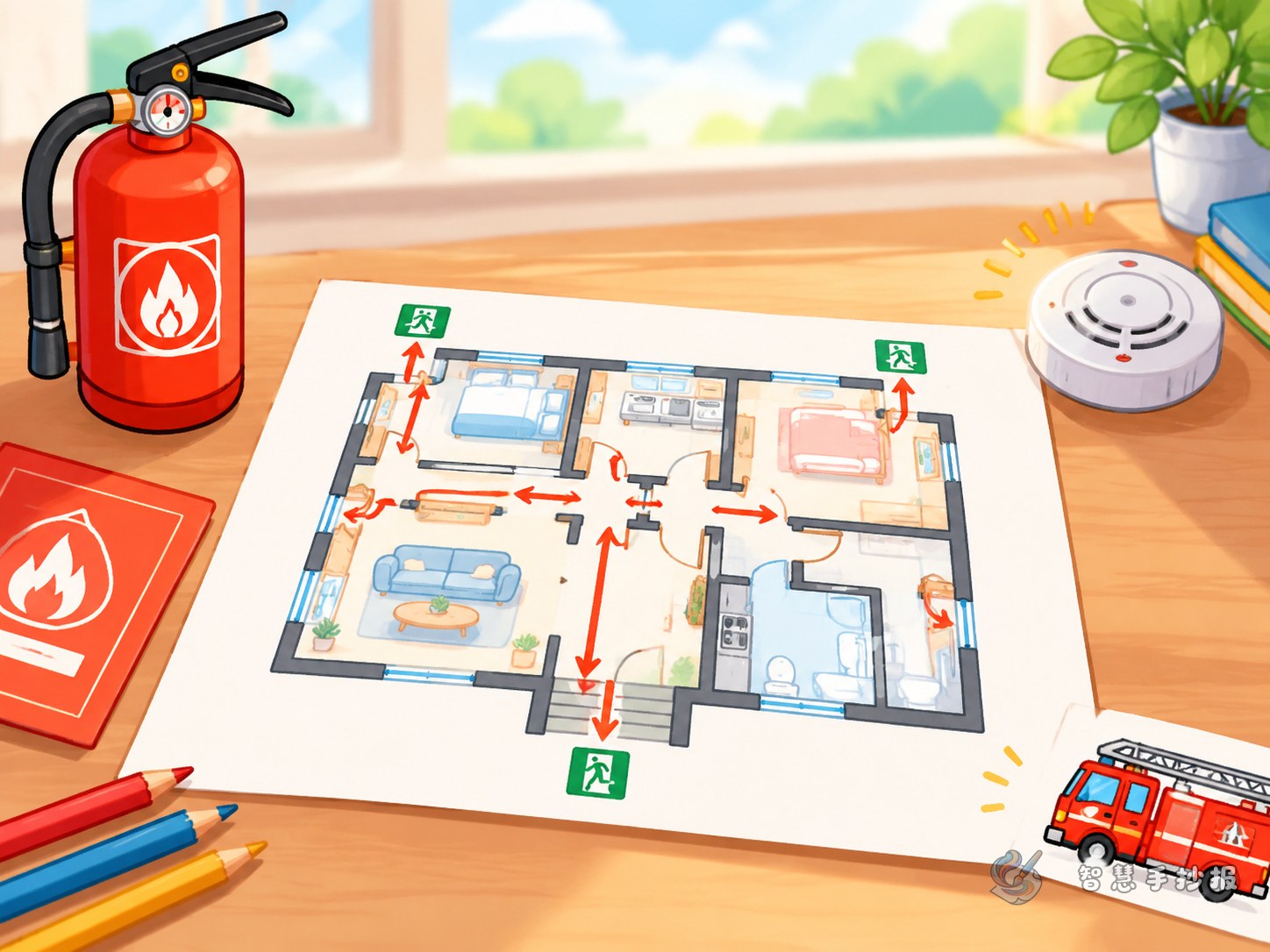
Many students start by drawing roofs, windows and flowers, then run out of space for arrows. A fire escape route map on a poster only needs to show three things: where you are, which way you go, and where you meet. Once those are clear, the map works.
- Start: your bedroom or the living room.
- Path: bedroom door, hallway, stairway.
- Finish: a fixed outdoor meeting point such as the open ground or the gate.
Try to give every room two ways out, one through the door and one as a backup, such as the other stairway or a window where you can call for help.
Five marks your map should always include
Readers understand a map through repeated symbols, so decide each symbol first and keep it the same everywhere.
- Arrows: a solid arrow for the main route, a dashed arrow for the backup route.
- Stairway: label it and add an arrow pointing down or out.
- Meeting point: draw a circle or star and write 'count heads here'.
- Red cross: place it over the lift with the note 'never use the lift'.
- Emergency number: write 119 next to the phone symbol and remind readers to call only after they are safe.
Divide the poster so nothing feels squeezed
The map is the main character, but the poster still needs text. A layout that works well places the map on the left or in the centre, a narrow column of escape steps on the right, and a short strip along the bottom for three rules to remember.
- Put the title at the top centre and keep it under ten words.
- Leave white space around the map so arrows never touch the border.
- Use no more than four colours: black for rooms, blue for the main route, red for warnings, and one light colour for the background.
Short lines you can copy straight onto the poster
- Escape first, call 119 once you are safe.
- Touch the door handle before opening; if it is hot, keep it closed.
- Stay low, keep close to the wall, do not hide in a room.
- No lift, no belongings, no going back.
- At the meeting point, count family members.
- Warn neighbours on the way out, but never delay your own escape.
Each line is short enough to sit beside an arrow or inside a small text box, which reads far better than a long paragraph.
Check the poster before you hand it in
- Are there two routes instead of one?
- Do the arrows point from the rooms towards the stairs and the exit?
- Is there a red cross on the lift?
- Is the meeting point clearly named?
- Is the lettering a consistent size and readable from half a metre away?
If you are short on time, open the 智慧手抄报 mini program in WeChat, pick a fire safety layout, draw the route map in the centre using the marks above, and drop these short lines into the text boxes.