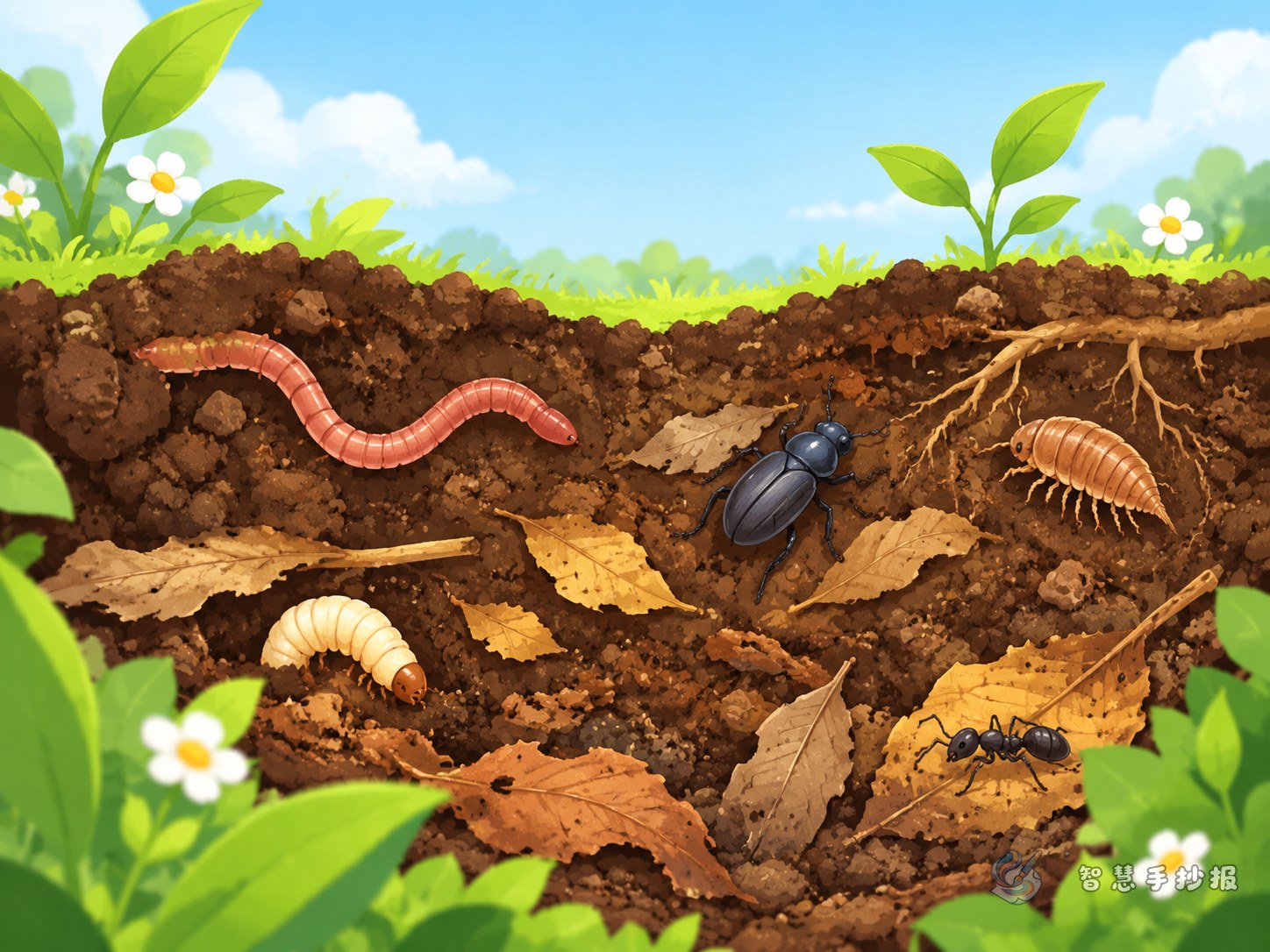
Start With One Big Idea: A City Under Your Feet
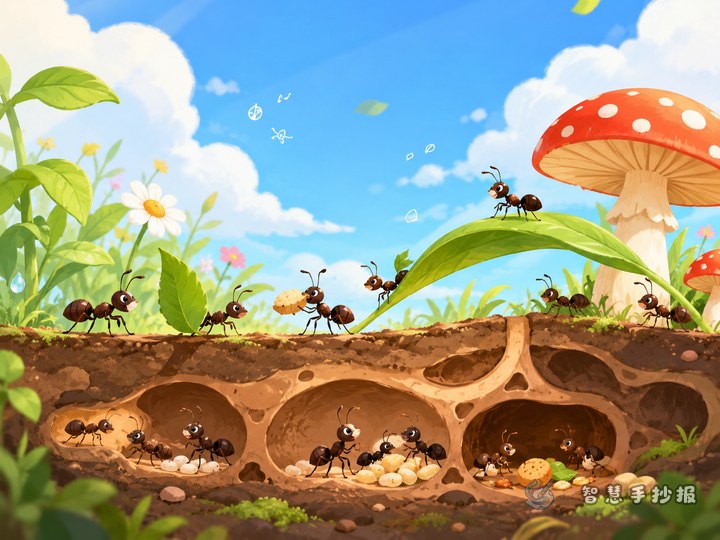
Soil looks quiet, but it is a busy underground city. Fallen leaves, twigs and fruit are first chewed into smaller pieces by tiny animals, then broken down further by microbes. The result is nutrients that plants can take up again. Build your poster around the line how a fallen leaf returns to the soil and every box will connect.
Who Lives Down There?
Make a resident list and sort it into two groups.
- Soil insects: ants, termites, springtails, dung beetles and burying beetles. They move, chew or bury dead material.
- Helpers that are not insects: pill bugs are crustaceans, earthworms are annelids and millipedes are myriapods. They are still key members of the cleanup crew.
One short caption per creature is plenty, for example: dung beetles bury animal droppings so nutrients return to the soil.
Draw the Breakdown Process as a Flow
Connect these steps with arrows and the page instantly looks organised.
- A leaf falls to the ground.
- Springtails and pill bugs nibble it into fragments.
- Microbes break the fragments down further.
- Nutrients soak into the soil.
- Plant roots take them up and new leaves grow.
A single curved arrow sweeping from top right to bottom left makes the action feel as if it is sinking into the ground.
Layout Plan: Show the Soil in Layers
Divide the page into four bands: grass and roots at the top, then leaf litter, then darker humus, then deep soil with small stones. Place each animal where it belongs, such as pill bugs in the litter and earthworms in the humus.
Use three text boxes: a creature gallery, the decomposition flow and an observation log. If space allows, add a short promise such as not tipping rubbish onto green spaces or digging up flower beds for fun.
Text You Can Copy and Observation Notes
- Soil animals are small, but their job is huge.
- Fallen leaves are not rubbish. They are food and building material for underground residents.
- Your notes can cover weather, place, the creature you saw and what it was doing.
- Three to five short dated notes are enough.
To finish faster, open the WeChat mini program from Smart Handwritten Poster, choose a soil-themed template, drop in your gallery, flow and notes, then adjust the colours and decorations to make the sheet your own.