Choose a Story: A Day in the Life of Ancient People
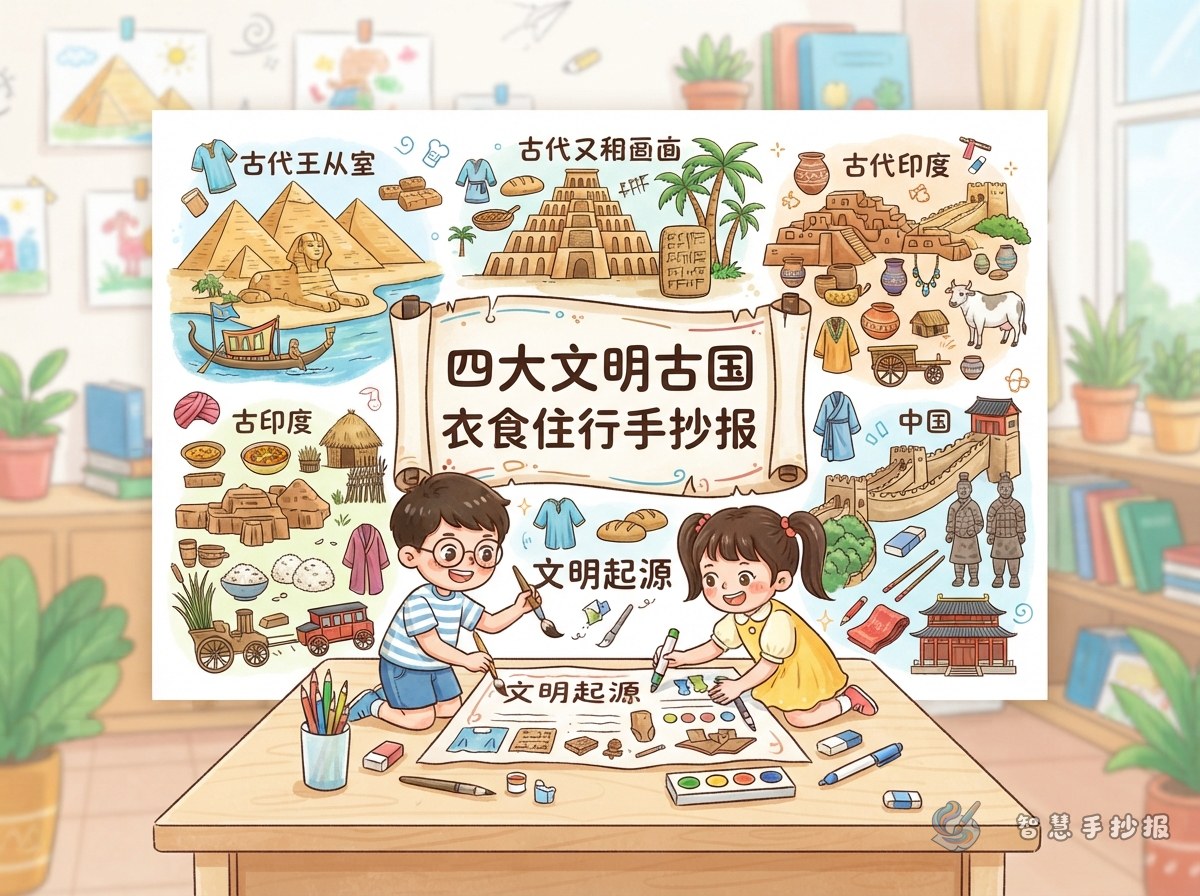
Instead of simply listing dates and achievements, this handwritten newspaper can explore the four ancient civilizations through clothing, food, housing, and travel. A daily-life perspective is easier for children to understand and gives them many ideas for drawings and short captions.
A suitable main title is “A Day in the Four Ancient Civilizations.” A subtitle could be “Understanding Early Civilizations Through Daily Life.” The opening text may say: Clothes, food, homes, and transportation show how people adapted to their surroundings and built civilizations through everyday life.
What to Write for Each Civilization
Ancient Egypt: Life Along the Nile
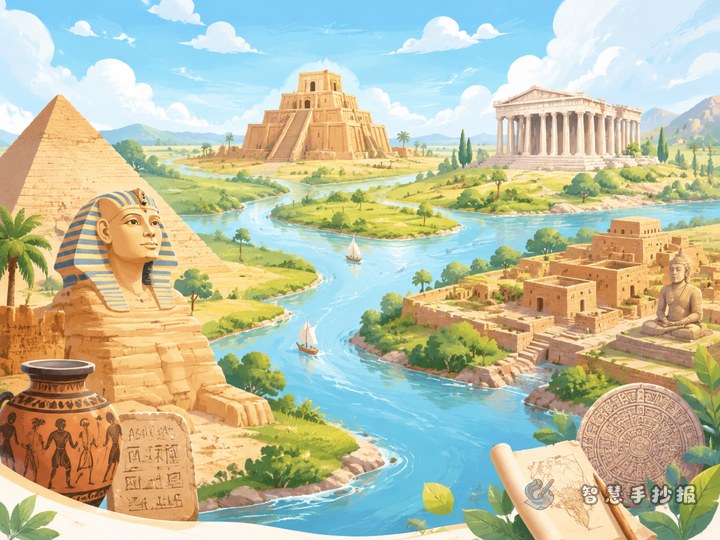
Explain that the Nile provided water for farming and daily activities. Ancient Egyptians used plant fibers to make light clothing, while their homes and tools reflected the local climate and available materials. Draw the river, papyrus, boats, and simple geometric decorations.
Mesopotamia: Cities and Irrigation
Mesopotamia lay between the Tigris and Euphrates Rivers, so canals, cities, and marketplaces make useful visual themes. You can write that irrigation supported farming, while cities encouraged crafts and exchange. Use ochre and brown tones to suggest mud-brick buildings.
Ancient India: Life in the River Valley
Focus on the cities of the Indus Valley, drainage systems, cotton, and everyday life. Short phrases such as “orderly streets” and “careful use of water” work well beside drawings of brick walls, pottery, cotton, and rivers.
China: Civilization Through Farming
For ancient China, introduce farming communities around the Yellow and Yangtze Rivers, along with houses, pottery, tools, and customs. Rice plants, fields, pottery, wooden houses, and traditional patterns are easy to draw. End with the sentence: “Respect for nature and hard work created a rich and lasting culture of daily life.”
Turn the Text into Four Daily-Life Cards
Place four horizontal or circular cards in the middle of the page. Each card should contain keywords and one or two short explanations rather than a long paragraph.
- Clothing: Clothes were influenced by climate, plants, and textile skills.
- Food: Farming, irrigation, and pottery helped people develop stable eating habits.
- Homes: Building materials and city layouts reflected concerns about weather, floods, storage, and community life.
- Travel: Rivers, roads, boats, and animals supported movement, trade, and communication.
Add a small conclusion beside the cards: Although the four regions had different environments, all of them valued water, farming, shelter, and cooperation.
A Layered Layout for the Handwritten Newspaper
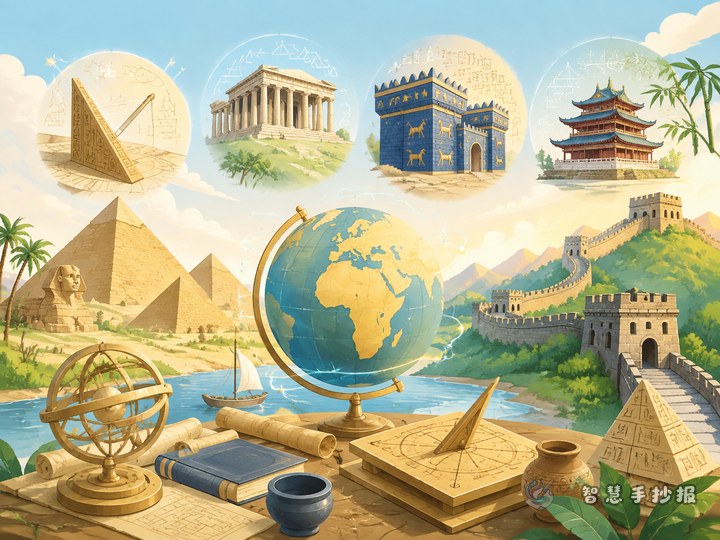
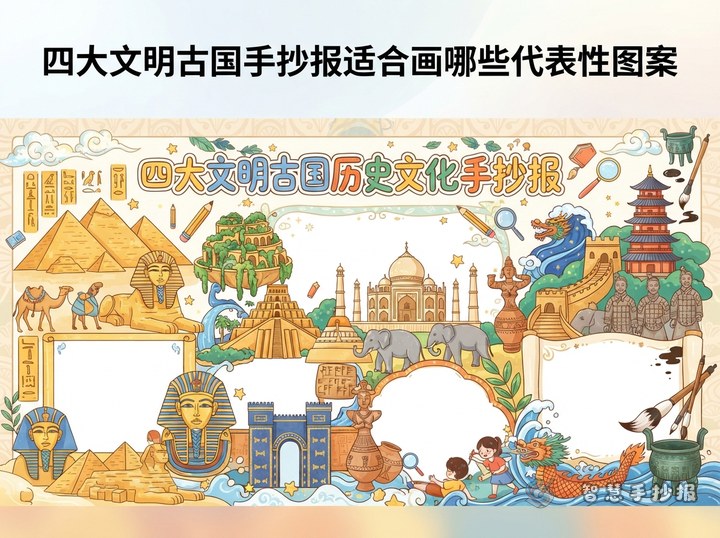
Try a central layout with the title at the top and four sections spreading outward. Draw an old map or compass in the center, place one civilization in each surrounding area, and add a “Shared Discoveries” section at the bottom. Connect the four daily-life cards with arrows.
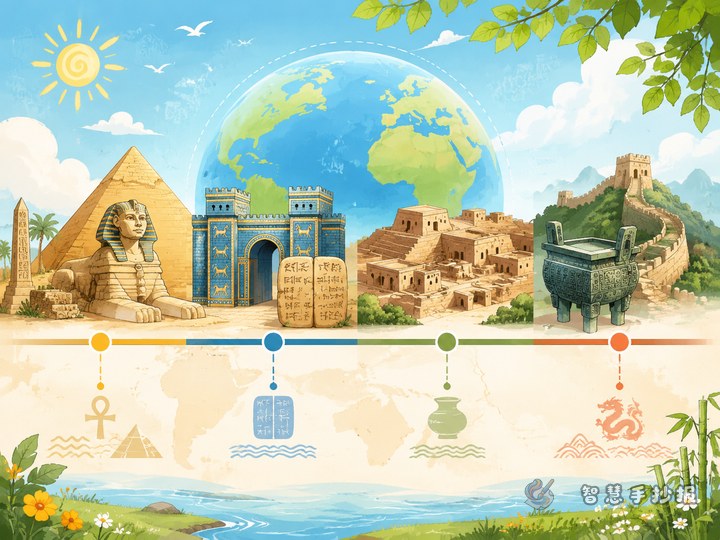
Use gold and blue for Egypt, ochre and dark orange for Mesopotamia, orange and green for ancient India, and red with blue-green for China. Limit each section to two or three main colors. Water-wave, brick, plant, or pottery patterns can be used as borders.
- Sketch the title, four regions, and four cards with a pencil.
- Copy the short sentences after checking that every section has enough open space.
- Add icons, borders, and color at the end, using bold lettering or bright colors for key words.
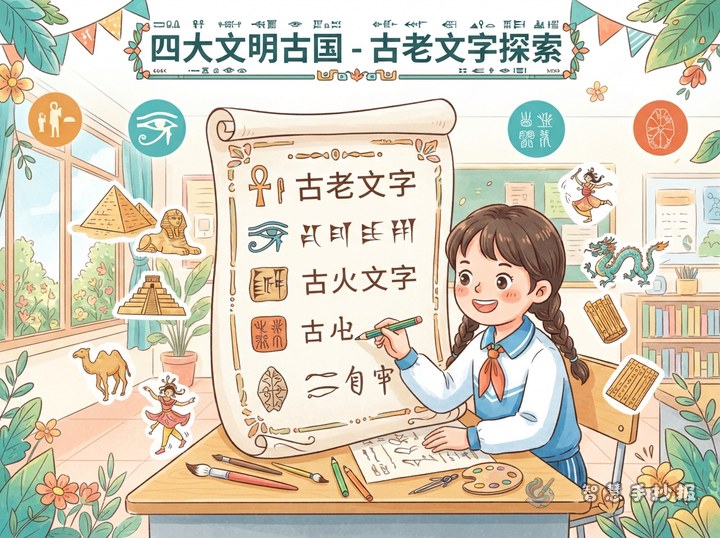
If you need help arranging the sections, open the WeChat mini program “智慧手抄报” and choose a suitable handwritten-newspaper layout. You can then adjust the wording and colors to create a clear design with your own ideas.