Start With a Theme Line for the Title Area
A Dujiangyan page often fails when the headline says only “Introduction to Dujiangyan” and the rest is copied text. Give the page one clear theme line, such as “One river, two thousand years of water wisdom,” and place it beside the title. Every later section can then support that single idea.
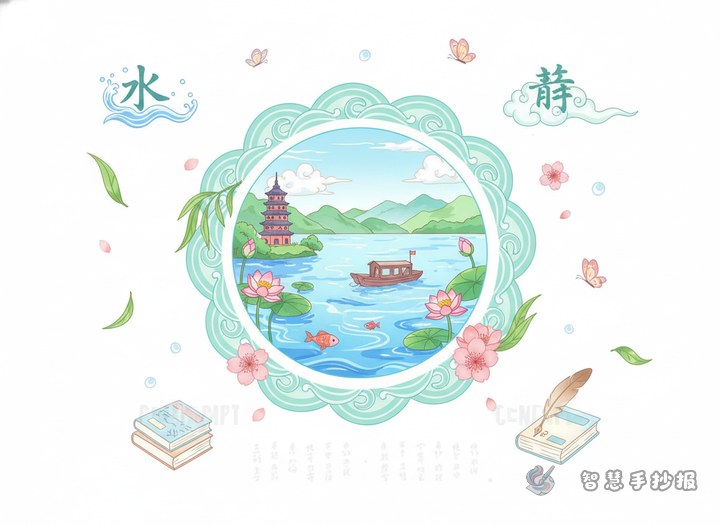
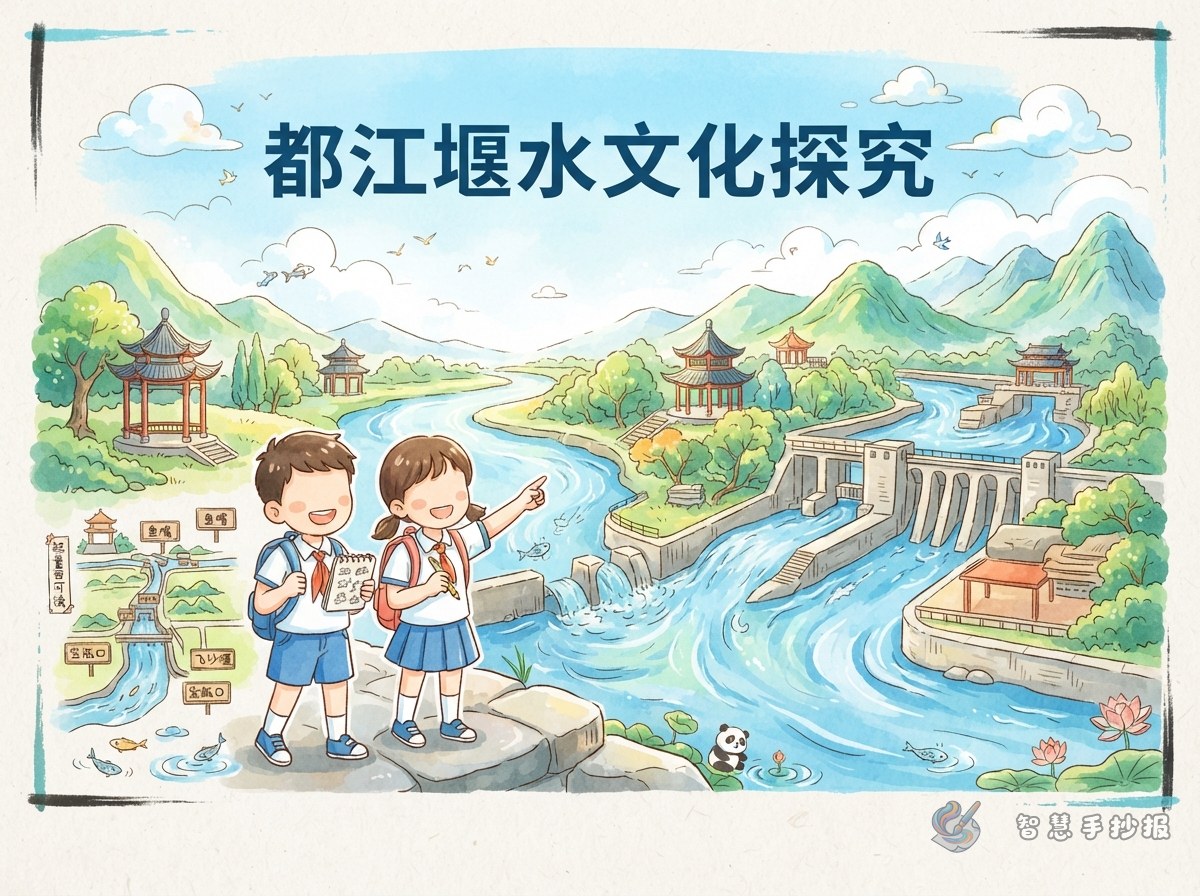
For the title area, draw the Min River winding down from the top right and splitting at the Fish Mouth. A fan, a water drop, or a curved wave frame around the title also works well. Use deep blue or teal for the letters and add a thin white or pale blue outline to keep them crisp.
Explaining the Three Key Works in Plain Words
The three works most students write about are the Fish Mouth, the Flying Sand Weir and the Bottle-Neck Channel. Instead of writing “the Fish Mouth divides the water,” try a pattern of “what it looks like — what it does — why it matters.”
- Fish Mouth: It looks like the mouth of a large fish and splits the Min River into two channels. You could describe it as letting the river choose its own path.
- Flying Sand Weir: Its job is to release silt and extra floodwater. A simple line such as “when the river rises, let more water pass; when it falls, keep water for the fields” explains it clearly.
- Bottle-Neck Channel: A narrow inlet controls how much water enters the Chengdu Plain. You can call it a natural tap for the river.
One small diagram beside each work helps readers far more than a long paragraph.
Water Culture Details You Can Add
Beyond the engineering, add sections with a stronger water culture flavor:
- Builders and wisdom: Mention Li Bing and his son, but focus on how they watched the river and worked with its flow rather than writing a biography.
- Then and now: One or two sentences about how the site still serves people today can open a “wisdom of the past” box.
- A saying about water: Copy a short line about water or conservation, or write your own, such as “Working with the river is smarter than blocking it.”
- A comparison box: Place “blocking” and “guiding” side by side and describe the different results of each approach.
Designing a Layout That Flows Like a River
This topic suits a river-shaped layout:
- Draw one winding river down the middle of the page as the main path for the eye.
- Put the Fish Mouth and Flying Sand Weir on the left bank, and the Bottle-Neck Channel and Chengdu Plain on the right.
- Place short facts in bubbles or wave shapes along the bends. Keep each note under three lines.
- Leave a horizontal strip at the bottom for “What I learned about water culture” or “My water-saving promise.”
Keep the main colors blue, green and teal, with a little ochre or earth yellow for the hills. Avoid filling the whole page with one flat shade of blue.
Staying on Topic
The most common mistake is filling most of the page with history and leaving only a small corner for water culture. Aim for a rough balance: about half the space for the engineering and its wisdom, and the rest for water culture, personal thoughts and decoration.
Also avoid crowding all the text into one large box. Leaving some open space and a few wave lines makes the page feel lighter and more readable.
A Quick Check Before You Finish
Before handing it in, check three things: does your theme line appear somewhere, does each key work have a drawing or a small box, and is there a clear direction of flow across the page? If you want to try a different border, color scheme or ready-made layout, open the Smart Handwritten Newspaper mini program in WeChat, choose the rivers and lakes water culture theme, and replace the sample text with your own words.