Pick One Clear Comparison
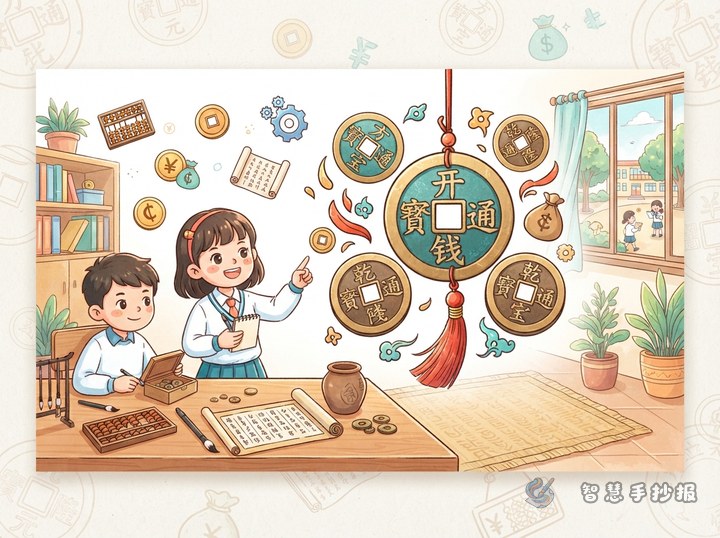
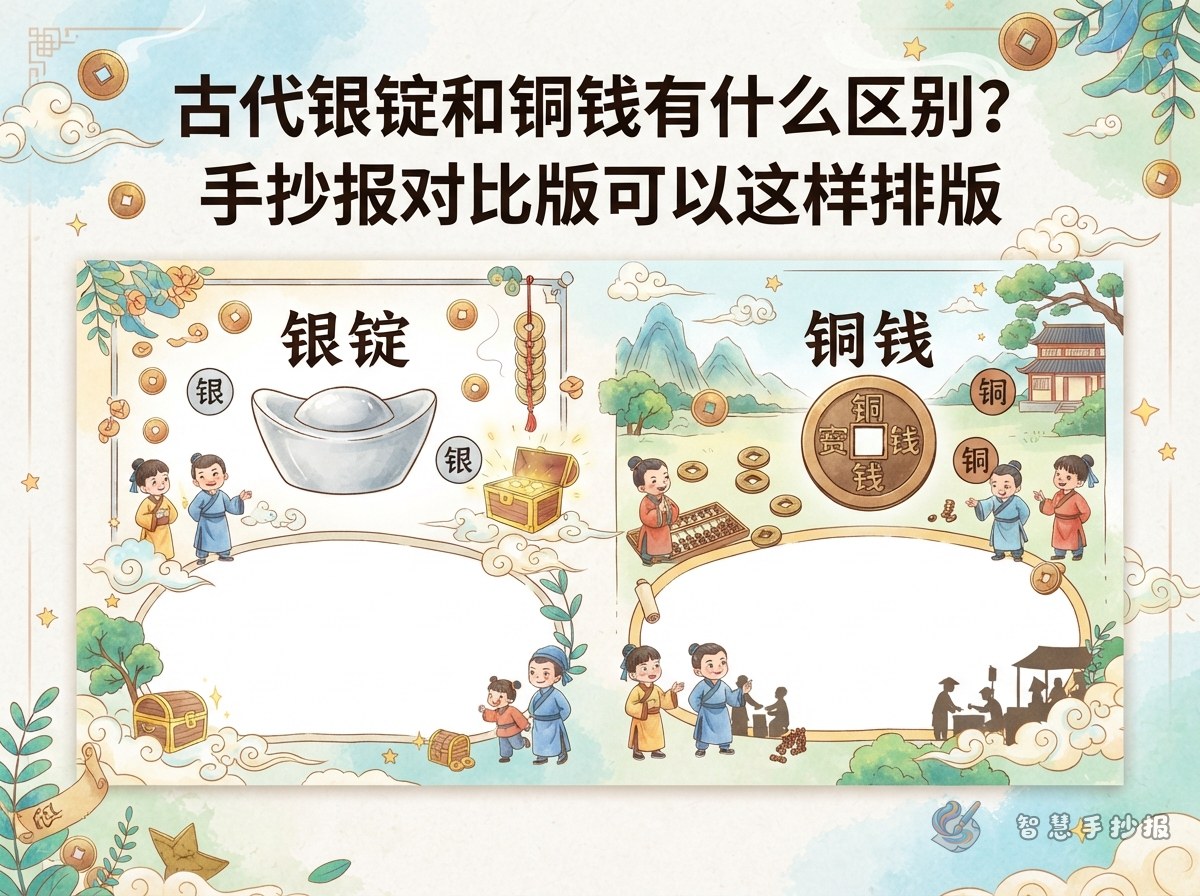
Ancient currency is a wide subject, and a page that tries to cover all of it quickly turns into a pile of facts. A smarter approach is to focus on just two items: copper coins and silver ingots. Set them against each other as "small everyday money" and "large valuable money," and the page almost designs itself as a left-right comparison.
Before drawing anything, write a one-line theme on scrap paper, such as "a coin buys vegetables, an ingot settles a big deal," then collect material that supports that line.
Two Content Cards: Coins and Ingots
What to put on the coin card
- Shape: round with a square hole, easy to string together and count by the string.
- Use: grain, cloth, snacks and other small daily purchases.
- Counting: usually counted in wen, with strings described as guan.
- Character: small, plentiful and close to ordinary daily life.
What to put on the ingot card
- Shape: varied by dynasty, including boat shapes and waisted forms, later the familiar yuanbao shape.
- Use: large transactions, tax payments, long-distance trade and storing wealth.
- Measuring: weighed in liang, qian and fen, with weight and purity checked during trade.
- Character: high value, so ordinary households rarely paid for firewood or rice with an ingot.
A quick reminder: these are general patterns, not facts to memorize. The point is for students to explain why the two kinds of money were used differently.
Building the Layout: Two Columns and a Bridge
Here is a layout that is easy to draw:
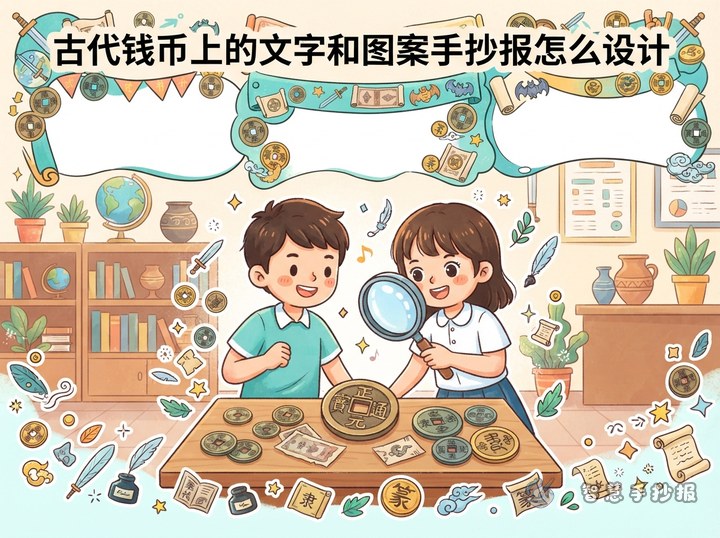
- Divide the paper into left and right halves. Use warm colors such as yellow and orange for the coin side, and cool colors such as blue and gray for the ingot side.
- Leave a vertical bridge column in the middle with a line like "both did the same job: making exchange easier."
- Draw a banner across the top for the title, with a string of coins on one side and an ingot on the other.
- Keep a small box at the bottom titled "What I noticed" for one or two personal thoughts.
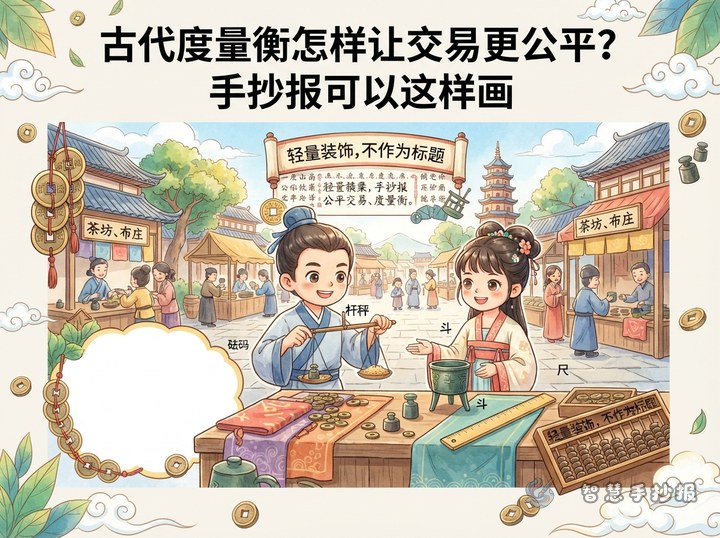
If space remains, add a small panel called "Count it, weigh it" with simple drawings of someone counting coins and someone weighing silver.
Short Lines You Can Copy Directly
- Coins for daily life, ingots for big business.
- One is counted, the other is weighed.
- Money is not only for buying things; it also records how trade was done.
- From coins to ingots, people separated "convenient" from "valuable."
Three or four lines are enough. Empty space makes the title and illustrations stand out far better than a page packed with writing.
Making Order and a Final Check
- Choose the theme line first, then decide the ratio of the two columns.
- Sketch light pencil guides and leave margins around text, pictures and the title.
- Write the body text in black ink before adding color, so the color does not cover the words.
- When finished, check that the title is clear, the two sides match, and there are no spelling mistakes.
To make the page look more polished, open the Smart Handwritten Newspaper WeChat mini program, pick a layout, drop in the text you have already written, adjust the positions, and then copy it neatly onto paper.