Turn the Topic into a Home Safety Action Map
This handwritten newspaper can focus on how to stay safe at home during typhoons and heavy rain. Instead of only writing slogans, students can include windows, balconies, electricity safety, drinking water, emergency supplies, and ways to ask for help.
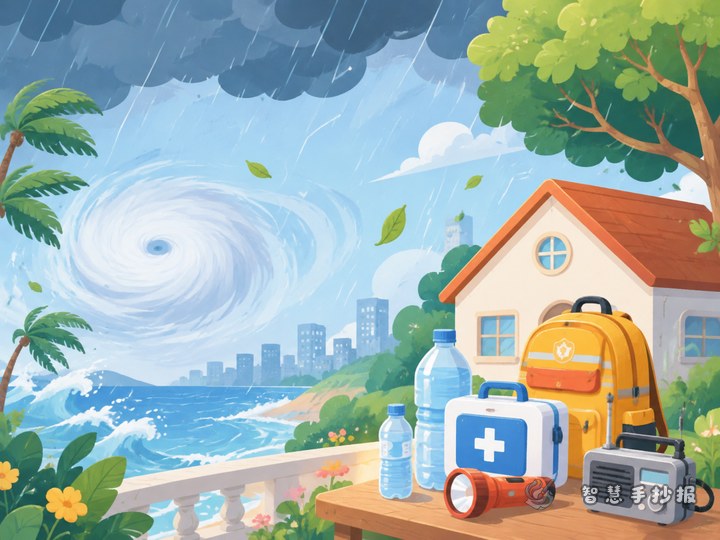
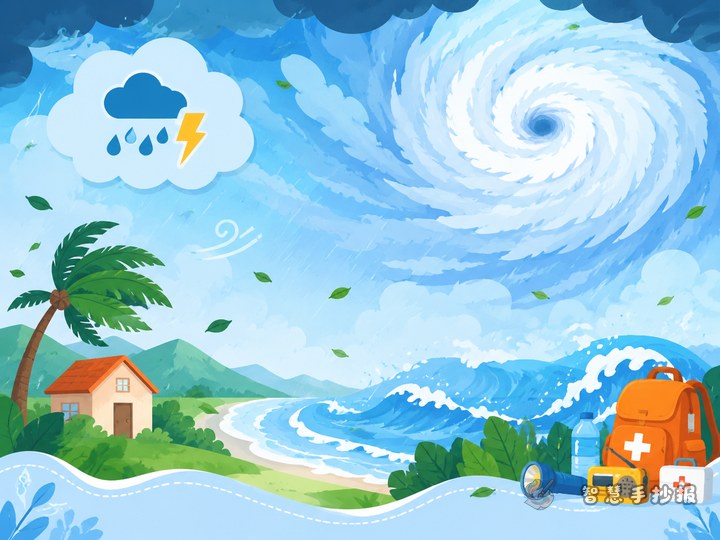
Possible titles include “Stay Safe at Home in Wind and Rain,” “My Family Storm Safety Checklist,” or “Do Not Panic When the Storm Comes.” For the main drawing, place a warm house in the center, with rain and wind outside and a family preparing supplies indoors. This makes the page both practical and friendly for children.
Short Safety Notes Students Can Use
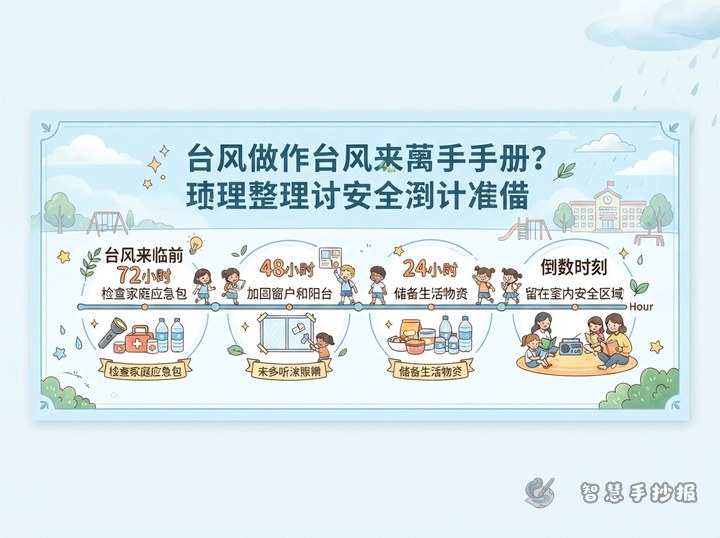
Before the Typhoon
- Close doors and windows, and move flowerpots, hangers, and loose balcony items indoors.
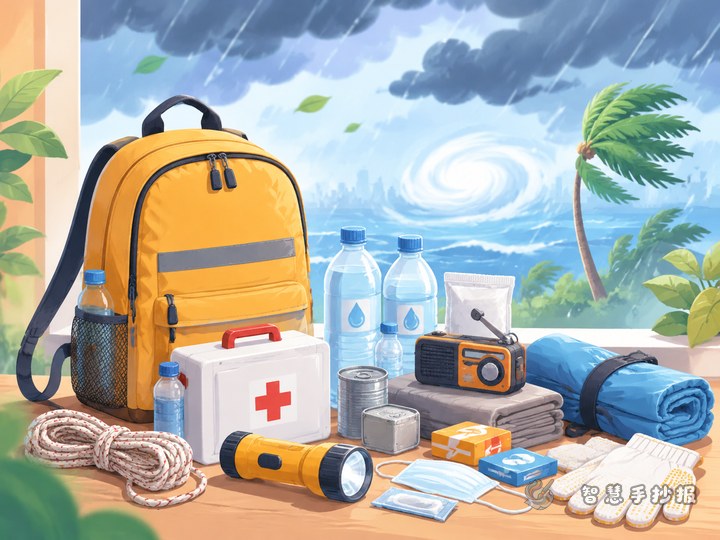
- Prepare a flashlight, drinking water, simple food, common medicine, and a fully charged phone.
- Pay attention to weather warnings and follow safety reminders from parents, teachers, and the community.
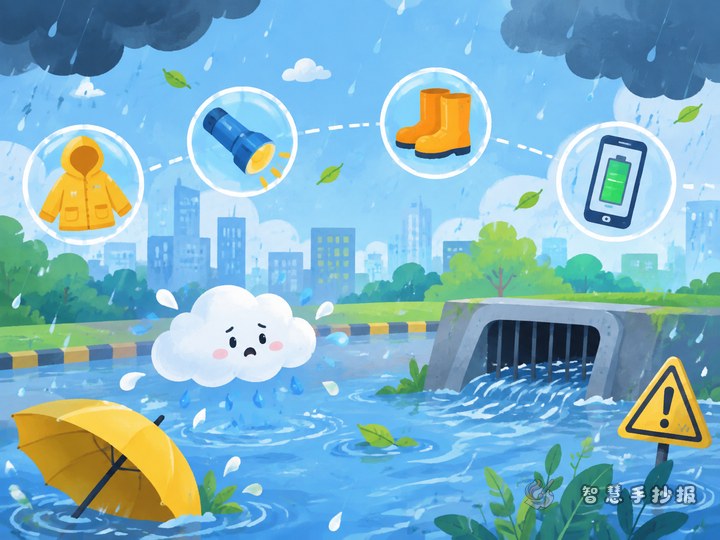
During Heavy Rain
- Do not stand beside windows to watch the storm. Stay away from glass doors, windows, and wet power sockets.
- Do not play in underground garages, low-lying areas, or places with deep water.
- If water enters the home, listen to adults and do not touch electrical appliances or power switches.
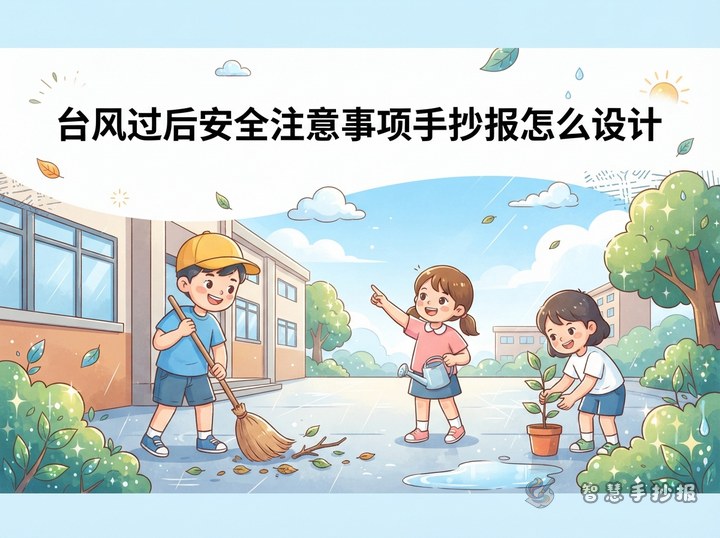
After the Storm
- Stay away from fallen trees, billboards, power poles, and flooded roads.
- Do not pick up unknown objects soaked by rainwater. Tell an adult if you see danger.
- Before going back to school or going outside, check whether roads and traffic are safe.
Useful Sections for the Page
- Warning Signs: Remind readers to check weather alerts and avoid unnecessary trips.
- Home Safety Corner: Write about windows, balconies, electricity, water, and indoor safety.
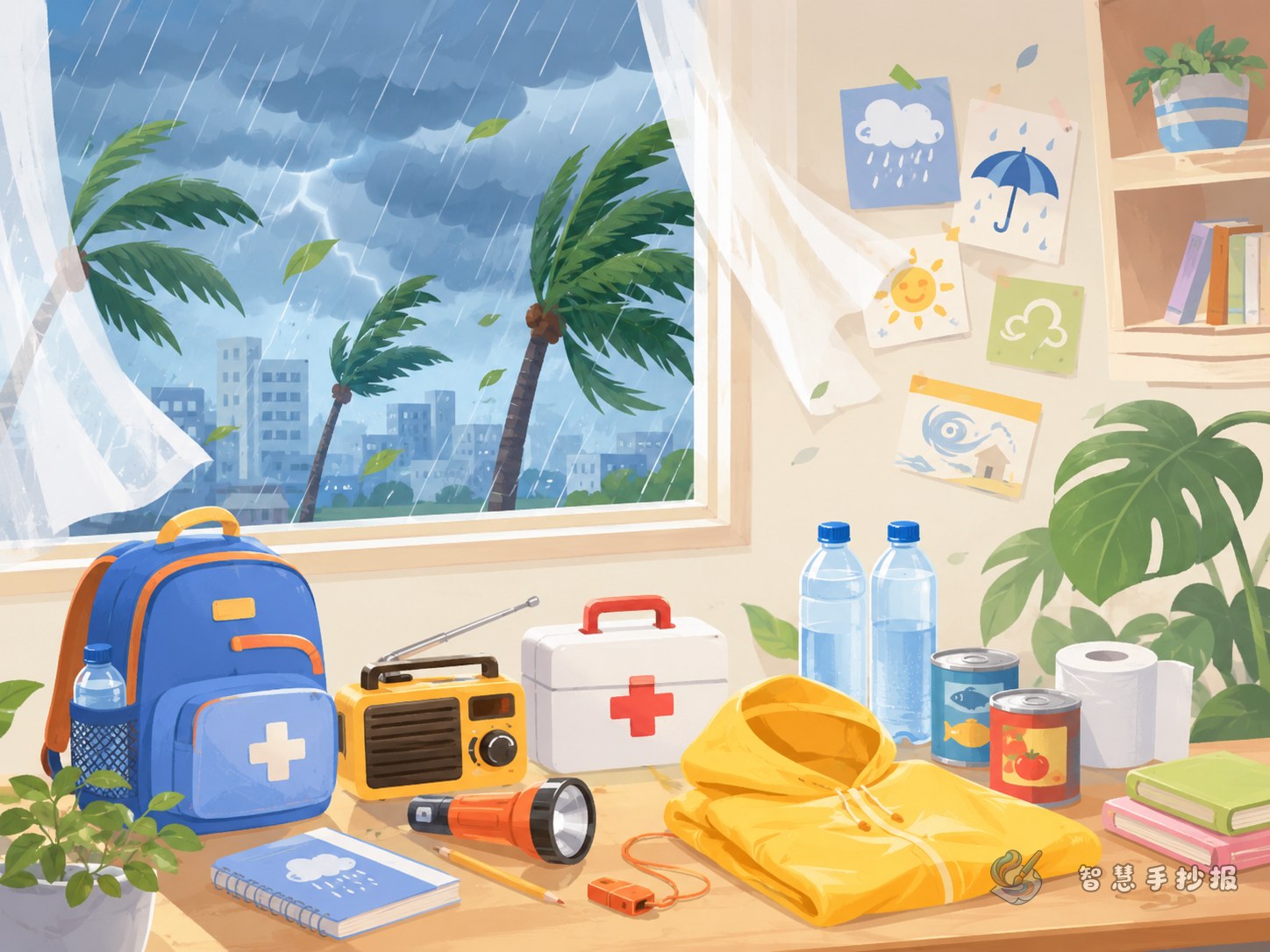
- Emergency Kit List: Draw icons of a flashlight, water, food, medicine, raincoat, and whistle.
- Places to Avoid: List riversides, tunnels, underground passages, billboards, and construction fences.
- I Know How to Ask for Help: Explain that children should ask parents, teachers, community workers, or emergency services for help when needed.
Create Both Stormy Feeling and Safety
A good layout idea is “storm on the left, safe home on the right.” Use blue-gray raindrops, clouds, and slanting lines on one side to show strong wind and rain. On the other side, use warm yellow light, a house, and an emergency kit to show safety and preparation. In the middle, add a large arrow with the message “Prepare Early, Stay Safe Wisely.”
Younger students can use more icons and fewer long sentences. Older students can add a family checklist and step-by-step safety rules. For colors, use blue and light gray for the weather, and orange or yellow to highlight important tips. This keeps the page bright instead of gloomy.
A Small Making Tip
Plan the title, main picture, and section boxes on draft paper before writing. This helps avoid a crowded page. Safety tips should be short, accurate, and easy to remember. For more layout ideas and matching borders, users can continue creating their handwritten newspaper in the 智慧手抄报 WeChat mini program.