Start with a familiar everyday question
“Why can we still hear sound through a door?” is a strong topic for a handwritten newspaper because children notice this in daily life. You can begin with a simple question: Why can someone outside the room still hear talking from inside? This makes the page feel curious and easy to read.
In the title area, you can use phrases like “Hearing Through a Door” or “How Does Sound Get Through?” to make the poster more engaging.
Core science points students can write
How sound is made
Sound is usually made when something vibrates. Our vocal cords vibrate when we speak, a door vibrates when we knock on it, and even clapping creates vibrations in the air. These vibrations spread outward and reach our ears.
Why sound can pass through a door
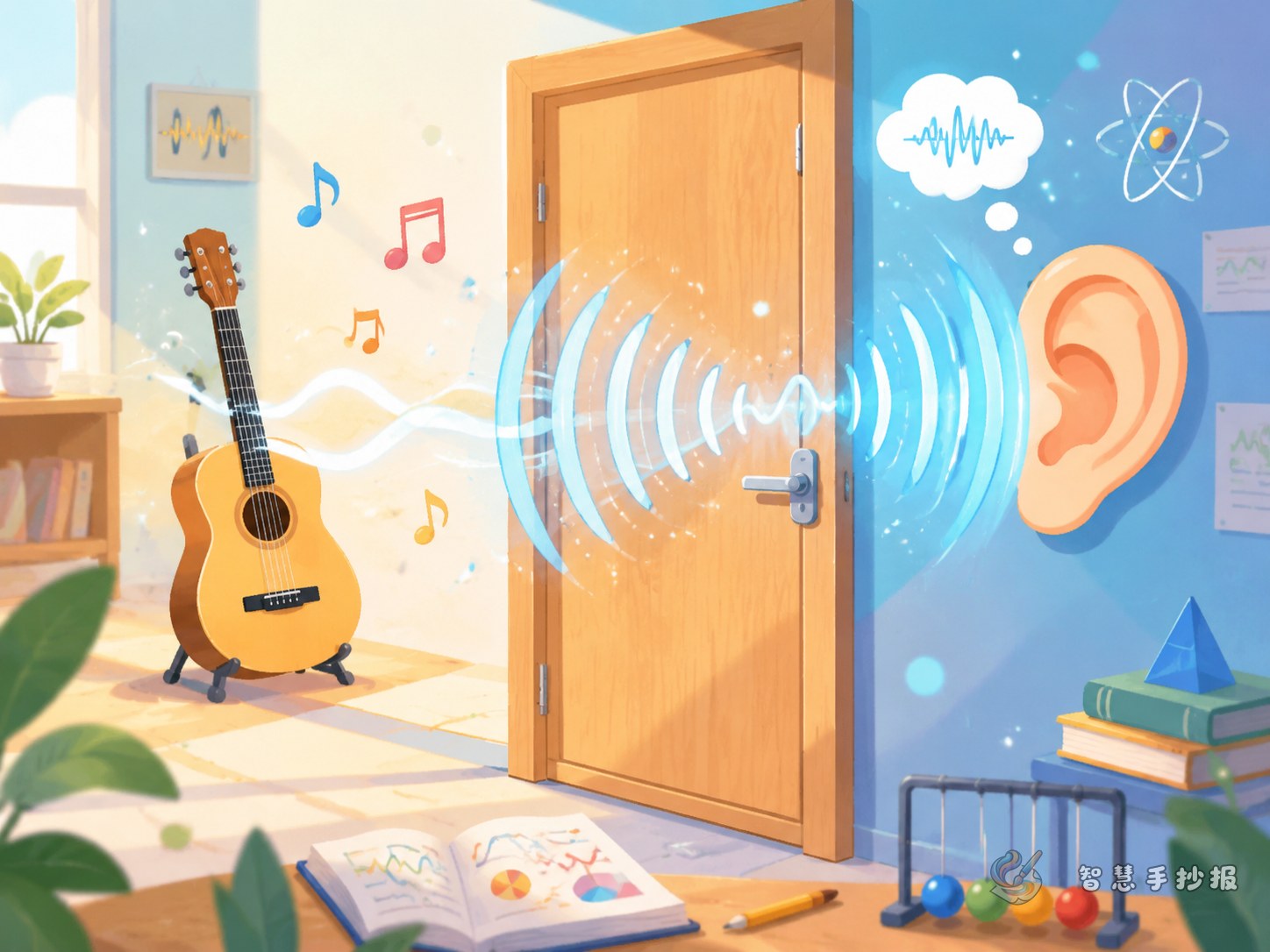
A door does not block all sound completely. Sound first travels through the air, then makes the door vibrate, and the vibrating door helps the sound continue to the air on the other side. The sound may become weaker or muffled, but it does not disappear entirely.
Solids can carry sound too
A useful sentence for the page is: Sound can travel through air, liquids, and solids. In many cases, solids can carry sound very clearly, which is why people sometimes hear better when they put an ear close to a desk, wall, or door.
Section ideas for the poster
- Phenomenon Corner: Hearing talking, knocking, or footsteps through a door.
- Science Explanation: Sound is made by vibration and spreads through air and solids.
- Everyday Examples: Hearing chair noises from another floor or hearing tapping better through a desk.
- One-Sentence Fact: A door reduces sound, but it does not stop all sound.
- Safety Reminder: Avoid shouting near doors and protect your hearing.
If there is more space, add a small section about the three media of sound: air, liquid, and solid.
Simple experiments that fit the page
Experiment 1: Knock and listen
- Ask one student to stand inside a room and knock lightly on the door or speak softly.
- Ask another student to stand outside and listen carefully.
- Write down how loud or soft the sound is.
A simple conclusion is: the door blocks some sound, but sound can still be heard, so sound can travel through the door.
Experiment 2: Sound through a desk
- Put your ear gently close to the desk surface.
- Ask a classmate to tap the desk at the other end.
- Then lift your ear away and compare the sound.
You can write that the tapping sounds clearer through the desk, showing that solids can transmit sound well.
How to arrange the layout
This topic works well with a door as the center of the design. You can draw a large door in the middle, put “Where sound starts” on one side and “How sound gets through” on the other, then place experiments and daily examples around it.
- Suggested colors: blue, light gray, and yellow for a clean science look.
- Decorations: sound waves, ears, doors, music notes, and speech bubbles.
- Writing tip: use short sentences instead of long paragraphs.
- Title tip: make the main title bold and add a small subtitle such as “A Small Discovery About Sound.”
If you want to organize the full page faster, you can continue making it in the Zhihui Shouchaobao WeChat mini program.
A ready-to-use ending paragraph
Sound cannot be seen, but it travels by vibration. We can still hear sound through a door because both air and the door itself can help carry the vibration. Many everyday experiences hide interesting science, and careful observation helps us discover how sound really works.