Begin with Three Number Facts
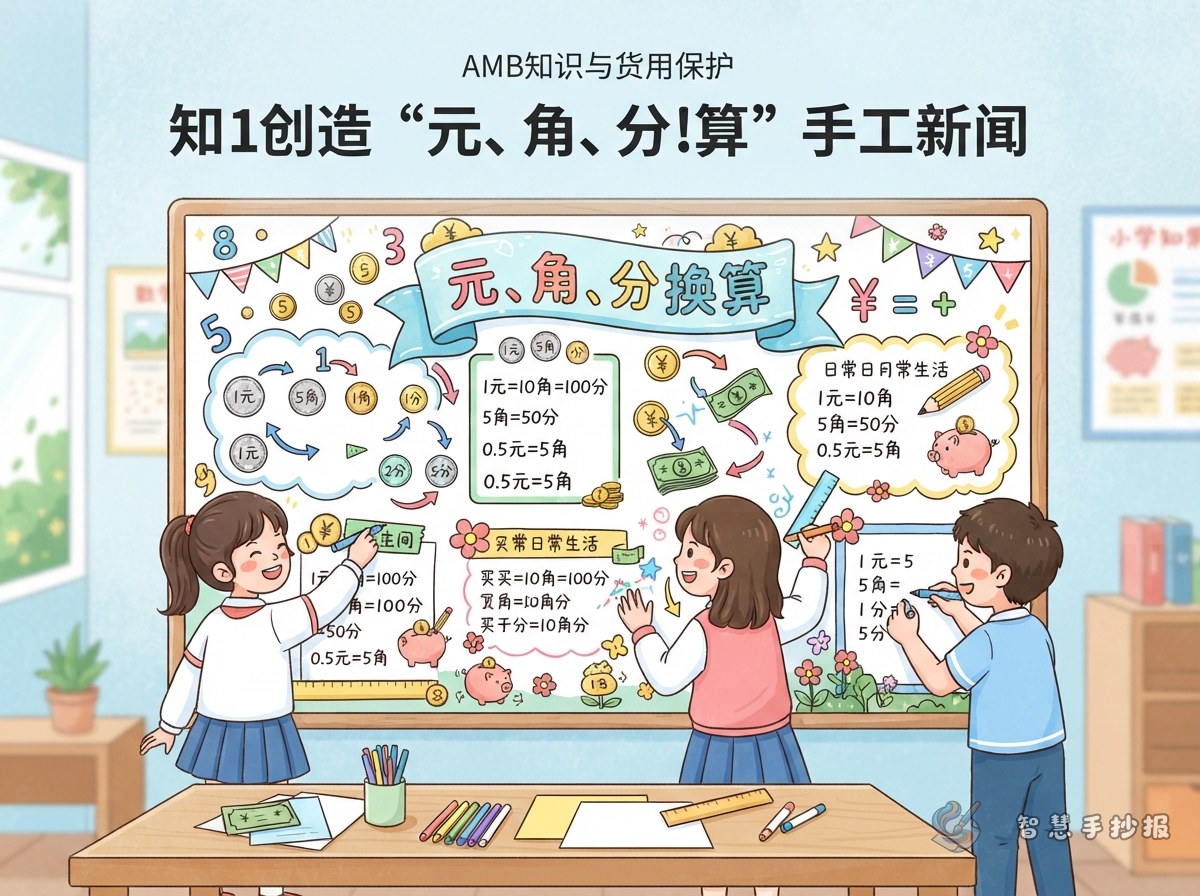
The main purpose of this handwritten poster is to explain how yuan, jiao, and fen are converted. Place these facts in a large box near the center:
- 1 yuan = 10 jiao
- 1 jiao = 10 fen
- 1 yuan = 100 fen
Add a short reminder that moving to a smaller unit makes the number larger. For younger students, whole-number examples are easier to follow than complicated decimal calculations.
Turn the Page into a Tiny Shop
Create a section called “My Little Shop” and add simple price tags. A pencil could cost 6 jiao, an eraser 1 yuan, and a notebook 2 yuan 5 jiao. Then include a few practical questions:
- If a pencil costs 6 jiao and you pay 1 yuan, how much change should you receive?
- How much do one eraser and one pencil cost altogether?
- How many jiao are equal to 2 yuan 5 jiao?
Put the answers in small boxes: 4 jiao, 1 yuan 6 jiao, and 25 jiao. Three to five questions are enough to make the poster interactive without overcrowding it.
Build a Conversion Challenge Trail
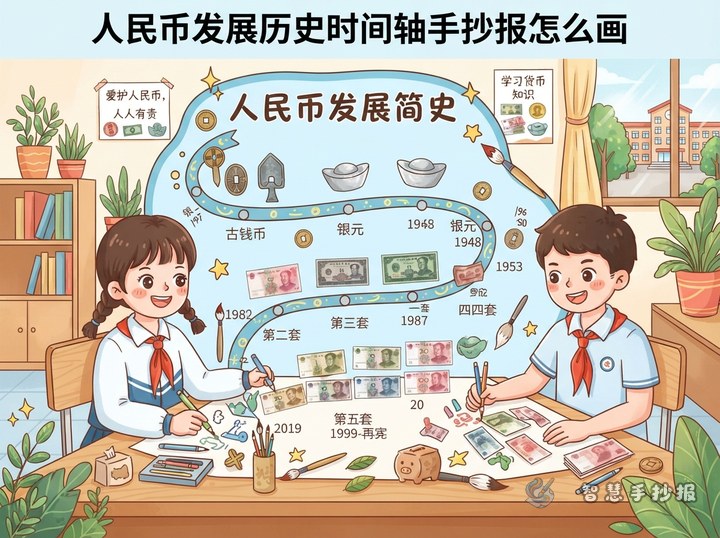
Draw a curved trail across one part of the page and place three checkpoints along it. The first can ask students to complete a unit, the second can compare two amounts, and the third can present a change-making problem.
Use a different color for each checkpoint and place the answers at the finish line. This game-like arrangement gives the reader a clear path through the math activities.
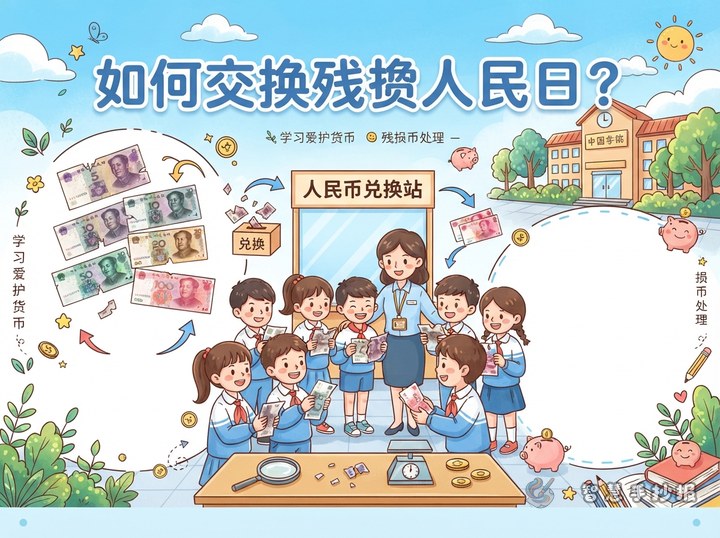
Add a Corner for Currency Care
A small section can connect math knowledge with responsible habits. Suggested reminders include:
- Do not write, draw, or stamp on banknotes.
- Do not tear, cut, or unnecessarily crumple money.
- Keep cash neat in a wallet instead of using it as a toy.
- Plan purchases and use pocket money responsibly.
Keep this section concise so the conversion theme remains the visual focus of the poster.
Arrange the Layout with Price-Tag Shapes
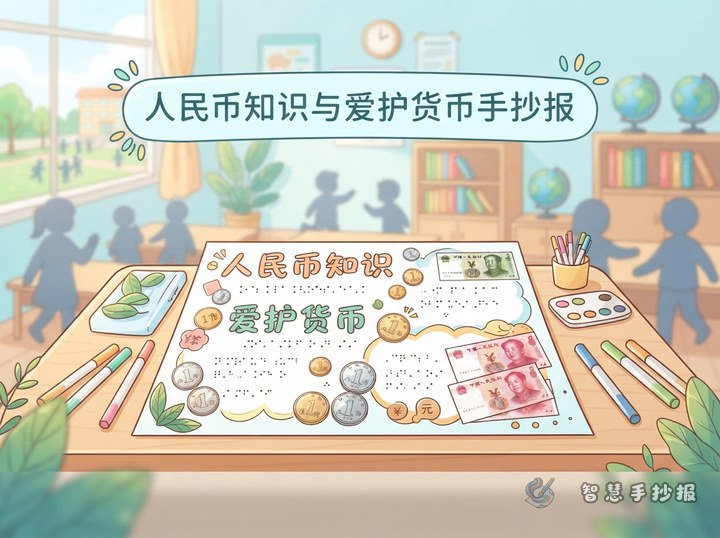
Place the title across the top and outline it in red, orange, or gold. Put the conversion facts in the center, the shop and challenge trail on opposite sides, and the currency-care notes along the bottom. Wallets, piggy banks, shopping baskets, number cards, and simplified coin outlines work well as decorations.
Sketch the sections lightly in pencil before writing the text, then add borders and color. To explore more section combinations and page layouts, continue creating in the Smart Handwritten Poster WeChat Mini Program.