Turn the topic into a journey of sound
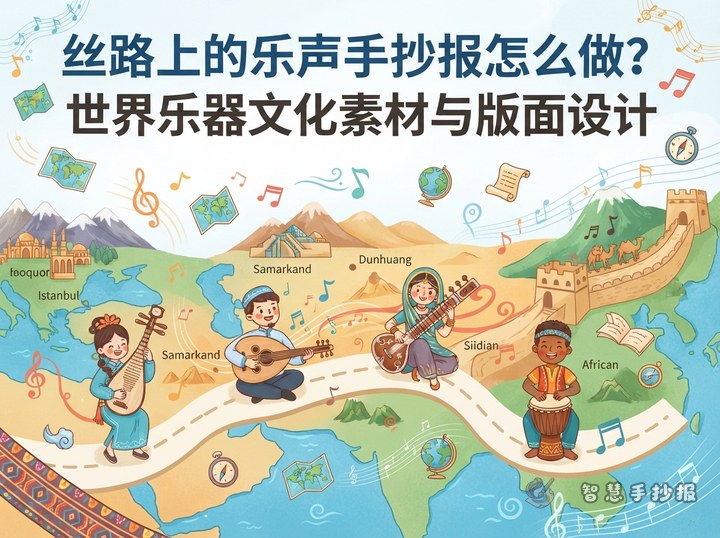
A world-instruments handwritten newspaper does not need to be a crowded list of names. Build it around one question: where does a sound come from, and how does it reach our ears? Treat the page as a sound map. Put the main title in the center, then draw three paths leading to string sounds, wind sounds, and percussion rhythms.
Suggested opening text: “People around the world create music with strings, moving air, and beats. Instruments can make sounds, but they also reflect daily life, celebrations, and ways of enjoying music.” This short introduction gives the page a clear focus.
Three sound paths and the facts to place on them
Echoes of strings: show the vibration
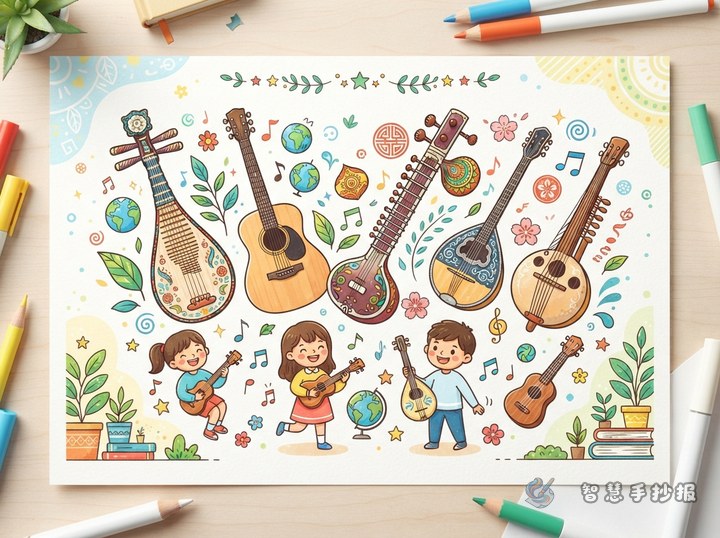
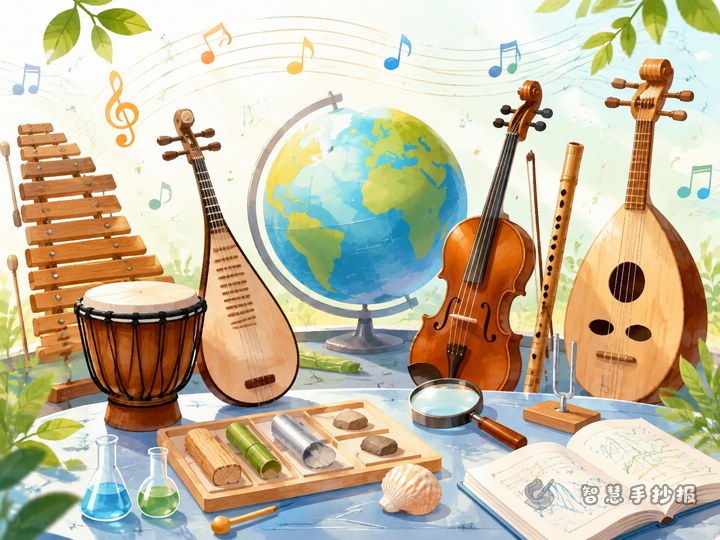
Use a violin, guitar, or erhu as simple examples. You can write: “String instruments mainly produce sound through vibrating strings. Players may use a bow, fingers, or a pick to change the sound. The shape of the instrument also affects its tone.” Draw the strings, the body, and the playing action, then add words such as “clear,” “singing,” or “deep.”
Songs of air: draw the flow inside a wind instrument
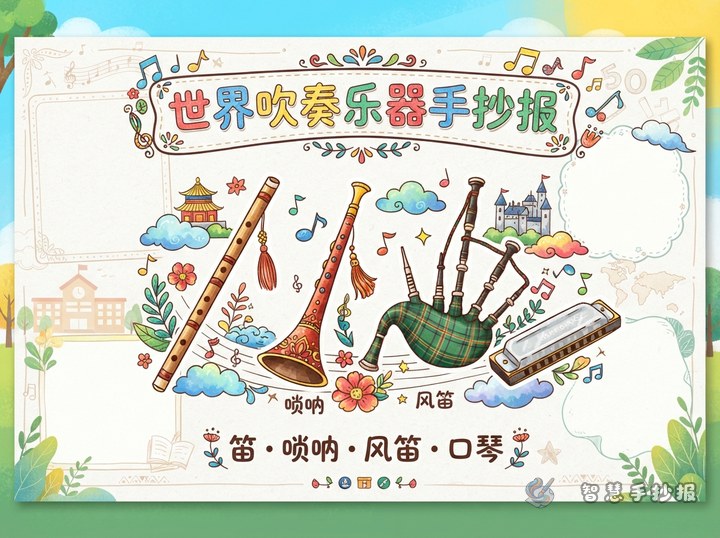
Choose a flute, trumpet, or panpipe. A short text could say: “Wind instruments use moving air to create sound inside a tube. Players control pitch and volume by blowing, using keys, or changing the strength of their lips.” Add curved air lines beside the drawing, along with words such as “whoosh,” “bright,” or “gentle” to make the picture feel active.
Beats from a strike: give the page a rhythm
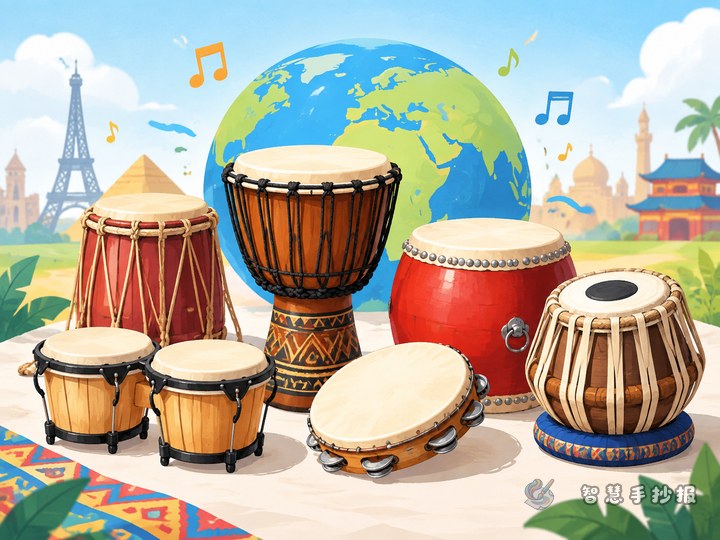
Good examples include a drum, tambourine, gong, or xylophone. Write: “Percussion instruments often make sound when they are struck, shaken, or rubbed. They help music keep its rhythm.” Show drumbeats as circles of different sizes and add small sound words such as “boom,” “tap,” or “ding.” Keep these words decorative while making the main explanation easy to read.
Add culture cards instead of leaving only instrument names
Place one “instrument culture card” beside each sound path. Each card can contain four items: the instrument name, how it produces sound, the playing action, and the feeling of its tone. If you find a reliable connection between an instrument and a region or celebration, include one short, checked fact. When the source is uncertain, do not attach an instrument to only one country based on guesswork.
- Sample card: Violin — played with a bow — the arm moves back and forth — a bright, singing tone.
- Comparison sentence: Strings are like lines that vibrate, wind instruments are like singing air, and percussion moves music forward with rhythm.
- Closing sentence: “When different sounds meet, world music becomes a bridge we can hear.”
Draw the sound map with a circular layout
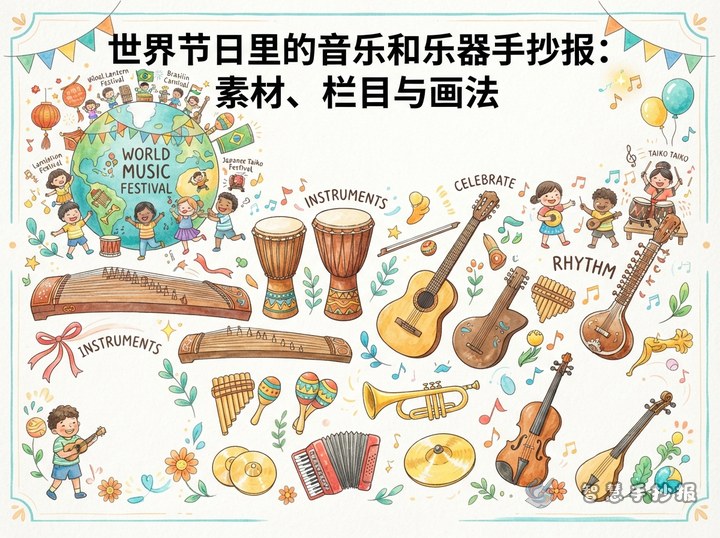
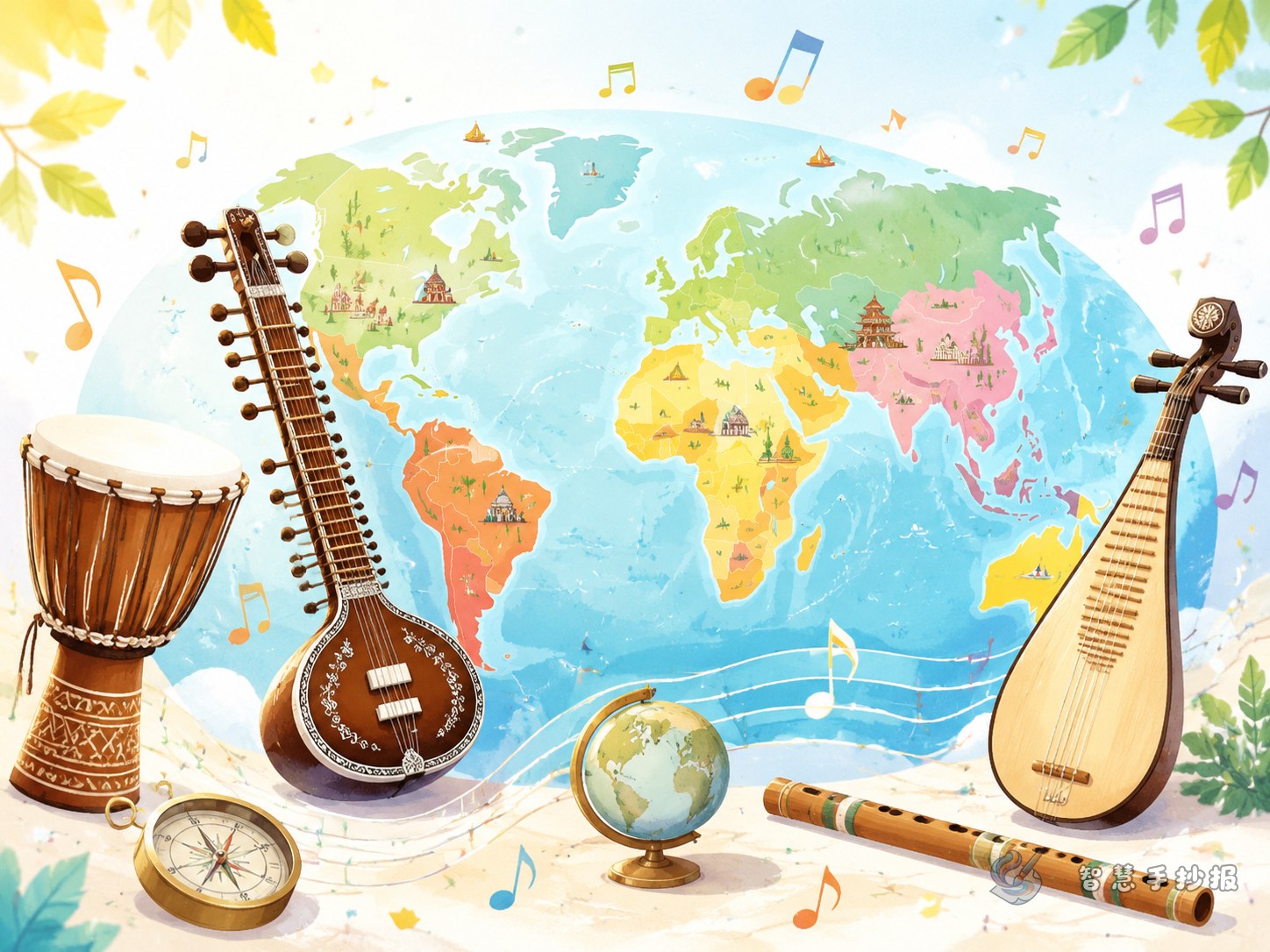
A circular or radial design works well for this topic. First, draw an ear, a music note, or a small globe in the center and write “World Instruments: A Sound Map.” Next, draw three colored sound waves from the center toward the string, wind, and percussion sections. Then place two or three small instrument drawings in each section. Finally, add the culture cards along the sound paths so words and pictures alternate naturally.
Blue can represent air and wind instruments, orange can show vibrating strings, and red or yellow can suggest drumbeats. Try to keep the whole page to three or four main colors. Use a thick marker for the title and a neat, smaller pen for the body text. A faint world-map outline can be used as a background, but it should not compete with the instruments and explanations.
A final check for a clear music-themed page
- Use a pencil to plan the title, three paths, and text boxes before coloring.
- Keep each explanation to two or three sentences, and turn longer facts into small cards.
- Check the spelling of instrument names and the accuracy of any cultural information.
- Leave a margin and make sure every section contains a picture, a short explanation, and a sound word.
After sketching, you can continue in the 智慧手抄报 WeChat Mini Program to arrange the sections, adjust the colors, and finish the page more easily for a classroom display.