Start with One Story Line: Why They Kept Reading
The biggest problem with a handwritten newspaper is filling the page without a clear focus. For a diligence theme, decide on one sentence first, for example: 'Even in hard conditions, they never put their books down.' Every column then supports that sentence. The story cards show how hard it was, the quote column shows why they kept going, and the bottom section shows what you learned.
With this story line in mind, the layout falls into place and children know what to write next.
Five Story Cards You Can Copy Directly
Write each card in three lines: the person, what happened, and one lesson. These examples can be copied or rewritten in your own words:
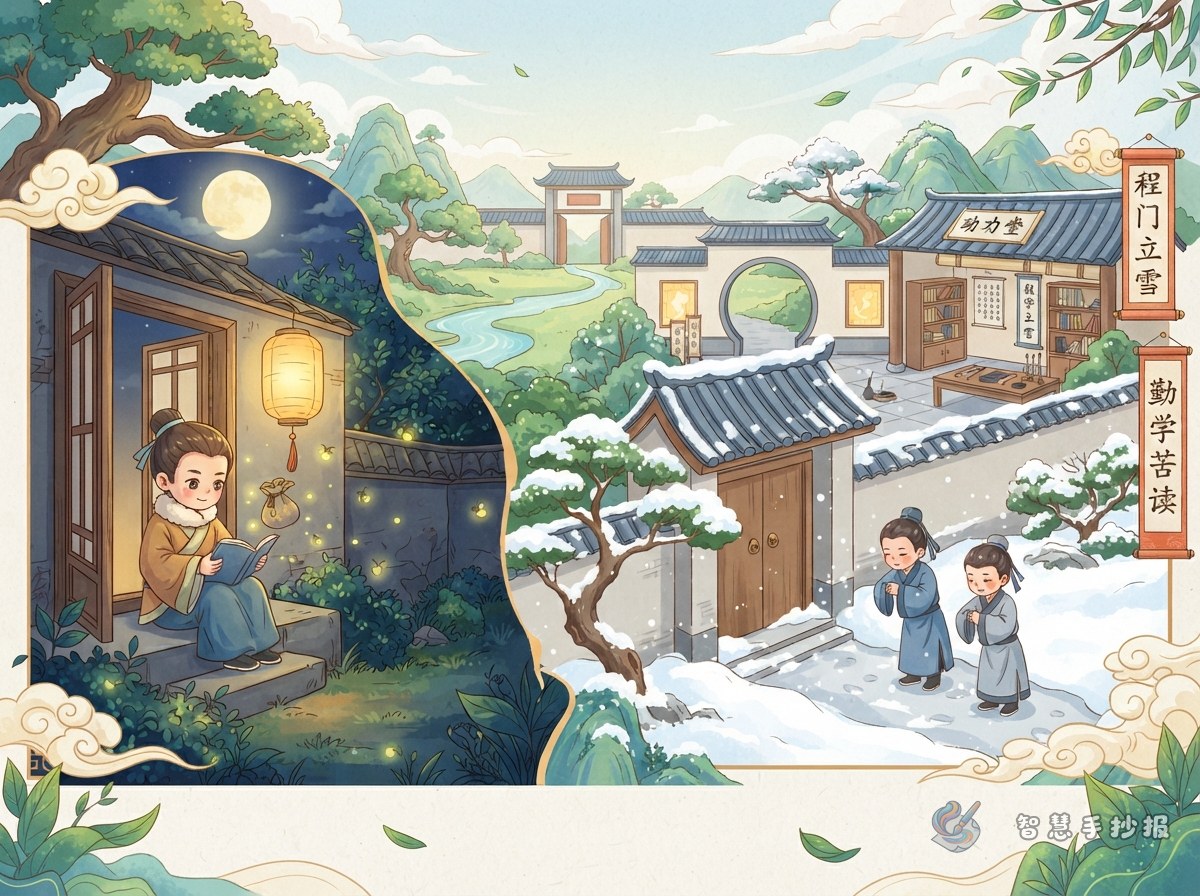
- Reading by Fireflies and Snow — One student kept fireflies in a cloth bag for light; another read by the glow of snow. Lesson: even a small light is enough if you are willing to use it.
- A Hole in the Wall for Light — A boy made a small hole in the wall so he could read by his neighbor's lamp. Lesson: when conditions are poor, find your own way forward.
- Tied Hair and a Sharp Awl — Two scholars used extreme methods to stay awake while studying. Lesson: persistence is not about never feeling tired, but about sitting down again after you are tired.
- Standing in the Snow at the Door — A student waited quietly in heavy snow to ask his teacher a question. Lesson: respect knowledge, and respect the person who teaches it.
- A Book on an Ox Horn — A young man hung a book on his ox horn and read while travelling. Lesson: reading can happen anywhere, and small bits of time are worth keeping.
You do not need all five. Choose three or four that fit your grade level.
Page Layout: Make the Paper Feel Like an Old Academy
Here is a layout that is hard to get wrong:
- Use the top quarter for the main title and one smaller subtitle, with a scroll or roof shape on each side.
- Use the left two thirds of the middle for three or four story cards, each in a square bamboo-slip or book-page frame.
- Use the right third for a 'Words from the Academy' column with two or three short quotes about reading.
- Leave a strip at the bottom for 'My Small Study Goal', such as reading for twenty minutes a day.
Keep the frames simple. One clean line plus a tiny corner pattern is enough — empty space makes the page feel more like a scholar's studio.
Short Lines for the Quote Column
- Read ten thousand books, and your pen will flow like a spirit.
- Diligence is the path up the mountain of books.
- If you do not study while young, you will regret it when your hair turns white.
- Study widely, ask carefully, think clearly, judge wisely, and act sincerely.
Write the quotes in a slightly smaller size than the story cards. The contrast makes the whole page easier to look at.
Color and Writing Tips
- Use cream, light brown and pale blue-green as the base colors, like old paper and bamboo slips.
- Use dark brown or ink green for titles and black or dark gray for body text. Keep the whole page to three colors.
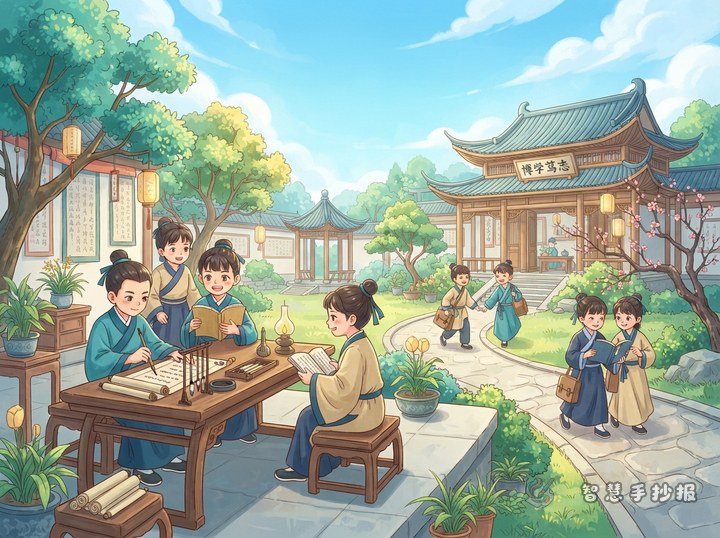
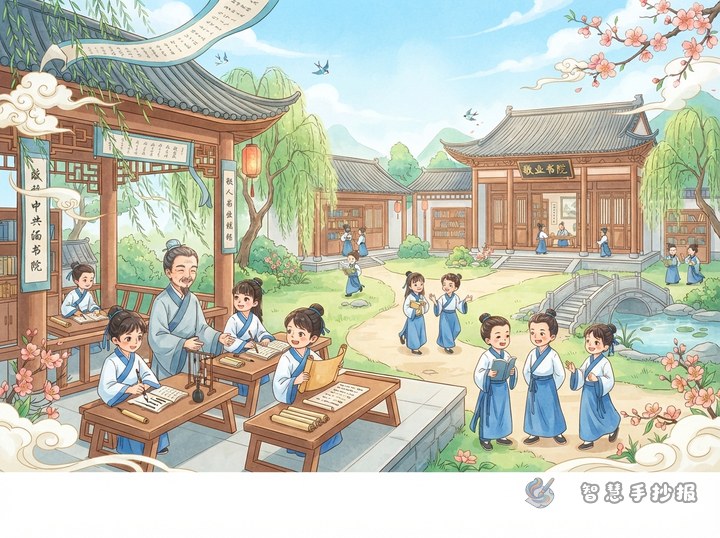
- Choose bamboo slips, window lattice, lanterns, brushes and scrolls as decorations. Too many cartoon figures can pull attention away from the theme.
- Draw pencil guide lines first, write the body text next, and add borders and patterns last. This order saves a lot of redoing.
When the main content is ready, you can browse more layouts in the WeChat mini program 'ZhiHui ShouChaoBao' and fill your finished story cards into a new template.