Turn the Rock Cycle into a Travel Story
A hand-copied poster about the three main rock types does not have to be a list of definitions. You can describe igneous, sedimentary, and metamorphic rocks as three travelers. They may begin in hot magma, rivers and seas, or deep underground, then change through cooling, layering, pressure, heat, and melting.
Good title ideas include “Rocks Can Change”, “The Amazing Journey of Three Rock Types”, or “From Magma to Stone”. Put the title at the top or inside a large cloud-shaped title box.
Write the Three Rock Characters Clearly
Igneous Rock: Born from Hot Magma
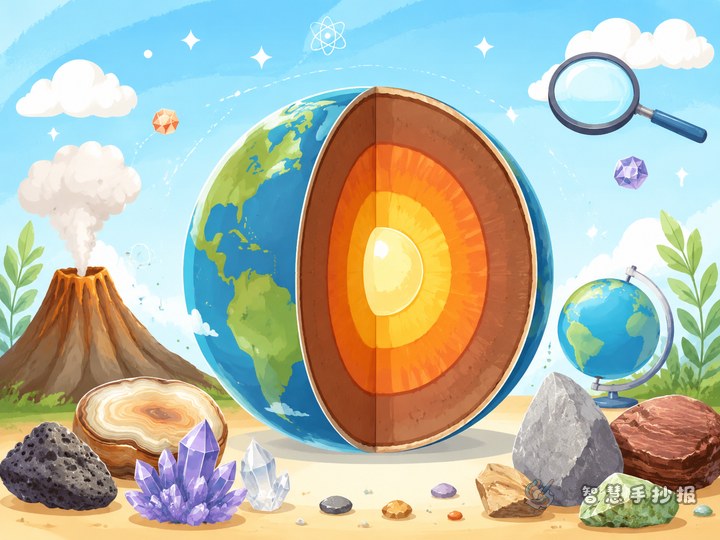
Igneous rock forms when magma or lava cools and becomes solid. Some magma cools slowly underground, while lava on the surface cools more quickly. Simple examples for a poster include granite and basalt.
Sedimentary Rock: Layers That Record Time
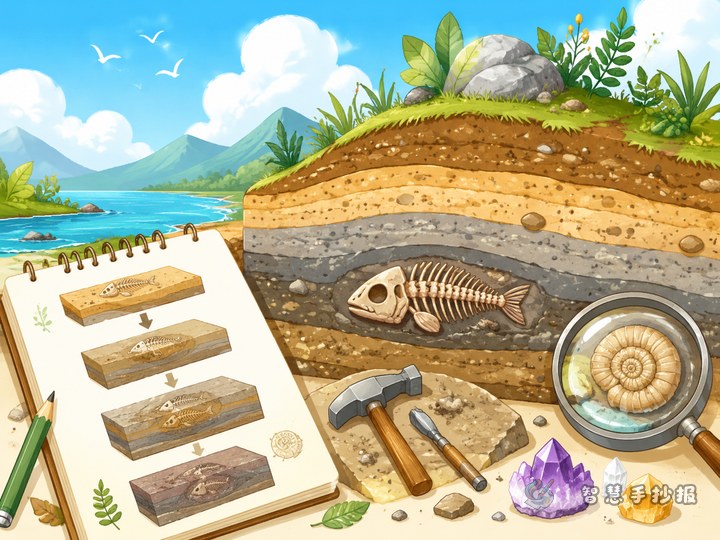
Sedimentary rock often forms from sand, mud, small rock pieces, or remains of living things. These materials settle, press together, and become rock. It can look like a diary of Earth because it is often arranged in layers.
Metamorphic Rock: Changed by Heat and Pressure
Metamorphic rock forms when an older rock changes under heat and pressure. It does not simply melt; its texture and structure change. Marble and gneiss are easy examples to write on a student poster.
How to Draw a Simple Rock Cycle Diagram
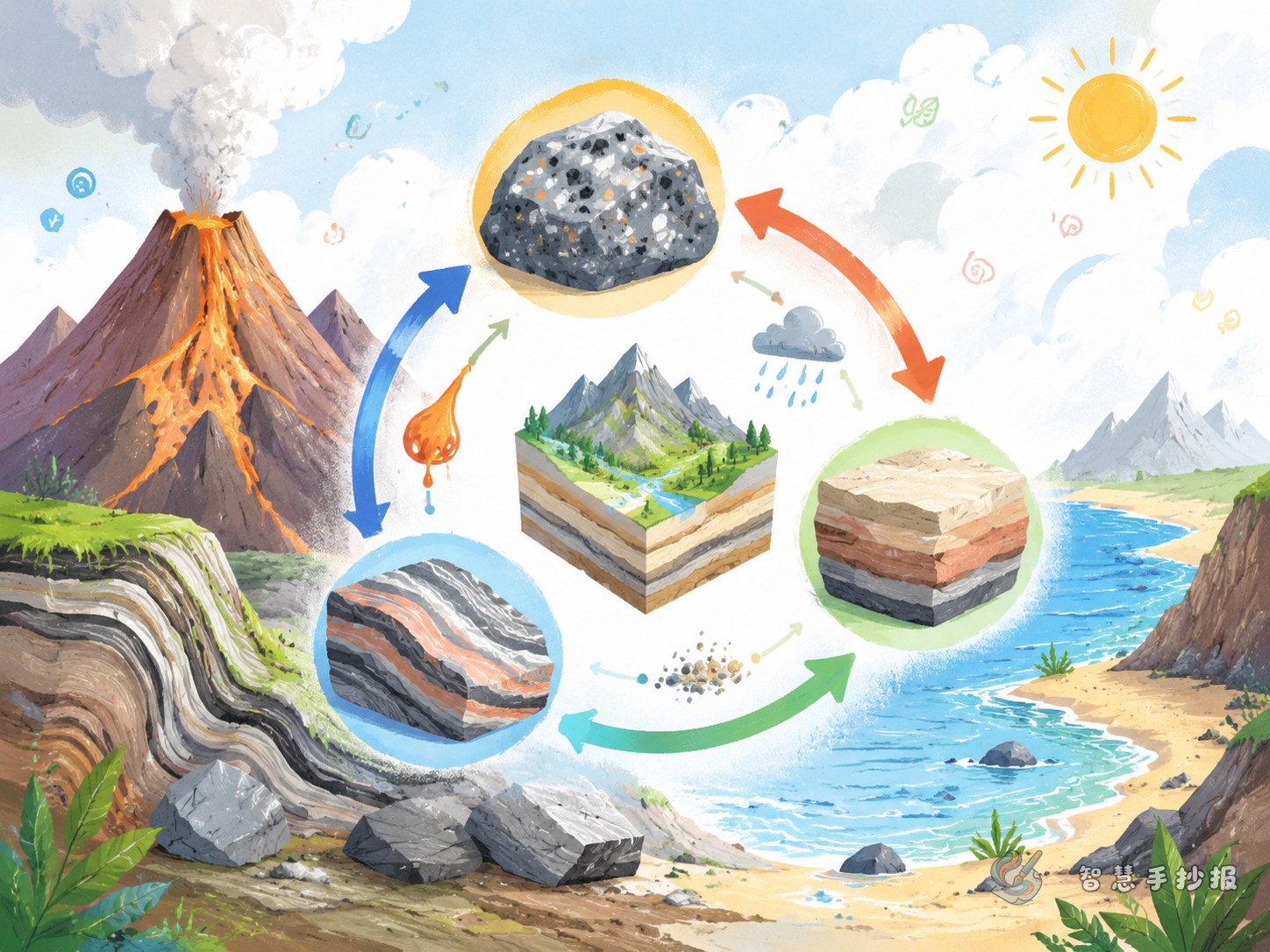
The most eye-catching part of the poster can be a circular rock cycle diagram. Write “Rock Cycle” in the center, then use arrows to connect the main processes: magma cools into igneous rock; weathering, transport, and deposition help form sedimentary rock; heat and pressure create metamorphic rock; melting may turn rock back into magma.
- Use red and orange for magma and volcanoes.
- Use blue arrows to show rivers carrying sediment.
- Use brown layered lines for sedimentary rock.
- Use dark gray or purple arrows to show underground pressure.
The diagram should be clear rather than complicated. For elementary students, the key message is that rocks can slowly change under different conditions.
Short Text Materials You Can Copy
- Rocks are not always the same; they can slowly change as Earth changes.
- Igneous rocks come from cooled magma or lava.
- Sedimentary rocks are often arranged in layers, like pages in Earth’s diary.
- Metamorphic rocks change under heat and pressure deep underground.
- The rock cycle shows that Earth’s surface and interior are always active.
If the page is small, turn these sentences into “geology cards.” Each card can have a tiny icon, such as a volcano, sand grains, pressure arrows, or a magnifying glass.
Layout Ideas for a Clear Poster
A good layout is “cycle diagram in the middle, knowledge boxes around it.” Put the large rock cycle in the center. Place igneous rock in the upper left, sedimentary rock in the upper right, metamorphic rock in the lower left, and observation tips in the lower right.
Do not use only gray. Try red-orange, light blue, earth yellow, and dark green. Highlight important words such as cooling, deposition, heat and pressure, and cycle. If you want to organize the title, sections, and layout more quickly, you can continue making your poster in the Zhihui Handwritten Newspaper WeChat mini program.