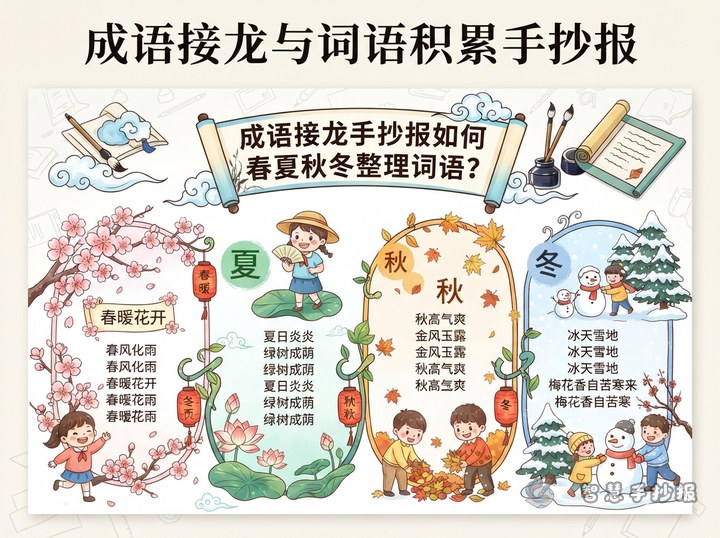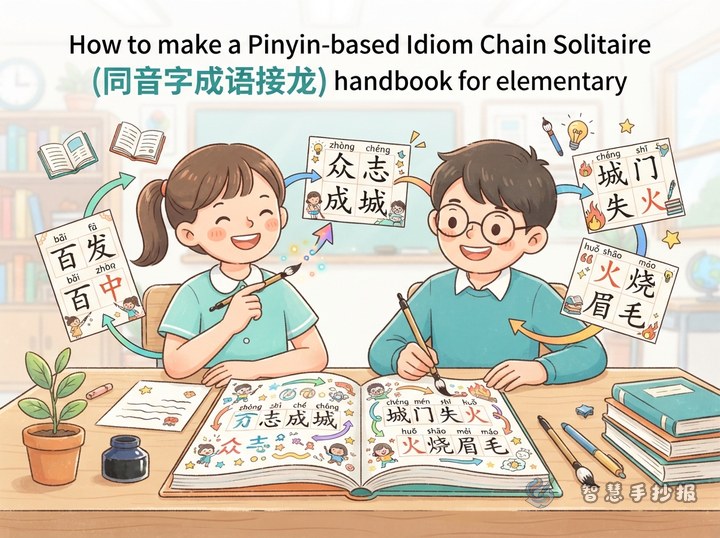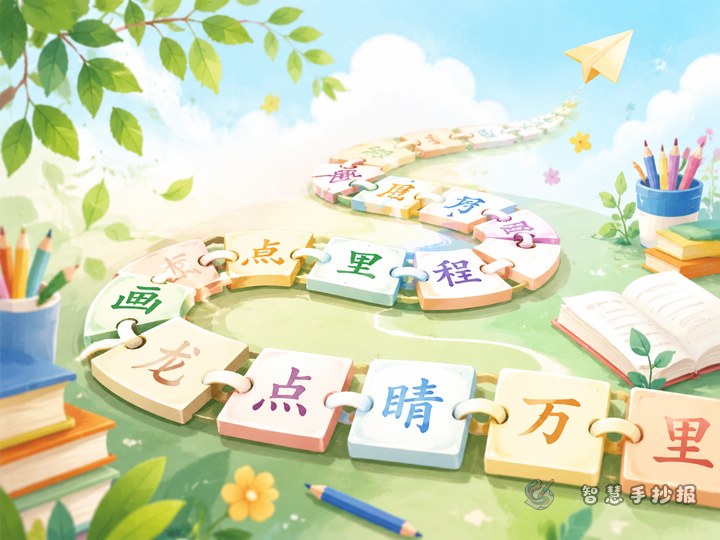
Turn the idiom chain into a challenge map
This handwritten newspaper can be designed like a small word adventure. Instead of listing idioms in plain rows, draw a path from the starting point to the finish line. Each stop on the path shows one idiom, and the next idiom begins with the last character or sound of the previous one.
For example, you may build a simple chain with positive and familiar idioms. The path can be decorated with flags, footprints, books, stars, and small checkpoints so readers feel they are following a language game.
Useful content to include on the page
Choose common idioms that primary school students can understand. Do not use too many difficult expressions. You can prepare several small groups:
- Study and growth: idioms about hard work, reading, progress, and confidence.
- Good character: idioms about kindness, honesty, teamwork, and helping others.
- Challenge words: a few more difficult idioms for students who want to continue the chain.
If the chain gets stuck, add a “word bank” box beside the route. This makes the page richer and also shows the process of vocabulary building.
Make the sections feel like game levels
The columns can be named in a lively way so the newspaper feels more interactive:
- Level 1: Start the chain — write a complete idiom chain.
- Level 2: Meaning station — explain three to five idioms in short sentences.
- Level 3: Sentence challenge — use two idioms in simple school-life sentences.
- Final level: Your turn — leave a blank space for classmates to continue the chain.
This structure combines learning and participation, making it suitable for classroom display and Chinese language practice.
Layout idea: a central route with word cards around it
Place the title at the top and draw a winding route in the center. Write one idiom at each checkpoint. Put meaning cards on the left, sentence examples on the right, and an interactive “continue the chain” area at the bottom.
Use bright colors such as blue, orange, and green to separate different levels. Keep the writing neat and clear. Younger students can use fewer idioms, while older students can add meanings, example sentences, synonyms, or antonyms.
Small tips before making the final version
Plan the idiom order on scrap paper first, then copy it onto the final sheet. Keep explanations short and make example sentences close to daily school life, such as reading, sports, helping classmates, or classroom activities.
If you want more title ideas, section names, and layout inspiration, you can open the 智慧手抄报 WeChat mini program and continue making a handwritten newspaper on idiom chains and vocabulary building.