Turn the Theme into the Journey of a Silk Thread
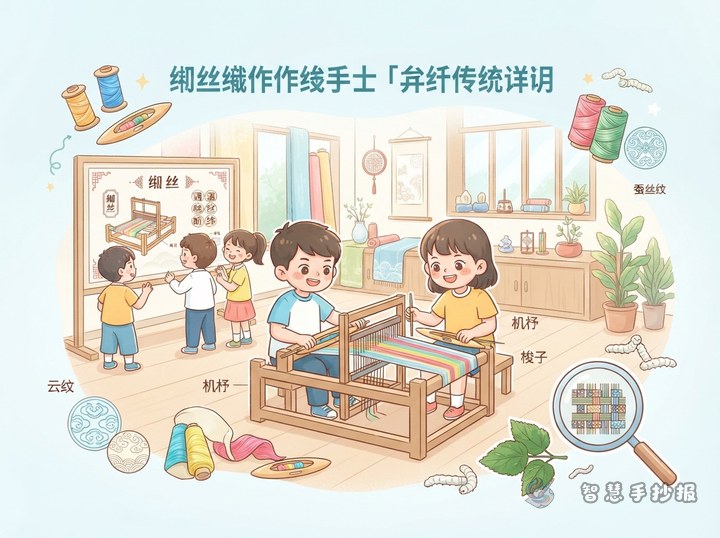
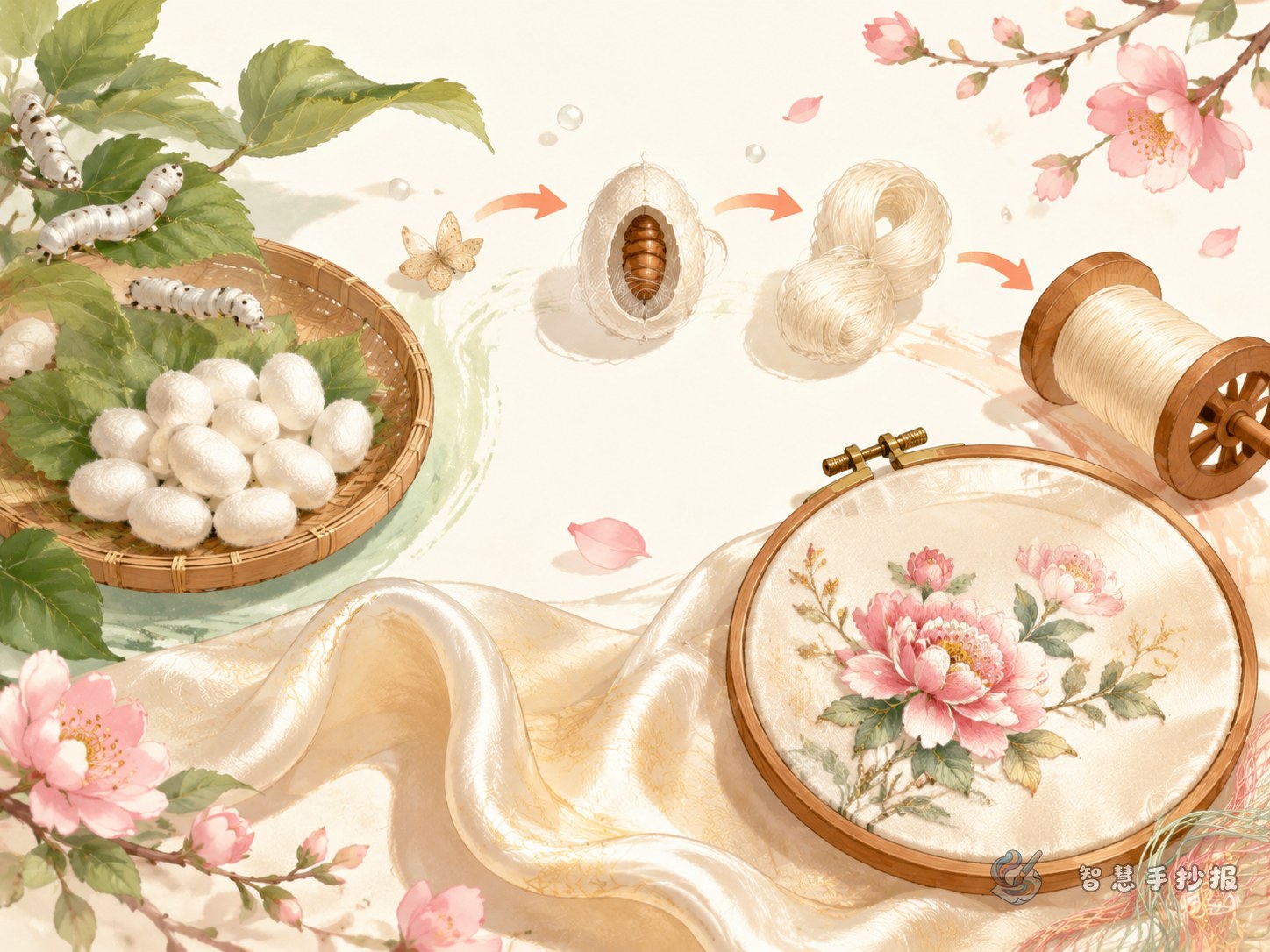
A silk weaving and embroidery poster does not have to be a plain knowledge page. You can design it as the journey of one silk thread: from cocoon to silk fabric, from dyeing to embroidery. This makes the topic easier for children to understand and more interesting to present.
- Opening section: Write “It all begins with a cocoon” and introduce silk as soft, bright, and suitable for weaving.
- Craft section: Explain weaving, dyeing, and embroidery in simple sentences.
- Heritage section: Show how craft workers protect beauty and culture through patient handwork.
Short Texts You Can Put on the Poster
Why Silk Is Special
Silk comes from silkworm cocoons. It is light, smooth, and gently shiny. People weave silk into fabric and use embroidery to add flowers, birds, landscapes, and lucky patterns.
Meanings Hidden in Embroidery Patterns
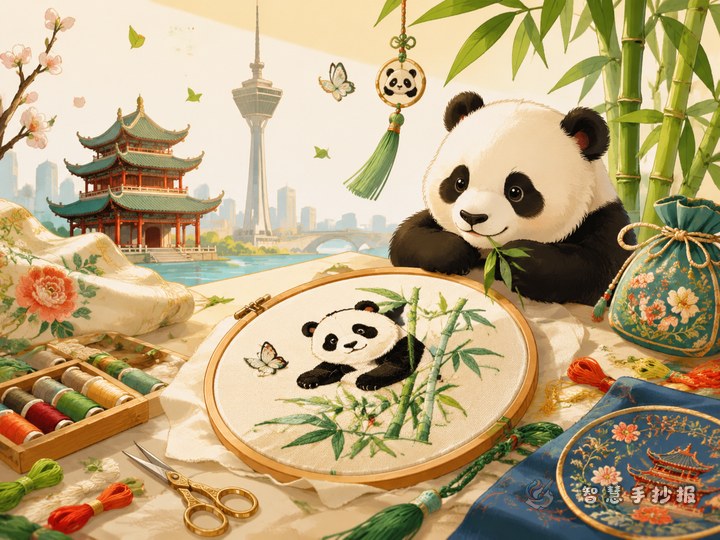
Many embroidery patterns carry good wishes. Peonies stand for richness and beauty, lotus flowers suggest purity, butterflies bring a sense of joy, and bamboo represents strength. Choose one or two patterns and add a short explanation.
What I Learn from Traditional Crafts
Traditional handicrafts are not only old skills. They show time, patience, and care. Every stitch needs focus, and every embroidered piece reflects people’s hope for a beautiful life.
Make the Layout Look Like Pieces of Fabric
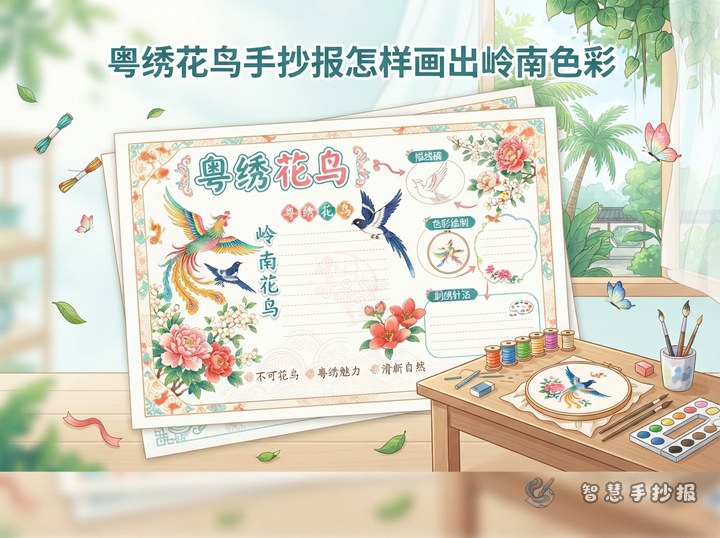
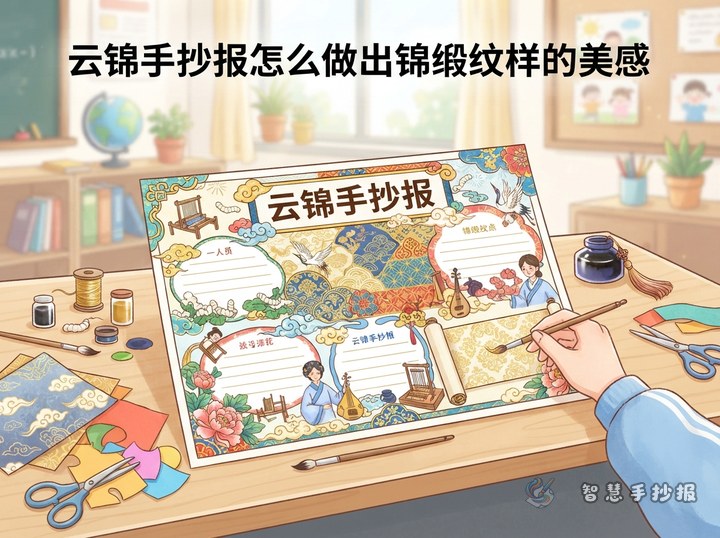
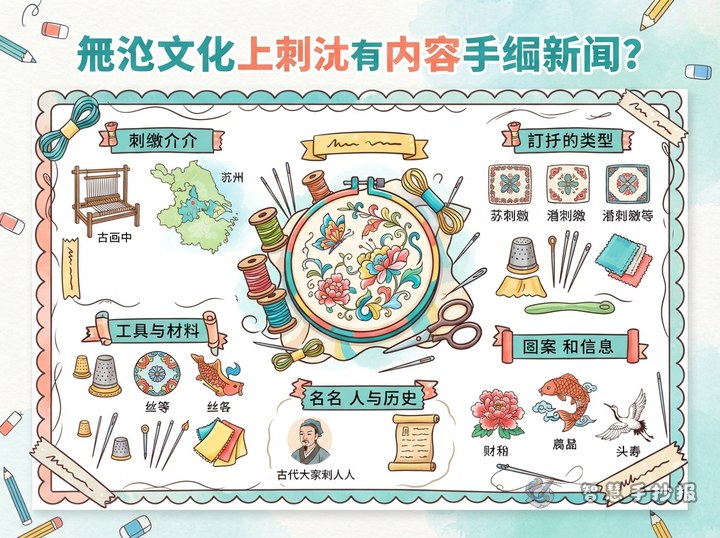
You can design the poster like a patchwork of silk pieces. Put the title in the center or at the top, and place different sections around it. Borders can look like stitches, ribbons, or scrolls. Soft pink, ivory, light blue, and pale purple work well for a fresh traditional style.
- Draw cocoons and mulberry leaves in one corner.
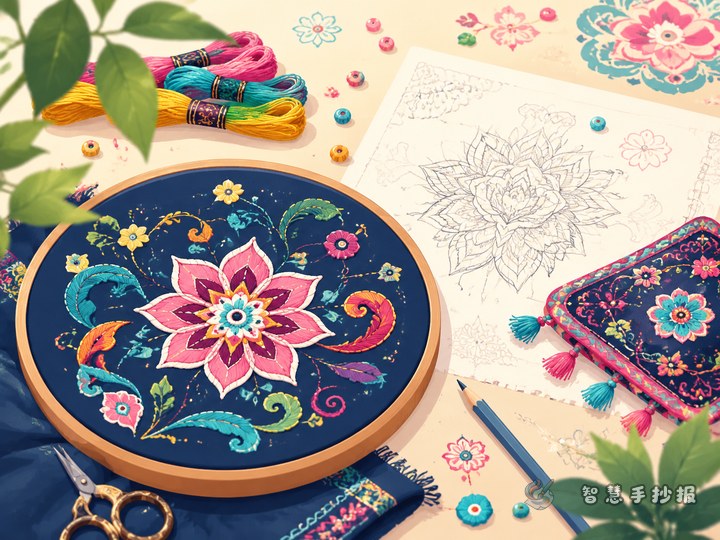
- Add a small embroidery hoop, needle, and thread for the craft section.
- Use a row of flower patterns at the bottom for the pattern meaning section.
- Decorate empty spaces with clouds, petals, or thread spools.
Useful Titles and Section Names
- Main title: The Traditional Craft Journey of One Silk Thread
- Section names: From Cocoon to Silk, Flowers on the Needle Tip, Blessings in Patterns, I Am a Young Heritage Keeper
- Slogan: Stitch by stitch, culture is embroidered; thread by thread, tradition is continued.
If you want to organize the layout, titles, and writing more easily, you can continue making your poster in the 智慧手抄报 WeChat mini program and then add your own drawings and ideas.
Small Details That Make the Poster Better
Try not to make the writing too encyclopedic. Use short sentences and clear sections. The drawings do not need to be difficult; needles, threads, flowers, ribbons, and embroidery hoops are enough to show the theme. Before finishing, check whether the title is clear, the sections are balanced, and the colors match.