Start with a River You Can Observe
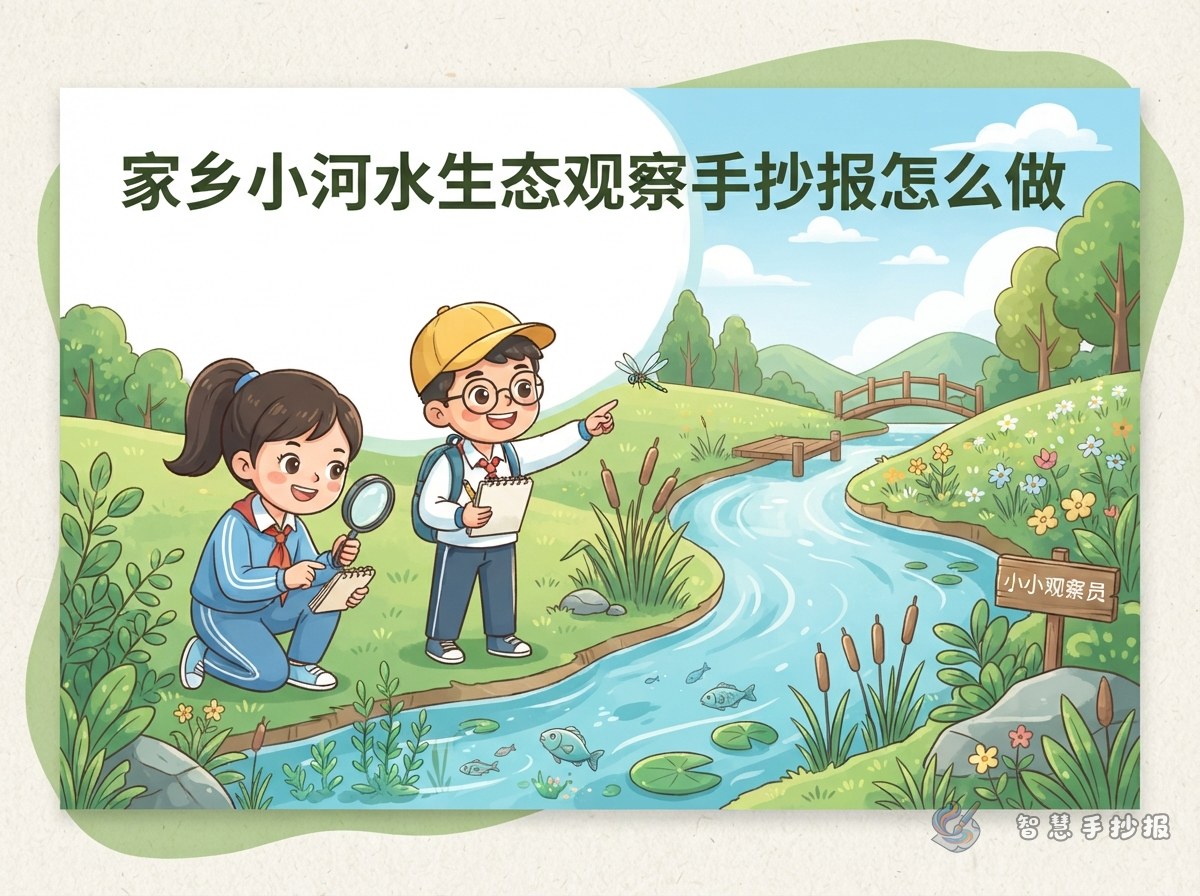
This handwritten newspaper can begin with a river, stream, canal, or wetland near home or school. Instead of using only big environmental slogans, choose a friendly idea such as “Is Our River Healthy?” or “A Little Checkup for My Hometown River.”
A good opening sentence is: A healthy river is not only clean; it also has plants, fish, birds, and safe riverbanks. This sentence connects rivers, wetlands, and water ecology in a simple way.
Make a “River Health Check Card” in the Center
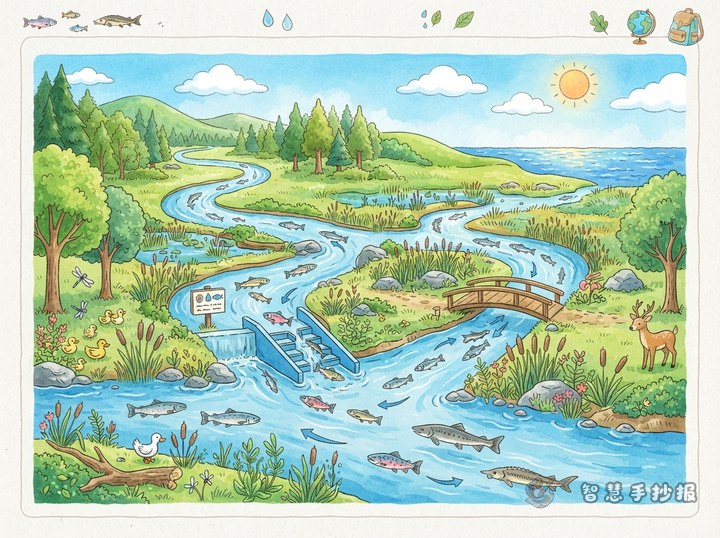
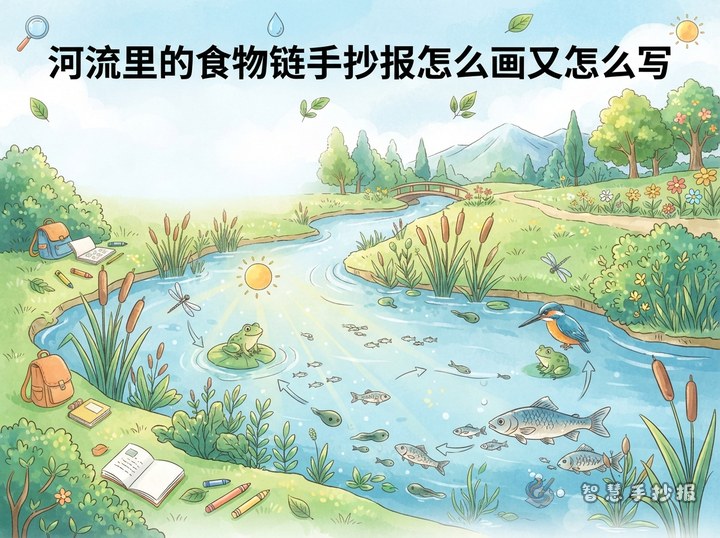
Draw a winding river in the middle of the page and turn it into an observation route. Add small labels around the river so the page looks lively and easy to read.
- Water color: Clear water with little floating trash shows a cleaner environment.
- Smell: No bad smell is an important sign of a healthier river.
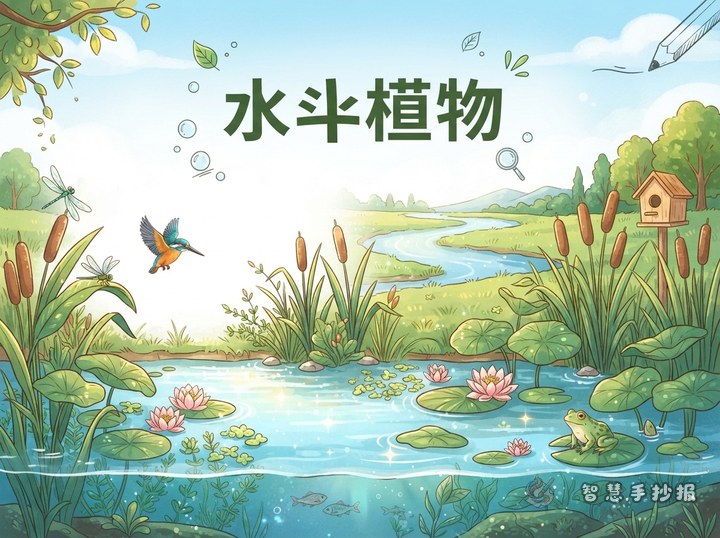
- Living things: Water plants, dragonflies, fish, shrimp, and birds are all part of the water ecosystem.
- Riverbanks: Grass, trees, and tidy banks help animals and plants live there.
Short Text You Can Copy into the Page
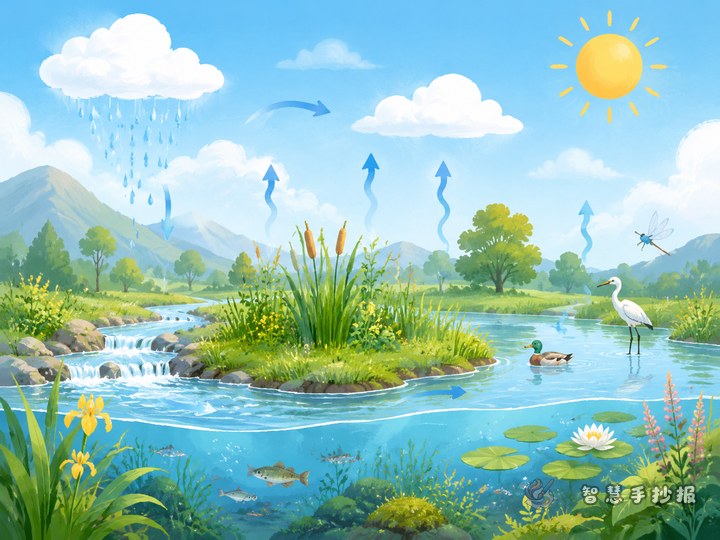
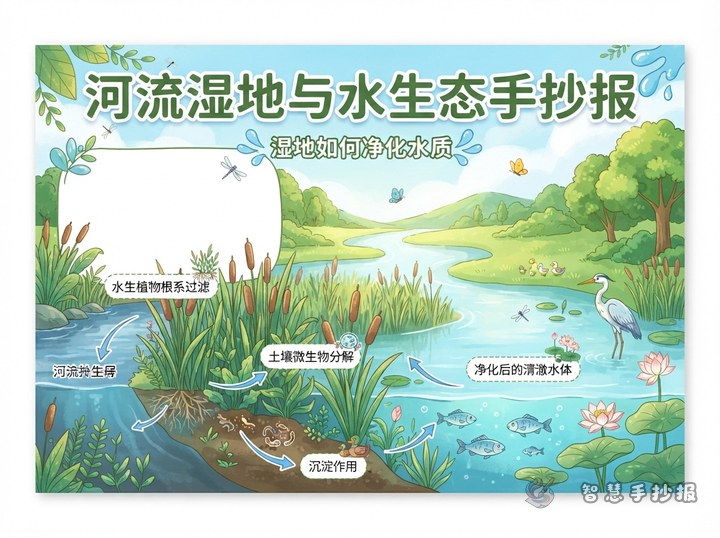
Rivers are like the blood vessels of the land, and wetlands are like breathing sponges. They store rainwater, help clean water, and provide homes for many plants and animals. Protecting water ecology means protecting the water, scenery, and natural spaces around us.
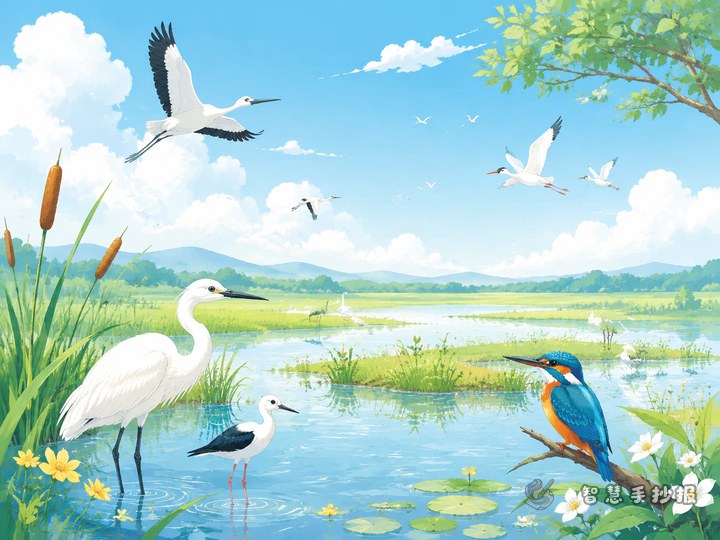
When there are green plants along the bank, fish swimming in the water, and birds flying above, the river is becoming more lively. We can help by not throwing rubbish, not pouring dirty water into rivers, and caring for plants near the water.
Use the Corners for Facts and Actions
Small Water Ecology Facts
- Wetlands can absorb and store rainwater like sponges.
- Water plants give small fish and shrimp places to hide.
- Plants on riverbanks help keep soil from being washed away.
My River Protection Actions
- Do not throw bottles, snack bags, or paper into rivers.
- Remind others to keep riverbanks clean.
- Draw posters or handwritten newspapers to share water protection ideas.
- Observe changes in water color, plants, and small animals near the river.
Layout and Color Ideas
Use blue for the river, green for wetland plants, and light yellow or orange for borders. Put the title at the top, the river observation picture in the center, short text on the right, and the action list at the bottom. This makes the reading order clear.
If you want to finish the layout more easily, you can continue in the 智慧手抄报 WeChat mini program. Use columns such as “River Health Check,” “Wetland Facts,” and “My River Protection Actions,” then choose a fresh nature-style template.