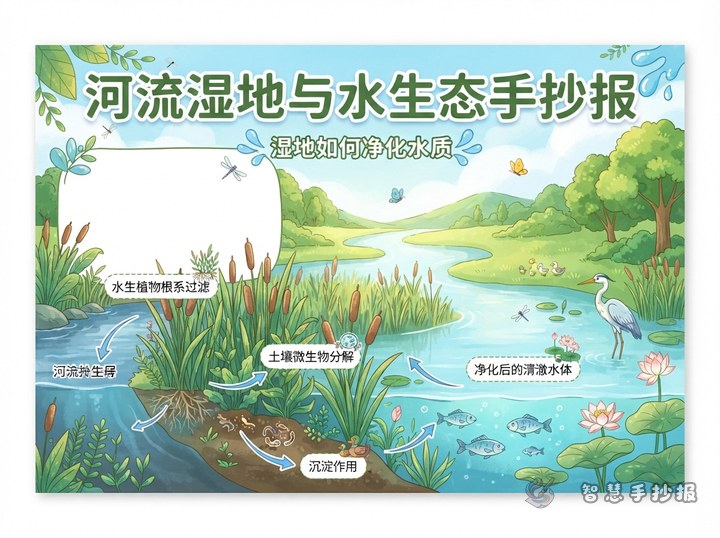
Start with one clear idea: connect rivers, wetlands, and water ecology
For this kind of poster, a broad topic like saving water is not enough, and writing only about one animal may feel off-topic. A better approach is to build the page around how rivers support wetlands and how wetlands protect water ecology.
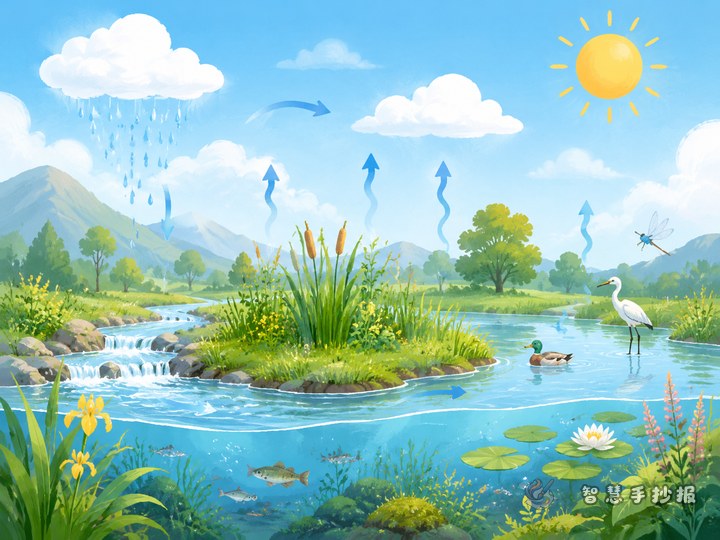
You can add a short introduction under the title: rivers are like flowing lifelines, and wetlands are like natural sponges. Together they clean water, balance water levels, and provide homes for plants and animals. This opening is simple, clear, and easy for children to use.
A layout idea that makes the topic easy to understand
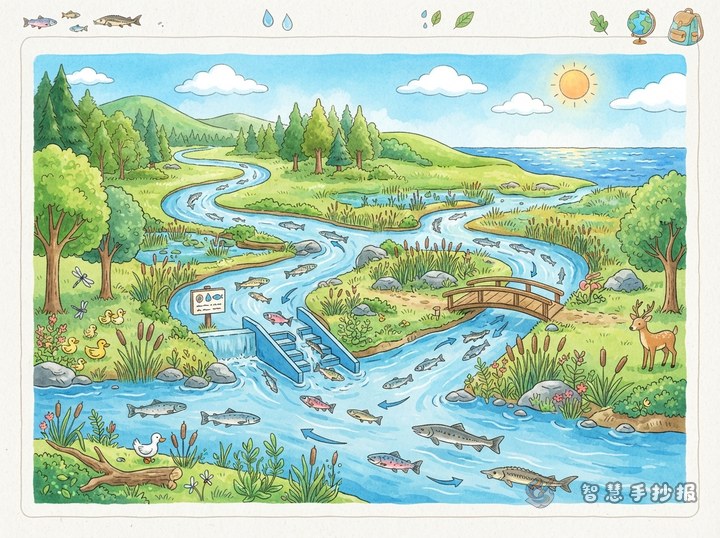
Try a central title with several sections around it. In the middle, draw a blue river connected to a green wetland area. Then place small themed blocks around the drawing.
- Top left: What is a river wetland?
- Top right: Why wetlands matter to water ecology
- Bottom left: Common plants and animals
- Bottom right: What we can do to help
- Bottom strip: Slogans or a short pledge
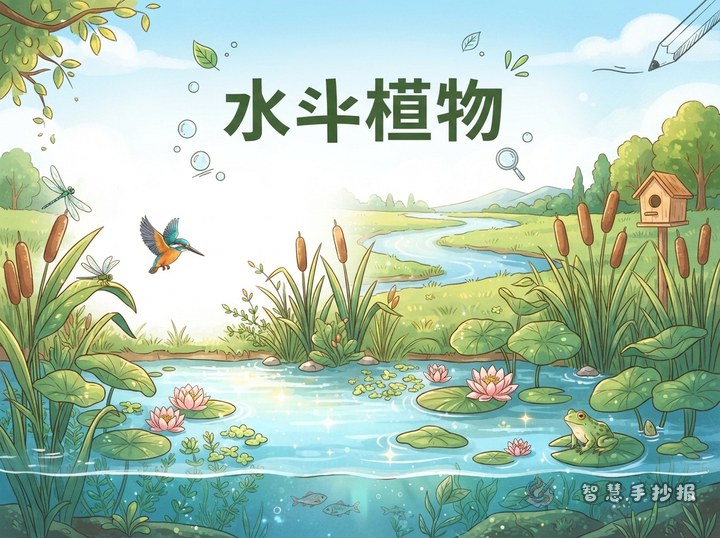
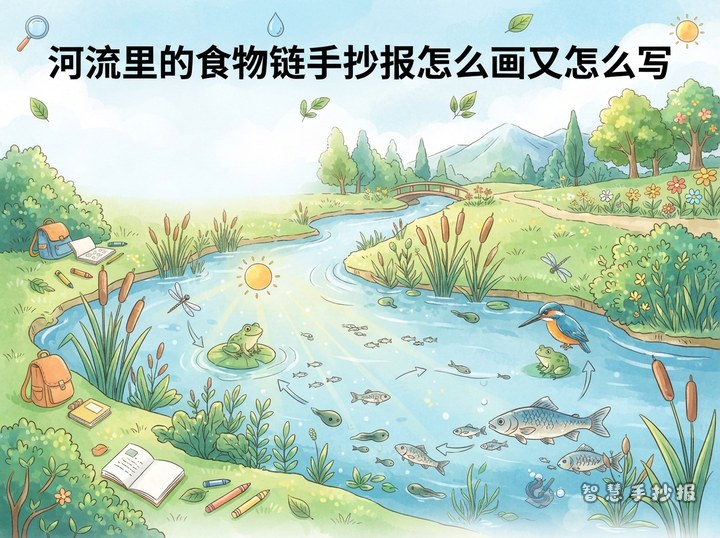
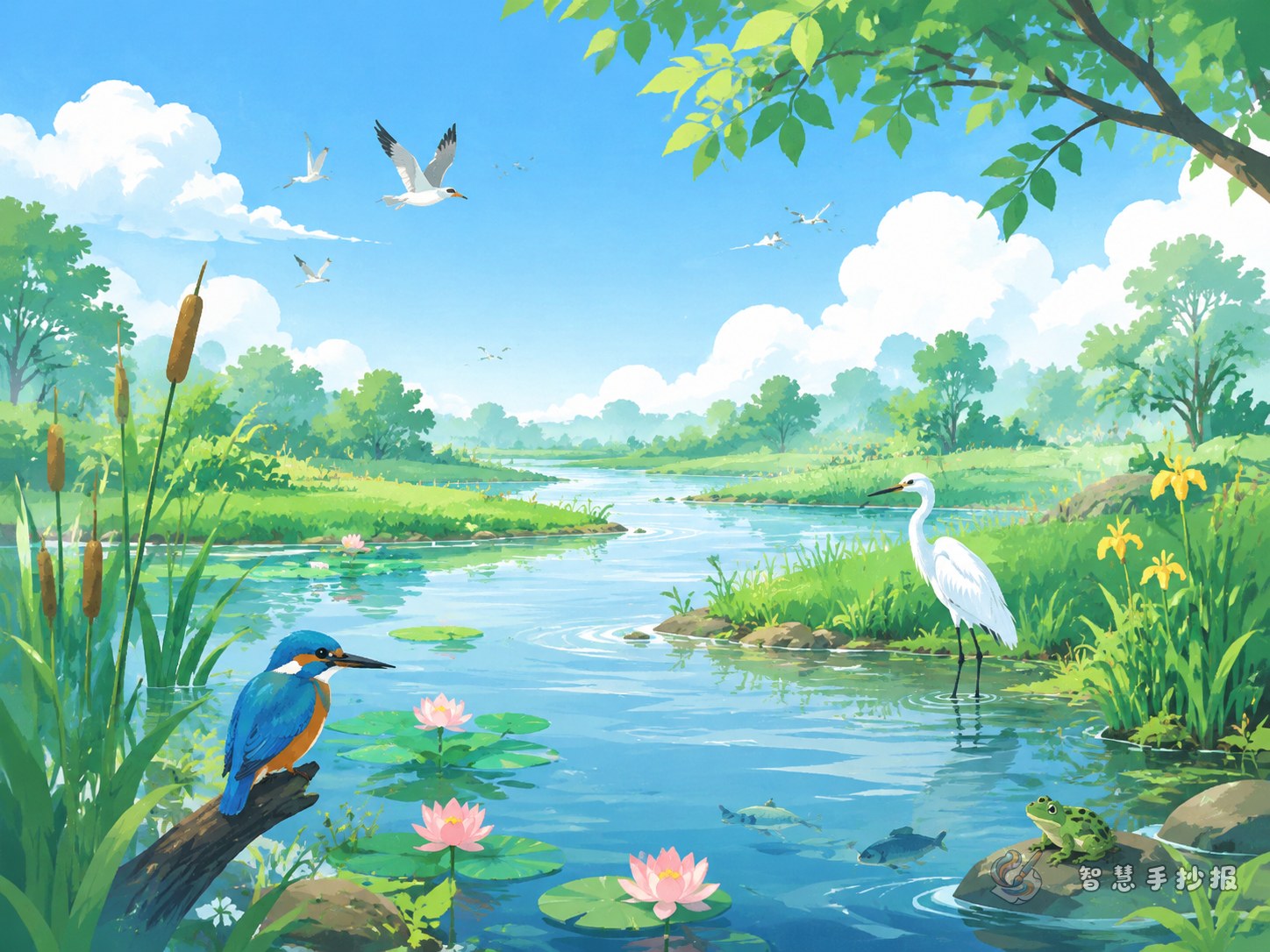
Decorations can include waves, reeds, lotus leaves, fish, birds, and water drops. Blue, green, and light yellow work well together and make the poster look fresh and student-friendly.
Ready-to-use writing materials for the poster
What is a river wetland?
A river wetland is an area near a river that stays wet for a long time or holds water during certain seasons. The soil is moist, plants grow well there, and many animals depend on it. It is an important place between land and water.
Why are wetlands important?
- They store water like a sponge and help reduce the effects of floods and droughts.
- They help settle impurities and improve water quality.
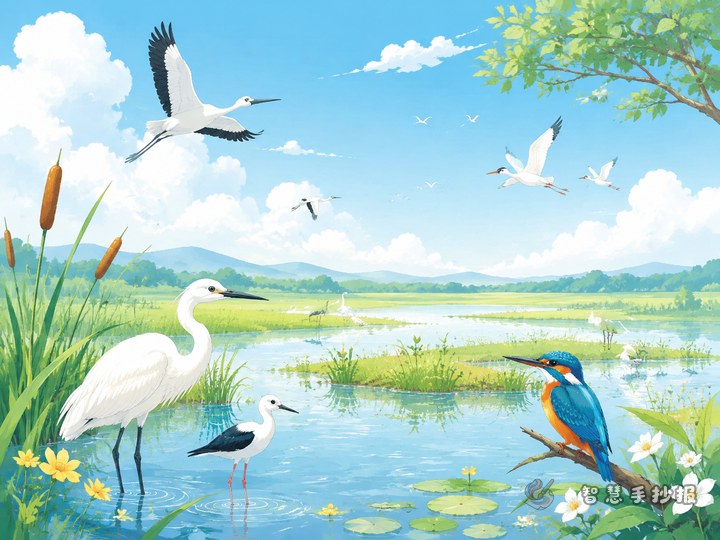
- They provide habitats for fish, frogs, insects, and birds.
- They protect riverbanks and reduce soil loss.
- They help keep the ecosystem balanced and healthy.
Plants and animals to mention
Common wetland plants include reeds, cattails, lotus, and aquatic grasses. Common animals include dragonflies, frogs, small fish, egrets, and ducks. You do not need a long list. Choosing three to five familiar examples is usually enough, especially if each one has a small drawing beside it.
Add a strong scoring point: problems and actions
A good handwritten newspaper should not only explain knowledge but also show what is harming the environment and what students can do. You can create a section called “Water Ecology Alert.”
- Throwing rubbish into rivers pollutes wetlands.
- Dirty wastewater harms aquatic life.
- Too much fishing and damaged plants break the food chain.
- Stepping on wetland plants or disturbing birds is harmful too.
Then add an “I Can Help” section: do not litter near rivers, save water, join clean-up activities, protect wild plants and animals, and remind adults when you see pollution. This makes the poster more practical and meaningful.
How to finish with a good title line and slogan
To make the page feel complete, add a subtitle under the main heading, such as Protect one river, keep one wetland, and care for one living ecosystem.
- Protect river wetlands, protect our shared home.
- Clean rivers and healthy wetlands help nature grow.
- Care for water, care for wetlands, care for life.
- Save every drop and protect every living thing in the water.
You can end with a short pledge: let us start with small daily actions, care about rivers, value wetlands, and protect aquatic life, so clean water can keep flowing and nature can stay beautiful. If you want to keep improving the layout and design, you can continue in the Zhihui Shouchaobao WeChat mini program.