Build the Main Idea Around One Food Chain
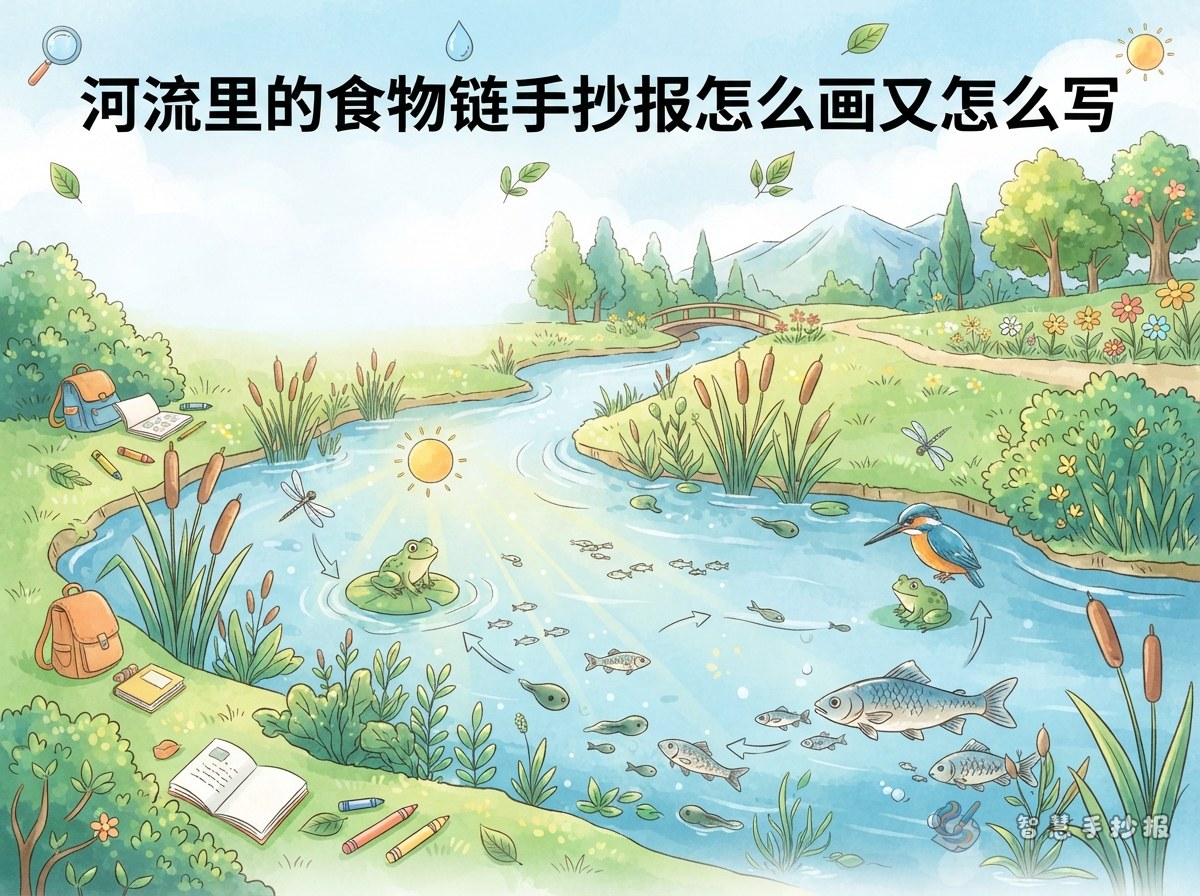
Start with an easy example that shows who eats whom in a river: aquatic plants or algae → aquatic insects → small fish → kingfishers. The arrows should point from the food to the animal that eats it because they show the direction in which food and energy move.
A second example can begin with fallen leaves: leaf fragments → small aquatic animals → fish. This helps explain that plants growing along the bank also contribute to the river ecosystem. Students may replace the examples with familiar local species.
Turn Separate Chains into a River Food Web
A real river does not contain only one straight food chain. A small fish may eat insects and plankton, while larger fish and water birds may eat that fish. When several food chains connect, they form a food web.
- Producers: Aquatic plants and algae use sunlight to make food.
- Consumers: Insects, fish, frogs, and birds obtain energy by eating plants or other animals.
- Decomposers: Bacteria and fungi break down dead material and return nutrients to the environment.
Use green, blue, and brown boxes to separate these roles and make the information easy to scan.
Add a “What If One Disappears?” Box
Include a reasoning question such as: What might happen if many riverside plants disappeared? There could be less food and shelter for insects, small fish might have fewer insects to eat, and animals that feed on fish could also be affected.
This section shows that protecting river ecology means caring for water quality, bank vegetation, shallow-water habitats, and many connected organisms rather than focusing on one animal alone.
Let a Winding River Guide the Layout
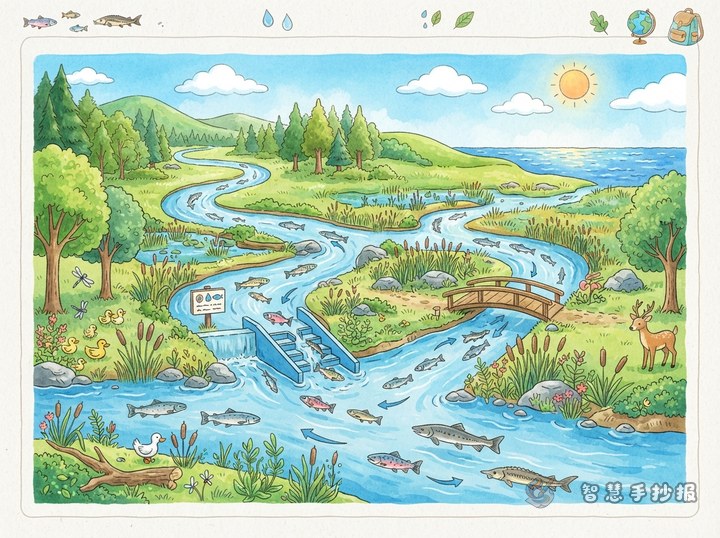
Draw a river flowing from the upper left to the lower right of the page. Place plants, insects, fish, and birds along its bends. Put the title at the top, use the food-chain arrows as the main visual path, and fit short information boxes into the open spaces around the river.
- Sketch the title, illustration, and text areas lightly in pencil.
- Draw the main organisms before adding arrows and borders.
- Keep each text block to a few short lines so it does not cover the pictures.
- Use blue for water, green for plants, and orange or yellow to highlight arrows.
Finish with a River-Care Message
Aquatic plants, insects, fish, and birds depend on one another and form a living river ecosystem. We can help by keeping litter out of waterways, leaving aquatic animals undisturbed, and protecting plants along riverbanks.
After planning the content, open the Smart Handwritten Newspaper WeChat Mini Program to choose a layout, arrange the sections, and continue creating the project.