Start with a Water Drop’s Journey
Build the poster around the story of one water drop traveling through a river wetland. Show it falling from the sky, flowing into a river, resting in the wetland, and returning to the sky. This story-like structure connects the water cycle with water ecology in a way that is easy to understand.
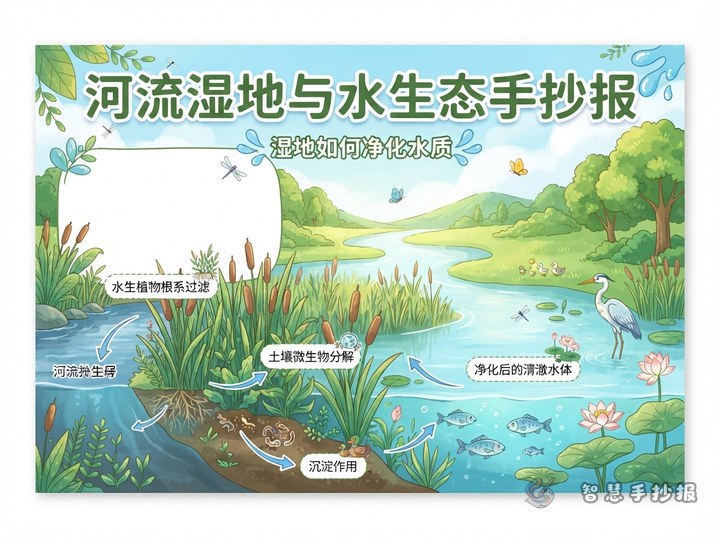
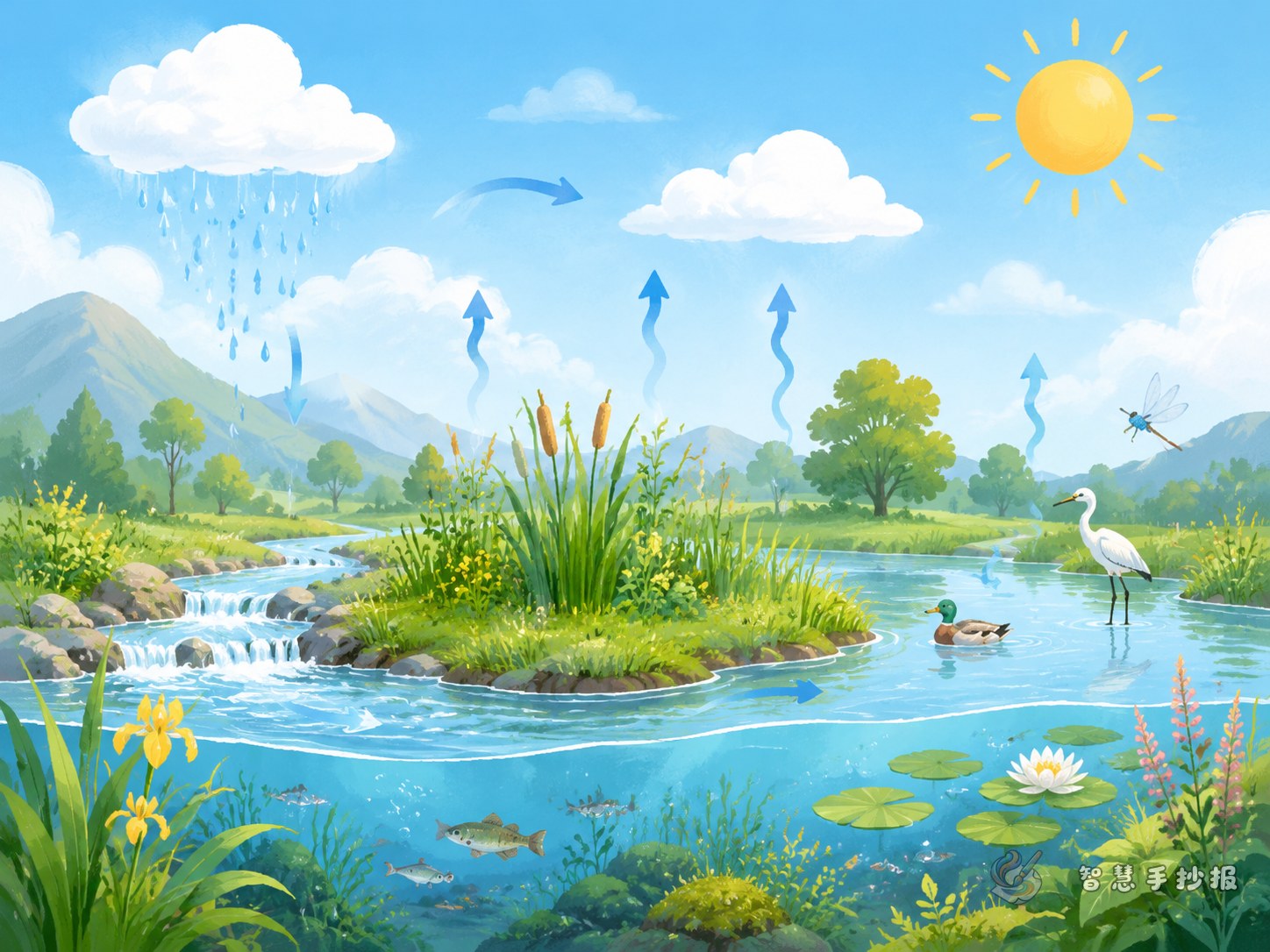
Central layout: Draw a winding river in the middle of the page. Add reeds, water plants, a shallow bank, and small pools along the shore. Above them, draw clouds and the sun. Use clear arrows to connect each stage and add a short label beside every arrow.
Explain the Water Cycle in Six Scenes
- Precipitation: Rain or snow falls from clouds and adds water to rivers and wetlands.
- Surface runoff: Water moves across the ground and gathers in streams, rivers, and lakes.
- River flow: The river carries water forward and supports plants along its banks.
- Wetland storage: A wetland works like a flexible sponge, holding some water when levels are high and releasing it slowly when needed.
- Evaporation and transpiration: Sunlight turns surface water into vapor, while plants release water through their leaves.
- Cloud formation: Water vapor rises and gathers into clouds, leading to precipitation and starting the cycle again.
Turn the Facts into Three Small Sections
A Water Cycle Word Box
Write a simple explanation: Water is always moving through precipitation, runoff, storage, evaporation, and new precipitation. Rivers and wetlands are important places along this journey.
Why Wetlands Matter
Wetlands store water, slow down flowing water, and provide living space for fish, insects, and aquatic plants. A few keywords with small icons are enough; the text does not need to be long.
My Water-Friendly Actions
Suggest saving water, keeping rubbish out of rivers, avoiding trampling wetland plants, and telling a teacher or parent if pollution is found. This section connects the science lesson with everyday behavior.
Make the Page Feel Fresh and River-Like
- Use lake blue, plant green, and soft yellow for water, vegetation, and sunlight.
- Place the title inside a cloud, river bend, or round water drop. Keep the lettering large enough to read from a distance.
- Keep the water-cycle route in the visual center, and use water-drop or leaf-shaped borders for the smaller sections.
- Leave some open space around the drawings. Short sentences and breathing room will make the page look cleaner.
After sketching in pencil, use a black pen to emphasize the arrows and title, then add a light background and a few decorations. To try different section arrangements and color combinations, scan to enter the WeChat mini program 智慧手抄报 and continue creating your poster.