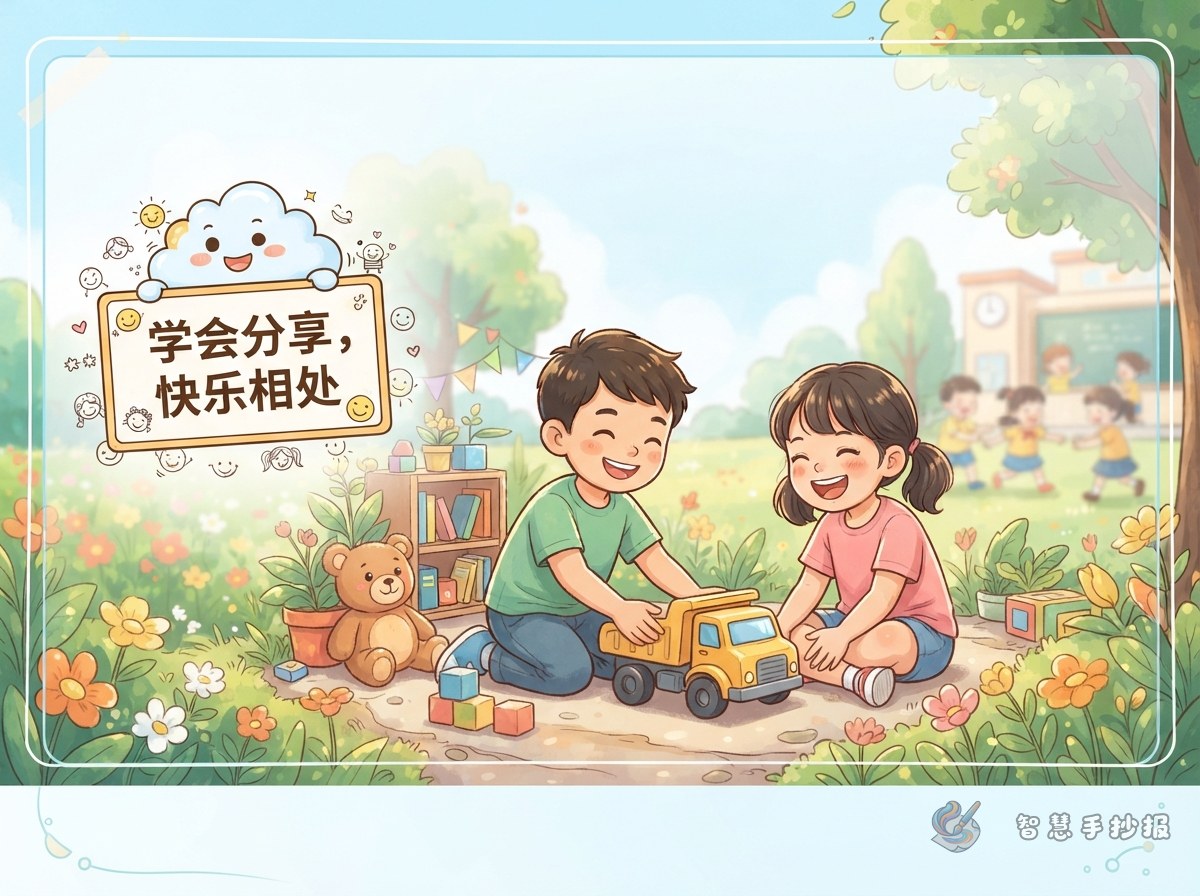
Why Taking Turns Deserves Its Own Handwritten Newspaper
Grabbing, arguing over who goes first, and refusing to share come up again and again among primary school classmates. It usually isn't about being selfish; children often cannot yet name what they want or tolerate waiting. A handwritten newspaper on taking turns lets them write the plan down, read it back, and remember it.
This page answers one question only: when I really want a turn but it isn't my turn yet, what can I do?
Pick a Headline a Child Would Really Say
Keep the headline short and spoken, not formal. Choose one of these or let the child rewrite it:
- Wait a bit, it's my turn
- One turn each, that's fair
- I say one sentence, then I wait
- Sharing isn't giving it away, it's playing together
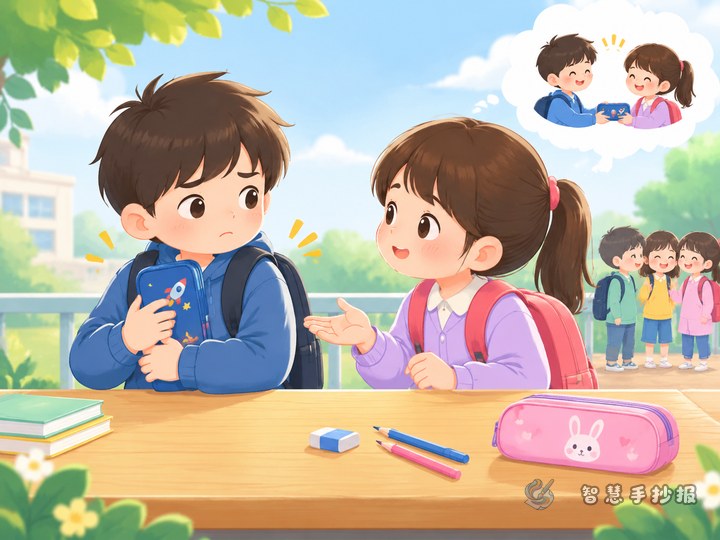
Write the chosen line large, and leave a small space beside it for a drawing of two children passing something back and forth.
Three Columns to Fill In
A feelings rhyme
Sum up waiting in three short lines: hands down (don't reach over), say it (I'd like a turn when you're done), wait (find something else to do). Stack the three lines vertically with a small icon beside each one.
Two short dialogue scripts
Copy two exchanges into speech bubbles, one on each side of the page:
- "I got it first." — "Can I have it when you finish?"
- "Let's take turns, five minutes each." — "Okay, I'll watch you play."
A waiting checklist
List three things to do while waiting: cheer for the other player, count how many turns they have had, and plan what you will do with your own turn. This column works well in the lower right corner, where children will see it often.
Layout Plan: Build the Page Around a Waiting Timeline
Divide the sheet into three zones: the top third is the headline area with the title and a small illustration; the middle splits into two text columns, the feelings rhyme on the left and the dialogue scripts on the right; the bottom carries a horizontal timeline running from "I really want a turn" to "My turn!" with two or three boxes in between.
- Sketch light pencil lines for the headline zone, the two columns and the timeline.
- Use a thick pen for the title and a thin pen for body text, leaving about two centimetres of white space between columns.
- Add a tiny square next to each timeline box for a small panel drawing; simple heads and hands are enough.
- Finish with light colour washes, no more than three colours, so the writing stays clear.
After the Ink Dries: Practising the Plan at Home
The finished page is only the beginning. Tape it near the desk and point to the reminder line when a squabble starts, or try the "five minutes each" rule when a classmate visits. If you want different layouts and colours, or want to turn the draft into a neat finished page, open the 智慧手抄报 WeChat mini program and choose a peer-relationship or emotion-management template to continue.