Decide the Message Before Drawing
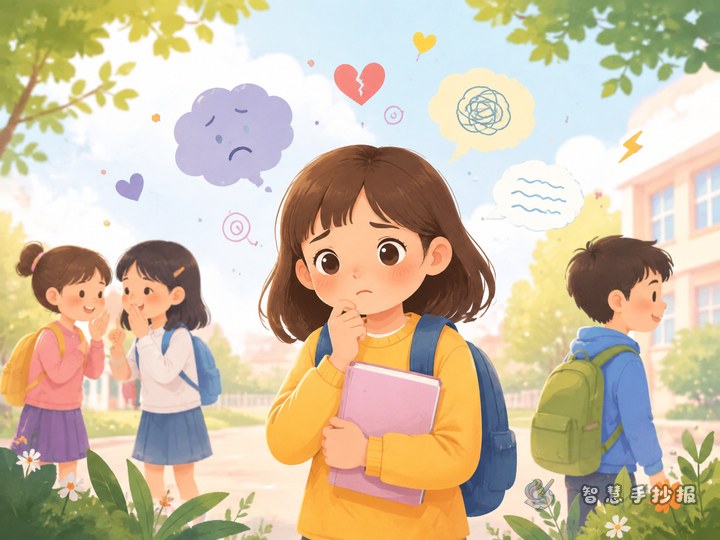
Being called a nickname can make a child feel hurt, angry, embarrassed, or even afraid to go to school. A good handwritten newspaper should not only say 'Do not give people nicknames.' It should show three ideas: my feelings matter, I can speak up bravely, and I can still respect my classmates.
Ask three simple questions first: How did I feel? How do I want others to call me? What can I do next time? Turn the answers into short lines. They become the most honest text on the page.
Pick a Strong Main Title and a Clear Subtitle
Good main titles include 'My Name, My Choice,' 'A Nickname Is Not My Label,' or 'Please Call Me by My Name.' A subtitle such as 'Emotion Management and Peer Relationships Handwritten Newspaper' makes the topic clear.
- Place the title at the top center or inside a large color block on the left.
- Decorate with a name tag, small shield, stars, or cloud shapes, but do not overdo every letter.
- Use dark blue, dark green, or dark brown for the title so it is easy to read.
If the child wants, draw a smiling main character holding a name card. It shows that everyone deserves to be called respectfully.
Four Practical Columns for Feelings and Friendship
Column 1: My Feelings Thermometer
Draw a thermometer or four feeling faces. Label them 'calm,' 'a little sad,' 'very angry,' and 'I need help.' This reminds children that feelings are not bad. Naming a feeling is the first step to calming down.
Column 2: Three Brave Sentences
Children can copy: 'I do not like that nickname. Please call me by my name.' 'What you said makes me sad.' 'If you keep doing it, I will tell the teacher.' Write these in large speech bubbles. Practice standing straight, looking at the person, and using a clear voice.
Column 3: Our Friendship Agreement
List simple promises: do not make fun of a classmate's looks, name, or accent; do not join in teasing; when someone looks sad, offer a kind word. Write it as 'Our Class Friendship Agreement.' This is more useful than a vague slogan.
Column 4: My Help-Seeking Plan
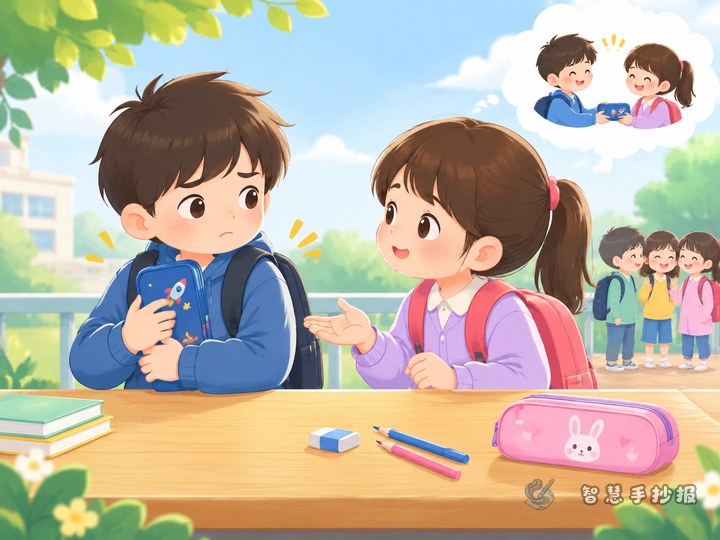
Show the order of asking for help: tell a trusted classmate, then a teacher or parent. If the child feels scared, they should not keep it alone. Draw a 'help tree': roots say 'tell an adult,' branches say 'say what happened,' and leaves say 'protect myself.'
Layout: Put the Child at the Center
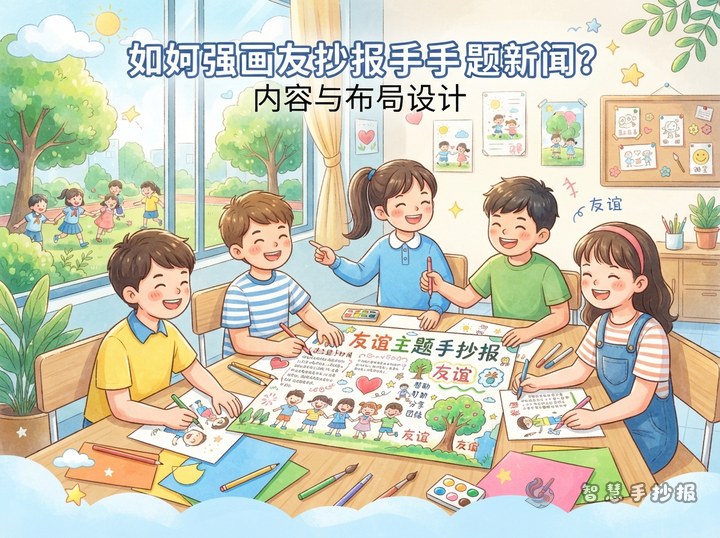
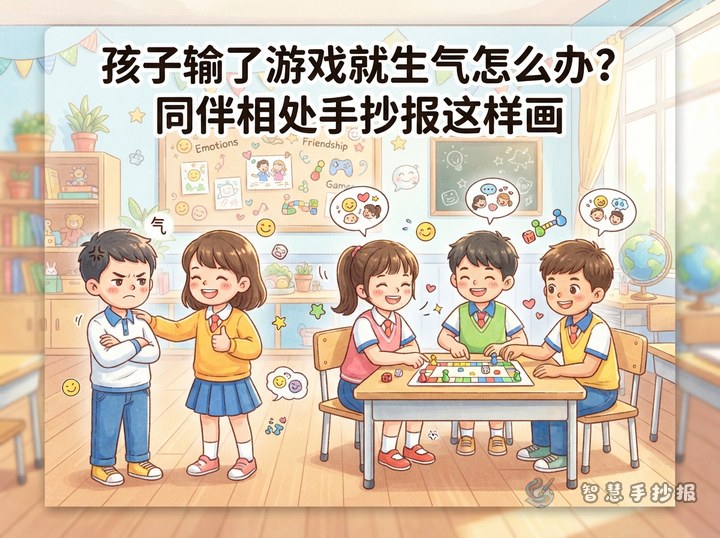
A center-out layout works well. Draw a confident child in the middle. Around the child, add four speech bubbles connected to the feelings thermometer, the three brave sentences, the friendship agreement, and the help plan. Another choice is a two-column layout: feelings on the left, actions on the right, divided by a rainbow or a handshake.
- Use a pencil to lightly mark the title area, center picture, and four text boxes.
- Write the main title and column headings before the body text so nothing runs out of space.
- Connect the columns with arrows, dotted lines, or small footprints to guide the reader.
- Leave some empty space in the corners. It makes the page look cleaner.
Colors and Small Drawings That Feel Kind and Strong
Use blue-green as the main color, with warm yellow, light pink, and a little orange. Blue suggests calm, green suggests friendship, and yellow suggests courage and hope. Choose only a few pictures: feeling faces, a name card, a handshake, and a help tree.
If a word is written incorrectly, cover it with a small cloud or star, or turn it into part of a speech bubble. Borders can be wavy lines, dotted lines, or small dots. Do not fill every text box with patterns, or the page becomes hard to read. For neat handwriting, draw light pencil guides first and erase them later.
Ready-to-Copy Lines and Final Reminders
Short lines to copy: 'My name is a gift from my family. Please call me by it.' 'Respect others, and protect yourself.' 'Not joining in teasing is basic kindness.' 'I can say how I feel. I do not have to hold it in.'
A short ending rhyme: 'Friends should be respectful and kind; jokes must have a line. If your heart feels sad or blue, ask for help—it is brave to do.'
When the page is done, ask the child to read it aloud. Which line do they really want classmates to hear? For more layout ideas and text choices, open WeChat and search for 智慧手抄报 in the mini program. Choose an emotion management or peer relationship template and keep creating with your own words.