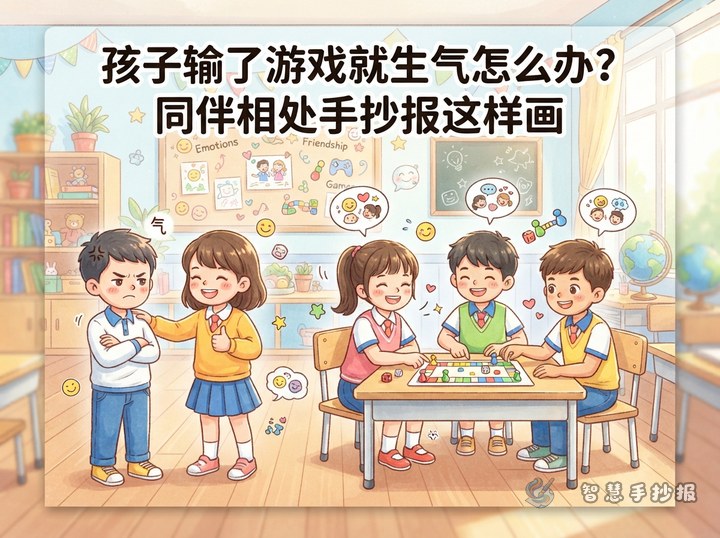
Turn the Topic into a Small Courage Challenge
Build the handwritten newspaper around a familiar playground moment: a child wants to join a game but does not know what to say. The message should not be that everyone must fit into every group. Instead, show that joining others takes courage, careful observation, polite communication, and respect for their response.
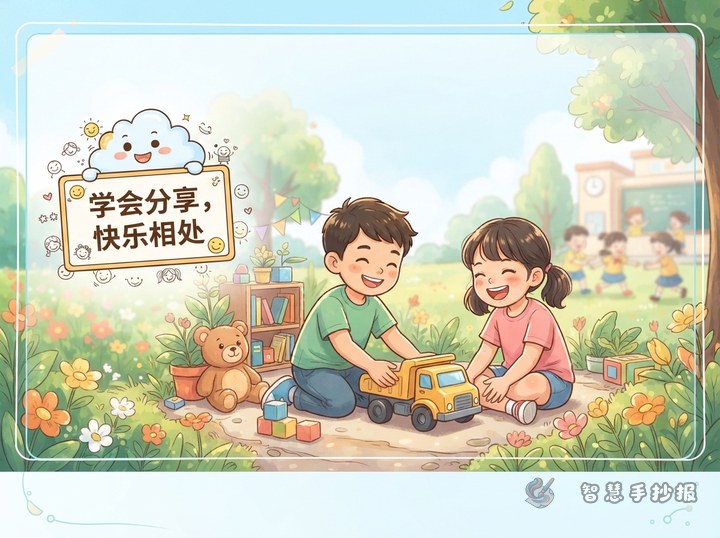
Possible main headings include May I Play Too?, One Brave Step Toward Friendship, or Friendly Ways to Join the Fun. Add simple drawings of children waving, a ball, a jump rope, building blocks, and speech bubbles to make the social situation easy to recognize.
Follow Four Footprints into the Game
- Observe first: Notice what the group is playing, how many players are involved, and whether a round is still in progress.
- Ask politely: Wait for a pause, then make a clear and friendly request.
- Respect the rules: Listen before playing, take turns, and avoid blaming others for losing.
- Cooperate: Encourage teammates and offer to keep score, collect equipment, or help organize the next round.
Place each step inside a colorful footprint, signpost, or puzzle piece. Connect them with arrows to create a visual journey from feeling nervous to enjoying teamwork.
Fill Speech Bubbles with Useful Words
Before joining
- May I play with you?
- Can you show me how this game works?
- Do you need another player?
- Could I join the next round?
While playing
- Let’s take turns.
- That’s okay. We can try again.
- That is a good idea. I can help.
- Thank you for including me.
Keep each sentence short enough to fit inside a speech bubble. A small “Which sounds friendlier?” activity can compare asking politely with grabbing equipment or interrupting a game.
Make Room for Disappointment Too
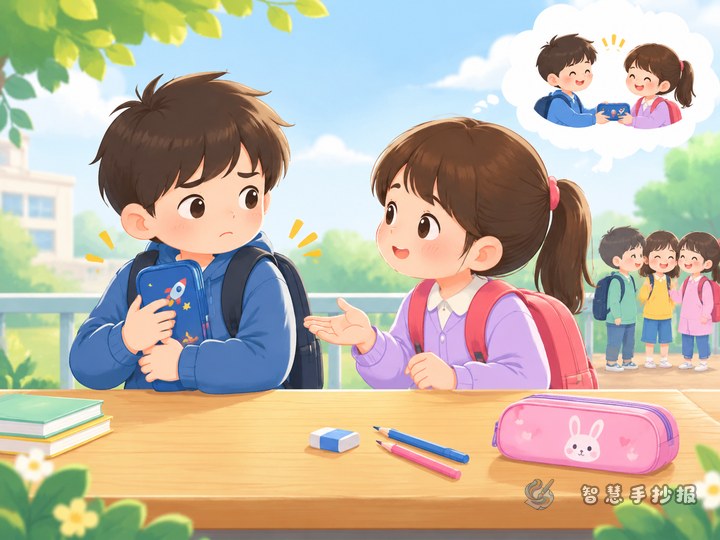
A group may say no because the teams are full, a match is underway, or the activity cannot take another player. It does not always mean that the child is disliked. Add a Feelings Reset Card with practical choices:
- Take a few slow breaths and let the first wave of disappointment settle.
- Say, “Not joining this time does not mean I cannot make friends.”
- Ask about the next round or invite someone else to start a new game.
- If exclusion happens repeatedly or deliberately, explain the situation to a trusted teacher or parent.
This section connects social skills with emotion management and acknowledges that nervousness and disappointment are real feelings.
Design the Page Like a Playground Journey
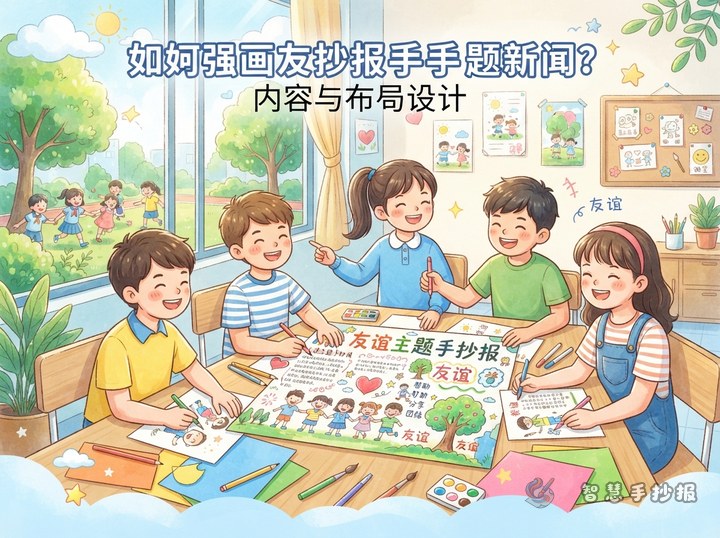
Use a horizontal sheet and draw a curved track or oval playground path through the center. Place the four action steps along the path. Keep the title in the upper-left area, draw a cooperative game scene in the center, and position polite phrases, game rules, and the feelings card around it.
Sky blue, grass green, and warm orange create a bright color scheme. Decorate borders with flags, balls, and footprints while leaving enough white space around the writing. After planning the sections, users can scan the code on the page to open the 智慧手抄报 WeChat Mini Program and continue choosing a layout and making their handwritten newspaper.