Why Paper Saving Fits a Campus Energy-Saving Poster
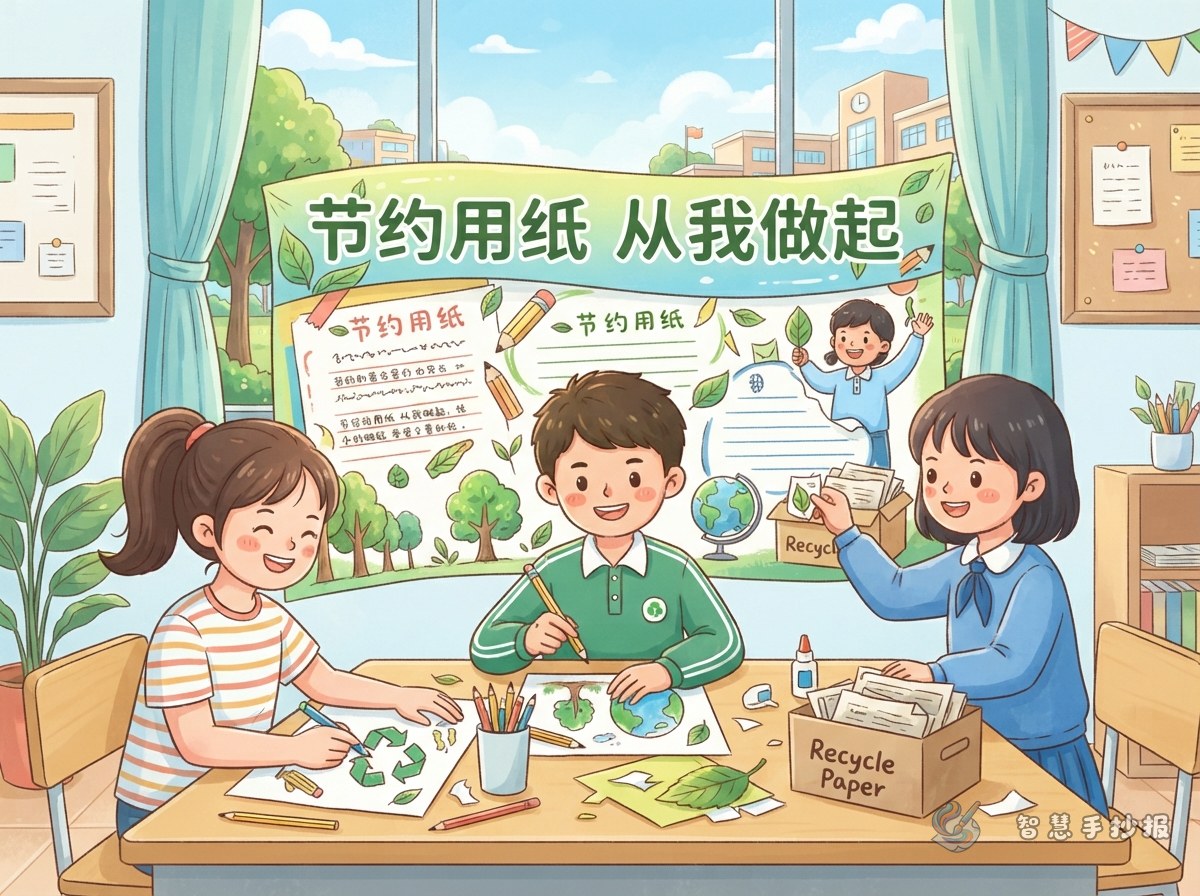
Energy saving sounds like a big idea, but paper is something students see and touch every day: notebooks, rough-draft sheets, handouts, test papers and textbooks. This theme works well because the material is all around you, the drawings are simple — a sheet of paper, a pencil, a small tree, a recycling box — and the actions are things a student can start doing today.
One reminder: a handwritten newspaper is not an essay. Instead of long paragraphs about responsibility, break the topic into short lines that explain why paper matters and how to save it.
Build the Layout Around "Two Lives of One Sheet"
Choose one main line first, or the page will feel scattered. A good choice is "the two lives of one sheet": the first life is using it carefully, the second is recycling it.
Suggested areas
- Header (top third): a big title such as "Save One Sheet, Protect One Tree", with a simple drawing of a tree or a stack of paper.
- Story strip (a horizontal band in the middle): three small pictures — blank sheet, used sheet, sheet in the recycling bin — joined by arrows.
- Columns (lower half, left and right): "Where does campus paper go?" and "Small things we can do".
- Corner details: pencils, erasers, a stapler, leaves. Use them to fill gaps, not to cover the page.
If your page is small, shrink the recycling part into one corner box and keep the focus on what students themselves can do.
Text You Can Copy Straight Onto the Page
Column title ideas
- Both sides of a sheet are the front
- The weight of one page
- Think before you draft
- Old notebooks, new uses
- Pass the textbook on
- A paper box is not a trash can
Short lines to copy
- One wrong character does not need a whole new sheet.
- Use the front of your scrap paper, then turn it over.
- Before printing handouts, count how many you really need.
- Do not throw away old test papers — the back is still blank.
- Passing one textbook on saves more than one tree.
- A paper box is a sheet's second chance.
Action checklist (draw small tick boxes)
- Finish a notebook before opening a new one.
- Think first, draft second, so you cross out less.
- Ask the teacher to set double-sided printing.
- Put used paper in the classroom recycling box.
- Give textbooks and workbooks to younger students.
Four Details That Make the Page Look Better
- Make the header letters big and bold; draw pencil guide lines before you color.
- Limit yourself to three main colors, such as green, pale yellow and wood brown, so the page matches the paper-and-trees idea.
- Arrows, dotted frames and small icons add movement and look better than a row of plain boxes.
- White space is part of the design — you do not have to fill every corner.
If drawing a full tree is hard, draw part of a trunk with a few leaves. Simple often looks cleaner.
A Simple Order for Writing, Coloring and Checking
Sketch the dividing lines and faint writing guides in pencil first, then write, then outline and color. Doing it the other way round can cover up work you have already finished.
- Set the margins: leave about one finger width of white space all around.
- Draw guides: light pencil lines inside each column.
- Write: start with the main title, then the column text, shortest lines first.
- Outline: go over the header letters and borders with a black pen.
- Color: colored pencils for large areas, markers only for small spots.
- Check: spelling, missing columns, and your name and class.
Turn the Poster Into a Real Class Habit
When the poster is finished, put it on the classroom notice board, or turn it into a "save paper" sign next to the printer and the recycling box. You can also ask classmates to check each other's rough drafts for both-sided use, so the poster becomes more than homework.
If you want to develop the theme further, search for "Smart Handwritten Newspaper" in the WeChat mini program, pick a layout and adapt it to your own text — it saves a lot of time compared with starting from a blank sheet.