Start With the Big Idea: Bacteria Multiply by Splitting
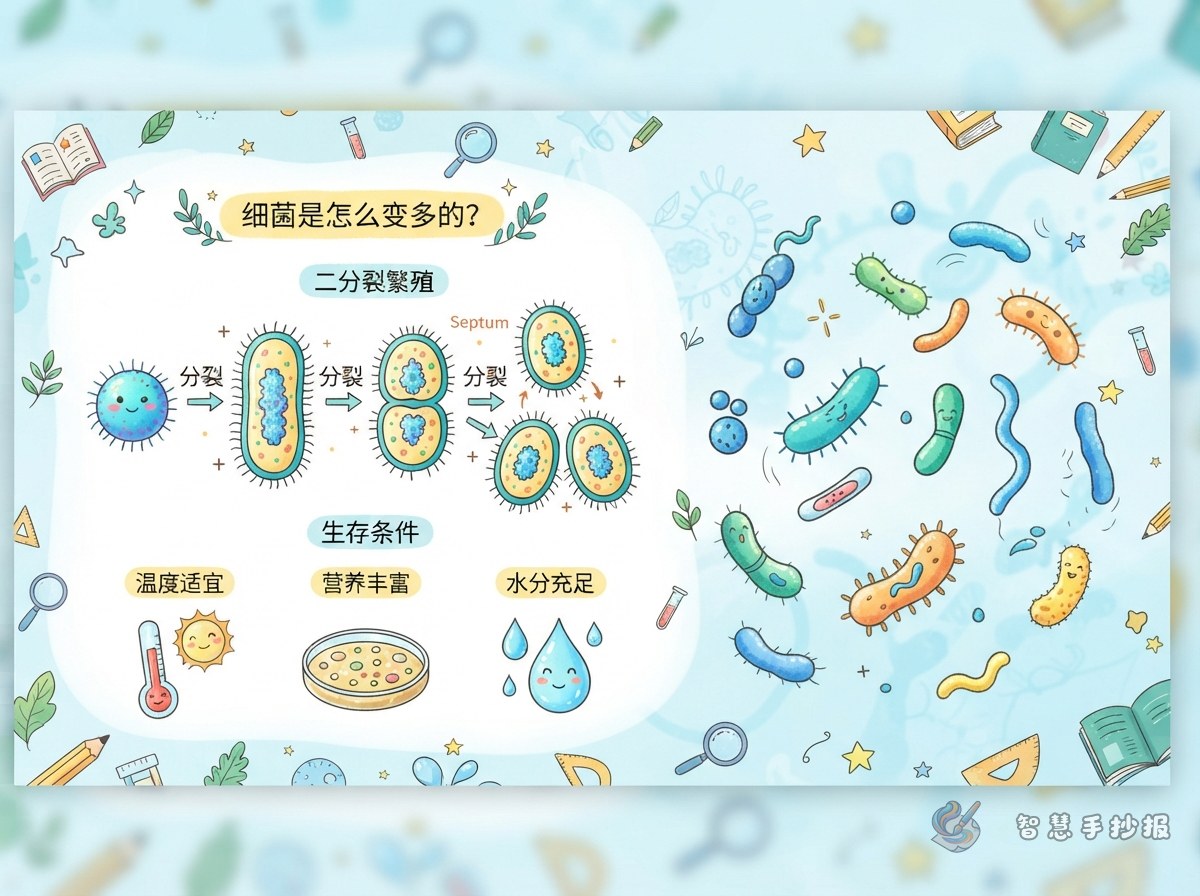
Bacteria do not give birth the way animals do. Their main method is splitting in two: a cell grows, pinches in the middle, and breaks apart into two complete new cells. Those two split again, then four become eight, so the numbers double rather than climb one at a time.
Open the poster with a single line under the title: the impressive thing about bacteria is not their size, it is their speed. Readers will know the topic at a glance.
Three Easy Drawings That Show the Splitting Process
- Four-step strip: draw four circles in a row labelled one cell, narrowing middle, two cells, both grown.
- Doubling staircase: write 1, 2, 4 and 8 down the left, and draw dots getting denser on the right.
- Magnifying glass view: draw a large circle as the lens, put a splitting cell inside, and label the narrow middle and the two halves.
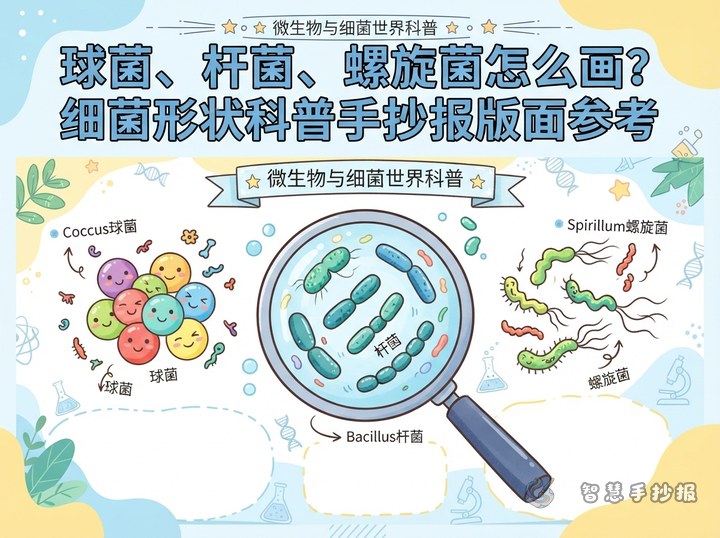
No need for realistic artwork. Circles, ovals and short rods all work as bacteria. Keeping them the same size and evenly spaced makes the page look neat.
What Bacteria Need to Grow Quickly
Turn this into a four-item panel, which teachers tend to like:
- The right temperature: cold slows bacteria almost to a stop, extreme heat kills them, and warm conditions suit them best.
- Moisture: in dry places bacteria struggle to multiply, which is one reason drying and salting help preserve food.
- Nutrients: foods rich in sugar and protein attract bacteria more easily.
- Suitable acidity: very acidic environments hold many bacteria back, which is how vinegar helps keep food fresh.
Add a small callout box: change any one of these four conditions and bacteria slow down.
Layout Ideas That Make the Page Feel Like It Is Doubling
A top-and-bottom split with left-right pairing works well:
- Top: main title plus the one-line opening.
- Middle left: the four-step splitting strip. Middle right: the four-condition panel.
- Bottom: a horizontal timeline or staircase showing the doubling numbers.
- Corner: a small box for “what I noticed” or “my question”.
Pick two or three main colours such as blue, green and pale yellow, and use one colour for all bacteria shapes so the page does not look busy.
Sentences You Can Copy Straight Onto the Page
- Bacteria are so small that you need a microscope to see them clearly.
- One becomes two, two become four, and the numbers keep doubling.
- Temperature, moisture, nutrients and acidity are the four switches for bacterial growth.
- Understanding how bacteria multiply explains why we refrigerate food and wash our hands carefully.
These lines are short, so they fit neatly beside illustrations without running out of space.
Small Details That Make the Finished Page Look Neat
Sketch light pencil guides first so you know how big each block will be. Make the title one size larger than the body text, and leave white space around drawings instead of filling every gap. If time is short, open the Smart Handwritten Newspaper mini program, choose a microbe-themed layout, arrange the text and illustration positions, then copy it onto paper. It saves a lot of erasing and re-drawing.