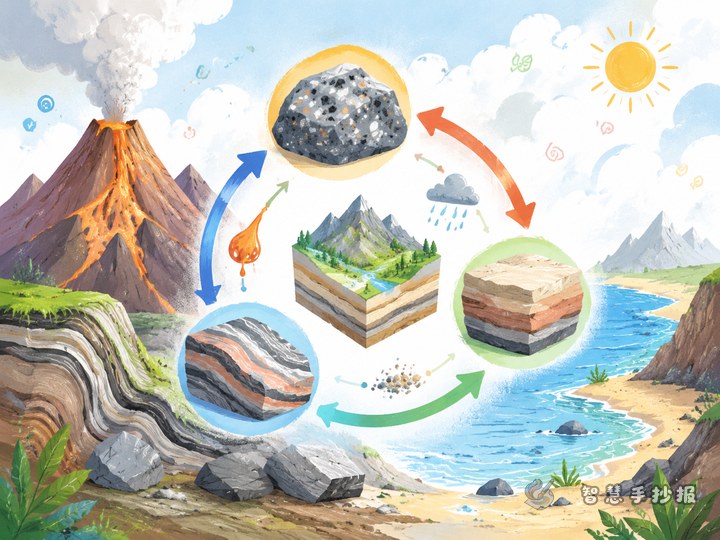
Build the page around the idea of seeing inside the Earth
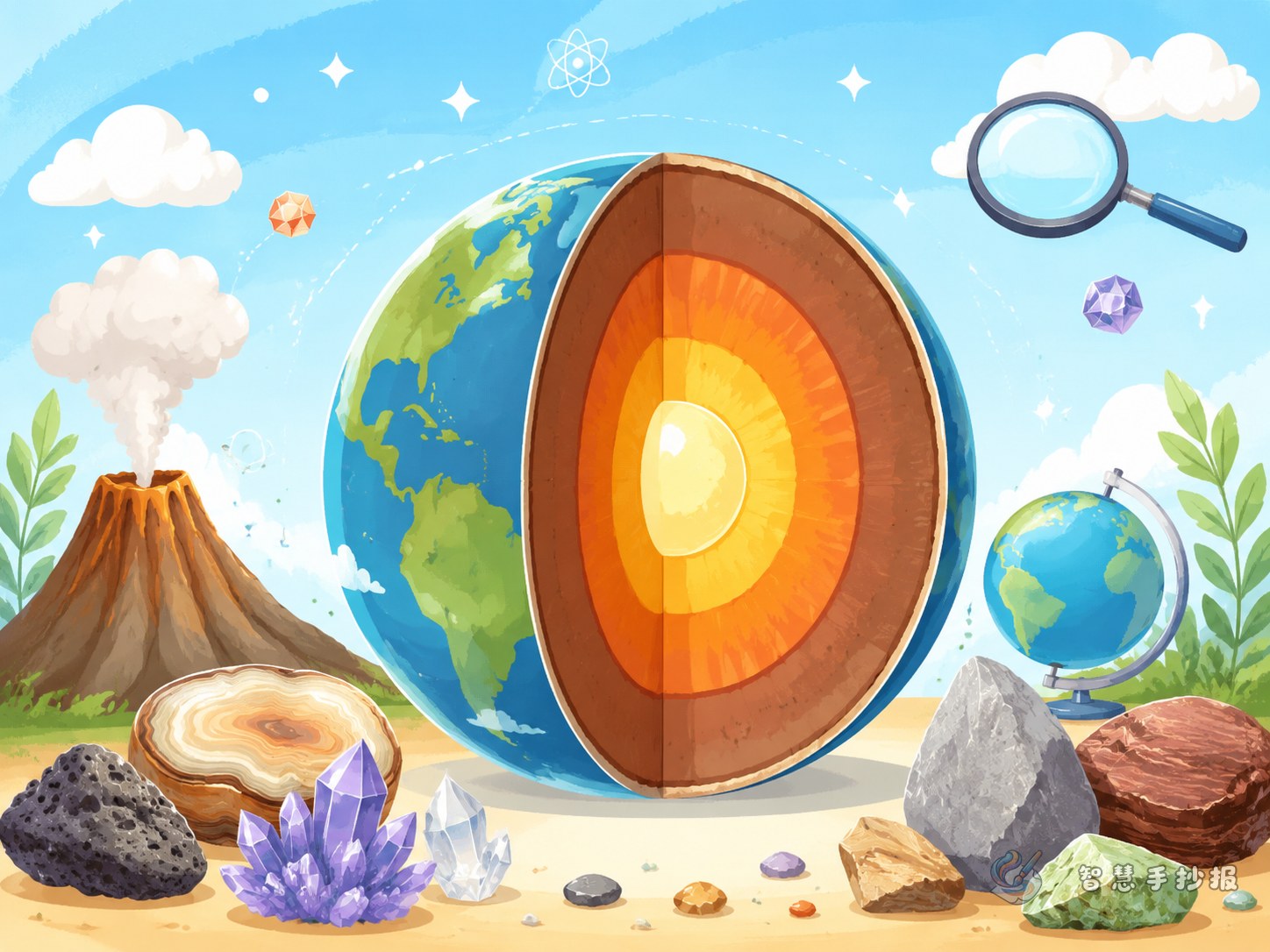
This topic works especially well as a cutaway-style handwritten newspaper. Instead of scattering facts across the page, students can focus on one strong visual idea: what the inside of Earth looks like. Once the center image is clear, the whole page becomes easier to organize.
A title such as “What Is Inside the Earth?” or “The Three Layers of Earth” feels natural, interesting, and suitable for a school science project.
Choose a few practical sections instead of too many
Section 1: The three layers of Earth
- Crust: the outer layer where we live.
- Mantle: the thick layer below the crust.
- Core: the deepest and hottest part inside Earth.
Section 2: How the layers are different
This section can compare the layers with short points such as which one is outermost, which one is thickest, and which one is hottest. The goal is clarity, not technical detail.
Section 3: Why it matters in real life
Students can connect Earth’s interior to volcanoes, earthquakes, and geothermal activity. This makes the handwritten newspaper feel alive and linked to real natural events.
Section 4: Simple thinking questions
- Which layer do people live on?
- Why can’t we directly see deep inside Earth?
- How are volcanoes related to Earth’s interior?
This part makes the page more interactive and classroom-friendly.
Short writing material students can actually use
The text on a handwritten newspaper should be brief and readable. These kinds of lines work well:
- Crust: The crust is the outer layer of Earth. It is the layer where humans live.
- Mantle: The mantle lies below the crust. It is very thick and very hot.
- Core: The core is the center of Earth and has extremely high temperatures.
- Volcanoes and earthquakes: These natural events are connected to activity inside Earth.
If there is still space, students can add a simple closing sentence: Earth may look calm on the outside, but its inside is full of structure and change.
A layout idea that looks clear and scientific
This theme is perfect for a circular composition. Draw a cutaway Earth in the center and color the layers differently. Then place the text sections around the main picture so the page reads naturally.
- Center: cutaway Earth diagram.
- Top left: names and positions of the layers.
- Top right: comparison of their features.
- Bottom left: volcanoes, earthquakes, and related ideas.
- Bottom right: fun questions or a short conclusion.
Blue, brown, orange, and red work well for this theme because they suggest the planet, rocks, and heat inside Earth. Keep the title bold and the body text neat.
Add child-friendly touches to make geology easier
To help younger students understand, the Earth can be described in simple layers, like an outside shell, a thick middle part, and a hot center. These comparisons make the science more approachable without losing the main idea.
Students can also include a personal sentence such as “I learned that Earth is not one solid ball but made of different layers.” This gives the page a stronger learning voice.
Leave enough space for clean final design
A common problem is trying to write too much. It is better to choose a strong center image and keep each section to just a few short lines. A well-structured page always looks better than a crowded one.
After preparing the text and section plan, students and parents can continue the design in the Smart Handwritten Newspaper WeChat mini program to adjust the layout, heading styles, and color balance more easily.