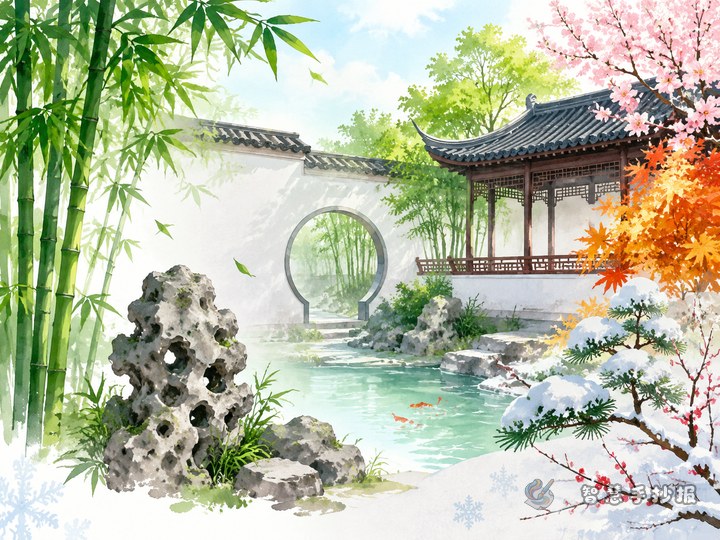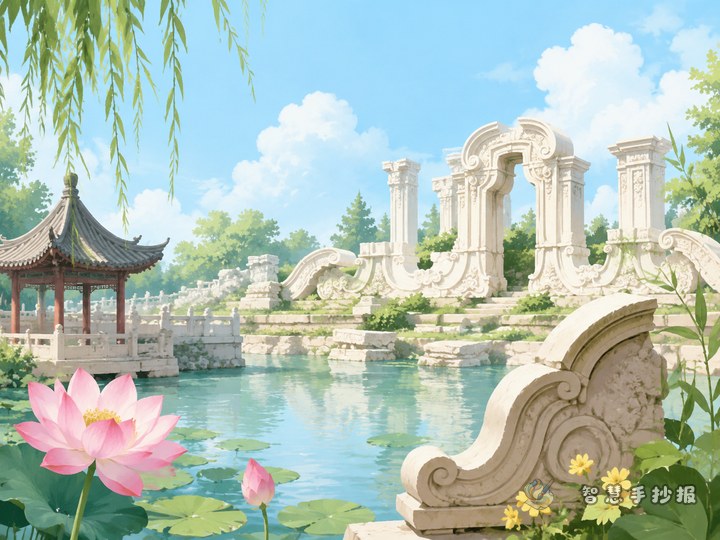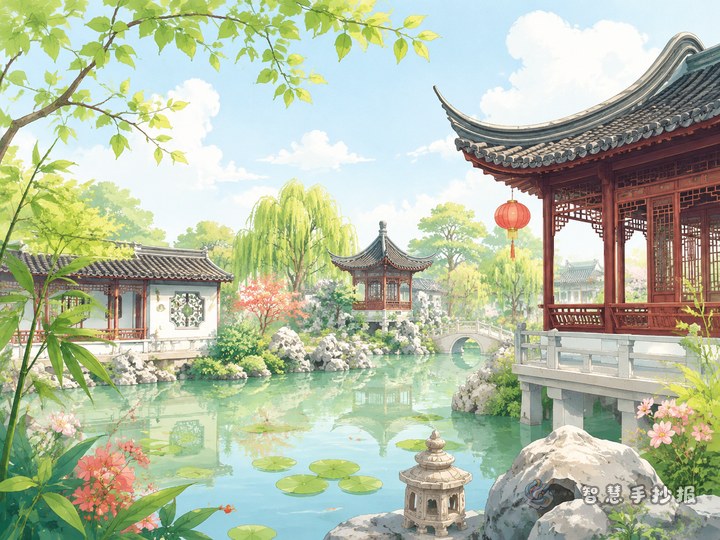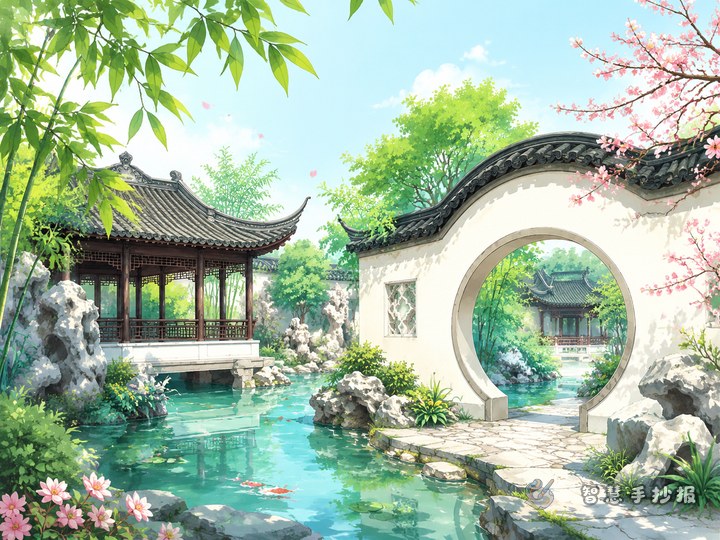
Start with one clear idea about Chinese garden art
Many students begin by listing garden names and adding the word beautiful after each one. The page looks full, but it says little about garden art. A better start is one sentence that the whole page can support.
Try something like: A Chinese garden brings mountains, water, buildings and plants into a courtyard. Or: A lattice window and a moon gate are the way a Chinese garden looks at the world. Put this sentence under the main title and let every column relate back to it.
Three features that are easy to draw
Blank space is the biggest problem on a garden page. These three features are recognisable and simple enough for most students.
Lattice window
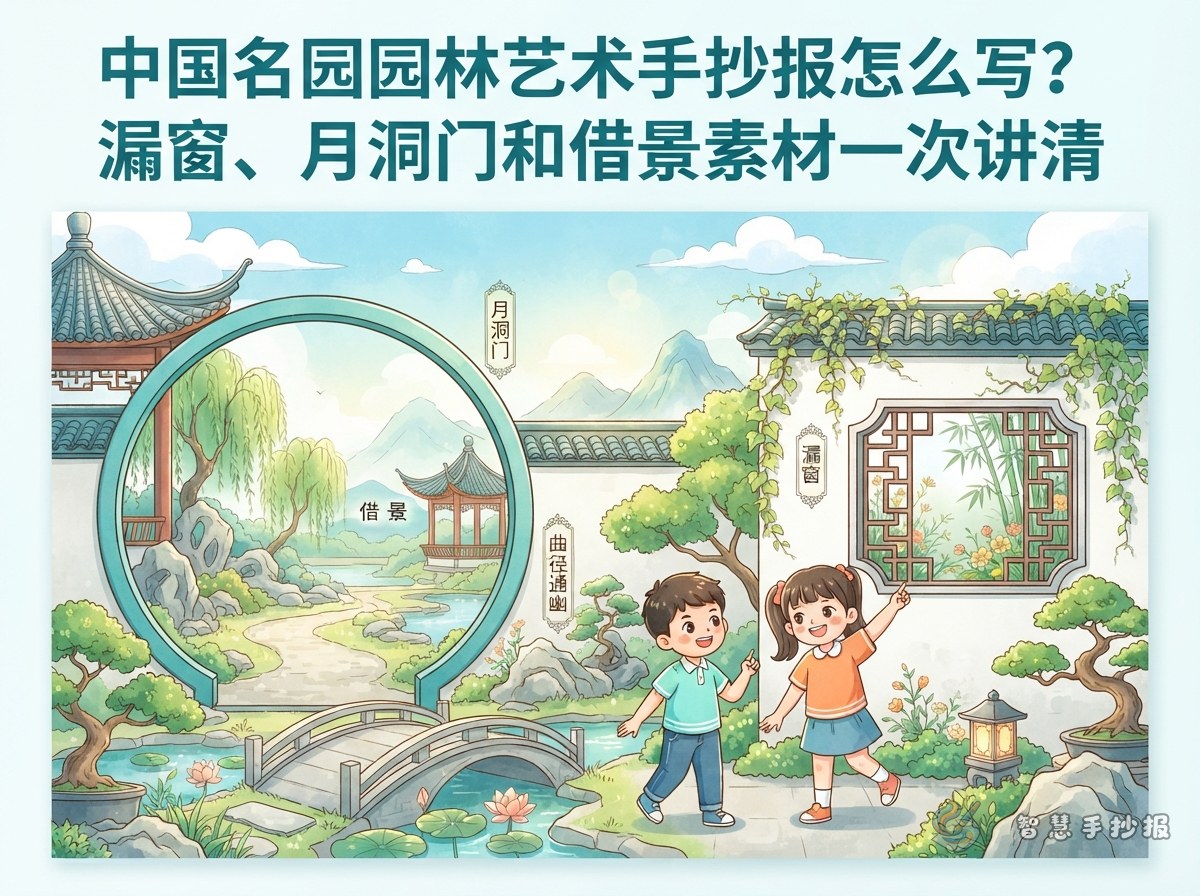
Draw a square or round frame, then fill the inside with a pattern such as plum blossom, cracked ice or a curved cloud shape. Behind it, sketch one bamboo branch or a corner of a roof. Add a line beside it: A lattice window shows half the view and saves the rest for imagination.
Moon gate
Draw a round archway. Inside it, place a small bridge, a pavilion or a stretch of water. Outside it, add a tiny figure walking through. This works well as the main image in the centre or lower corner of the page.
Winding bridge and corridor
Use parallel short lines for water and a bridge with two or three bends, ending at a small pavilion. It is quick to draw and can divide the page into an upper and a lower section.
Writing material: four elements and a short glossary
The four garden elements
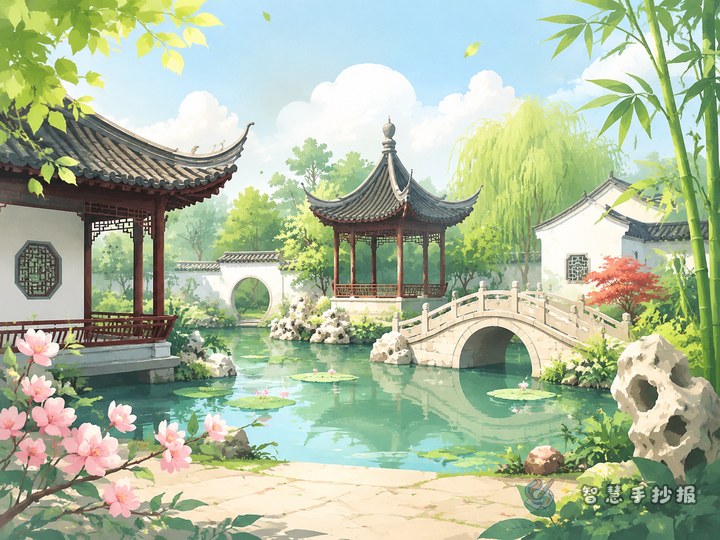
- Rock: rockeries are built with high and low points, paths and openings, so people can walk through and look at them.
- Water: a pond works like a mirror, holding the sky, trees and pavilions in its surface.
- Buildings: pavilions, halls, towers, corridors and bridges each have a purpose, and pavilions are places to stop and look.
- Plants: bamboo, pine, plum, lotus and osmanthus give the garden something to see in every season.
Garden terms you can explain in one line
- Borrowed scenery: a distant hill or tower is brought into the garden view so the garden feels larger.
- Framed scenery: a doorway or window opening frames a view like a picture.
- Opposite scenery: two spots face each other, so one can be seen from the other.
- Hidden scenery: a rockery or screen near the entrance blocks the full view, so the garden reveals itself slowly.
- Leaking scenery: a lattice window or bamboo curtain lets the view appear only in part.
Layout plan: let a moon gate hold the centre
- Place the paper horizontally and lightly draw a large circle in the middle as the moon gate frame.
- Inside the circle, draw a simple scene with distant hills, water and a small pavilion. Outside it, add plants or a wall so the circle sits inside the picture.
- Divide the rest of the page into three columns: the four elements on the left, a garden glossary on the right and a short personal note along the bottom.
- Write the main title at the top centre, one size larger than the column headings, and keep the colour palette to three colours.
- Erase the guide lines and go over the main lines with a pen so the page looks clean.
Column titles and sample lines to copy
- What a garden is: a Chinese garden shrinks mountains and rivers and places them inside a wall, so people can enjoy nature without leaving the city.
- One window, one world: the shape of a lattice window decides which part of the view you see.
- Walk and discover: paths curve and views are partly hidden, so the garden changes step by step.
- My own garden: write down one thing you would add, such as an osmanthus tree or a small stone bridge.
A few tips before you start
Choose your theme sentence, pick two or three pictures, and only then plan the text columns. If you want a more finished layout, you can open the 智慧手抄报 mini program in WeChat, choose a garden theme, place your text into the ready columns and keep adjusting the borders and colours.