Why Your Hometown Is the Easiest Way In
When students see the words “China landscapes”, they often worry that they must describe many famous mountains and rivers. In fact, the most familiar material is right around them: what kind of land they walk on every day, whether a river or lake lies nearby, and when the rainy season arrives. Starting with things you can explain clearly keeps the poster from feeling empty.
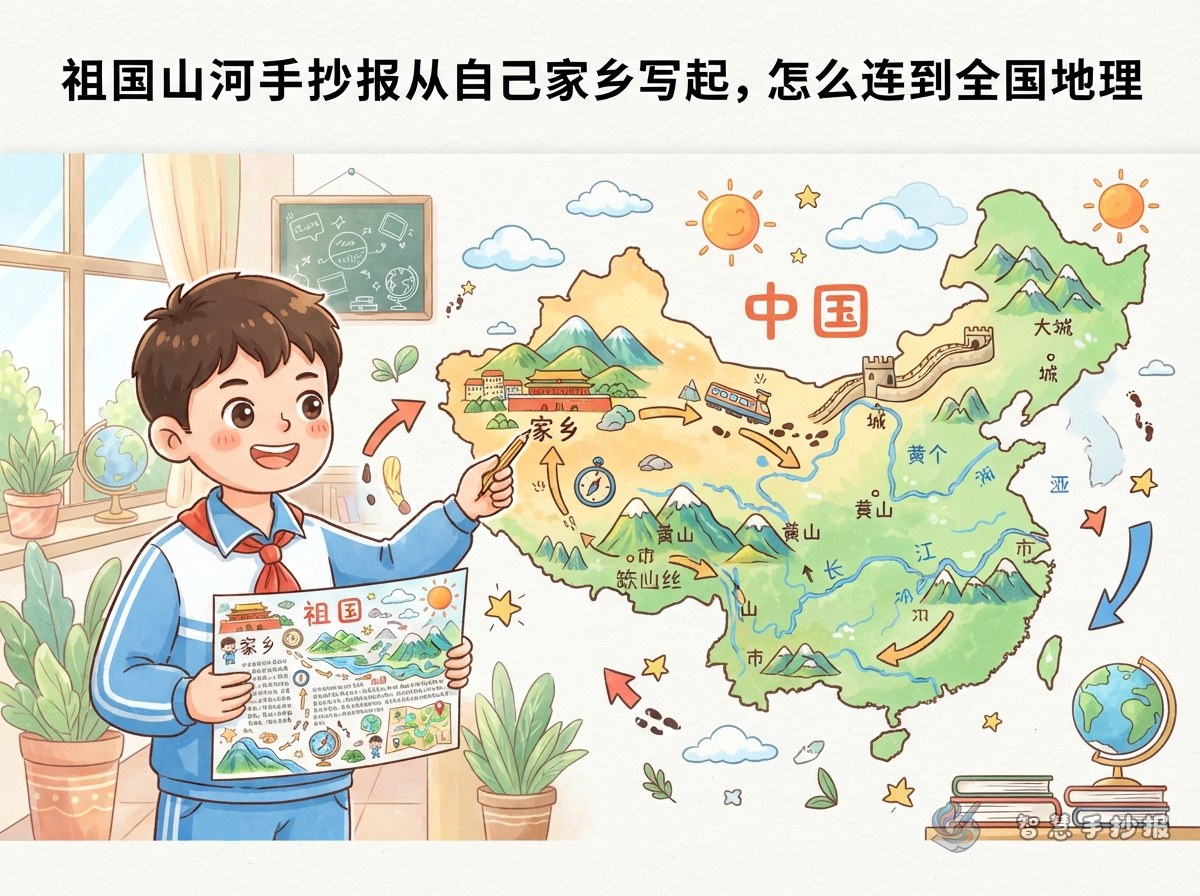
A hometown also gives the poster a natural shape. Home is the starting point, the province is the middle stop, and the whole country is the destination. Once these three layers appear on the page, the big theme of China landscapes stands firmly in place.
Linking Home to the Whole Country: A Three-Level Column Plan
Level One: A Hometown Card
- Which province is your hometown in, and which river or mountain is nearby?
- Is the main landform a plain, mountain, hill, plateau or basin?
- What is the climate like: cold winters, hot summers, plenty of rain?
- One local product or scenic spot, described in a single clear sentence.
Level Two: Put the Hometown Inside Its Province
This column describes the province as a whole. Which side is higher or lower, which way the main rivers flow, and whether there are famous lakes, valleys or coastlines. Using direction words such as “from east to west” or “higher in the west” immediately gives the page a geographical feel.
Level Three: Connect the Province to the Country
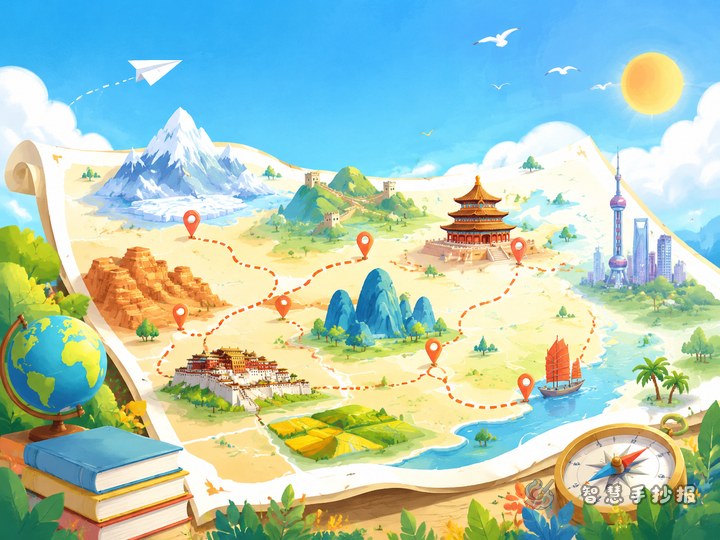
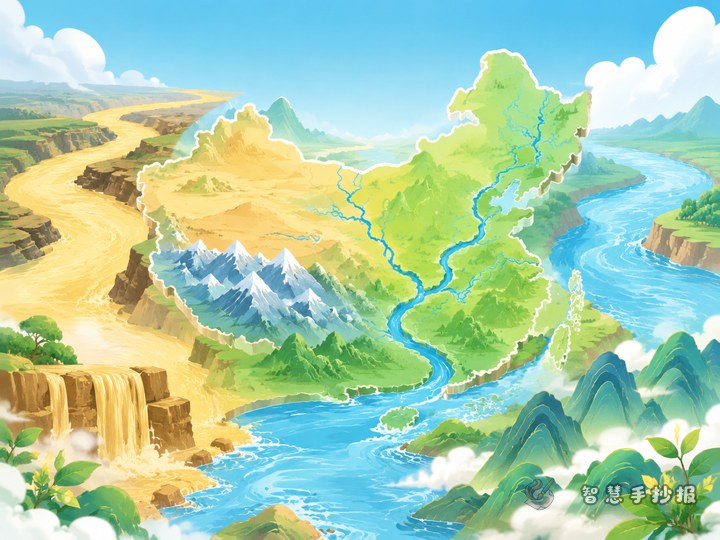
This is the key step. Use small arrows to link your hometown with national geography: which of the three terrain steps it belongs to, whether its river feeds the Yangtze or the Yellow River, and how its landform differs from the Northeast Plain, the Inner Mongolia Plateau or the Sichuan Basin. After these connections, readers can see at a glance that your hometown is part of China’s great landscapes.
Wording You Can Copy onto the Poster
- Landscape file: two or three sentences with a fixed pattern: name + location + feature.
- Geography comparison: compare your hometown with another region in climate, landform or produce.
- National records: only write facts you are sure about; leave out anything you cannot check.
- My discovery: one sentence about what surprised you while researching.
Layout and Colour: Make the Theme Easy to See
- Place the main title in the upper third, in the largest letters, with a mountain or wave line underneath.
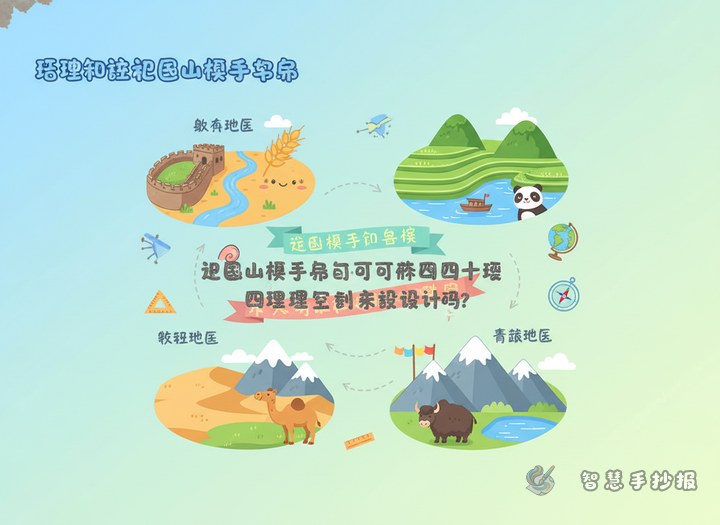
- Keep a connecting area in the middle, with arrows running in one direction from home to province to country.
- Use the two sides for small columns such as “Hometown Card”, “Landscape Files” and “Geography Q&A”, each with its own border.
- Limit colours to four: green for plains, brown for plateaus and mountains, blue for rivers and seas, and white space for text.
- Leave a finger-width of blank space between columns so the page looks clean.
A Checklist Before You Copy in Ink
Sketch the outline and arrows on rough paper first to check the column sizes, then copy neatly onto the final sheet. Check three things: whether every paragraph links back to national geography, whether the map outline and arrows point the right way, and whether titles and column names are spelled correctly. If you prefer not to start from a blank sheet, the WeChat mini program “Smart Handwritten Newspaper” offers landscape templates that you can fill in and then adjust by hand.