Meet the Tiny Helpers Behind Familiar Foods
Build the poster around the question: “How can invisible microorganisms change the food around us?” Yeast is a fungus, while lactic acid bacteria are bacteria. Both are tiny, but they can take part in making bread, yogurt, and pickles. A “fermentation lab” theme gives the page a clear science story and an inviting look.
Show the Difference with Two Character Cards
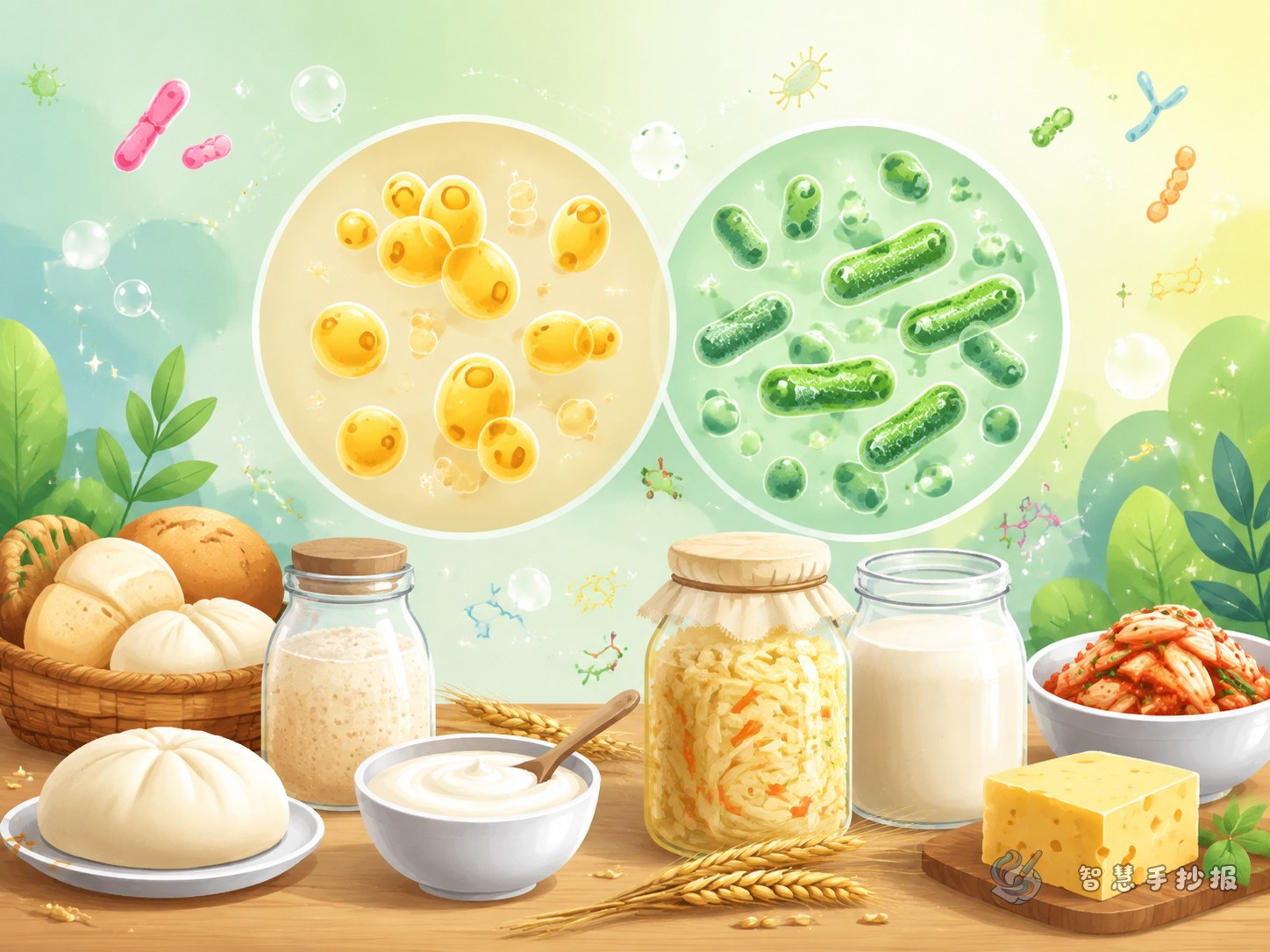
- Yeast: Under suitable conditions, yeast uses sugars and produces carbon dioxide, which helps dough become light and fluffy.
- Lactic acid bacteria: These bacteria convert some sugars in food into lactic acid and commonly take part in foods such as yogurt and pickles.
- What they need: Both need suitable food and environmental conditions to become active.
- Important note: Yeast is a fungus, not a bacterium. Lactic acid bacteria belong to the bacterial group.
Place a large fermentation jar in the center. Draw arrows from the left side toward bread and steamed buns, and from the right side toward yogurt and pickles. This makes the relationship between microorganism, food, and change easy to follow.
Short Science Texts for the Page
Science note: Fermentation is a process in which microorganisms take part in changes to food. When conditions are suitable, they use certain food components and produce new substances. As a result, the food may develop a different taste, smell, texture, or shape.
Quick question: Why can dough rise? Carbon dioxide released during yeast activity becomes trapped in the dough as tiny bubbles. Why does yogurt taste sour? Lactic acid bacteria take part in fermentation and produce lactic acid.
Catchy lines: “Tiny bodies, amazing skills!” and “Look at everyday food through the eyes of science.”
Turn the Page into a Friendly Fermentation Lab
Write the main title at the top and decorate it with bubbles, test tubes, or small labels. On the left, create a “Yeast File” with simple round or oval cell drawings. On the right, make a “Lactic Acid Bacteria Card” using short rod-like shapes. At the bottom, add a “Fermented Food Map” with small drawings of bread, yogurt, and pickles connected to the relevant facts.
Use creamy yellow, yogurt white, light green, and orange for a warm, clean, lively palette. Keep each section to one or two key sentences. Highlight important words with a marker or bold lettering, and leave enough open space so the page does not look crowded.
Use a Simple Science Trail to Finish
- Choose the title and four sections, then lightly sketch the borders, jar, and food icons.
- Write the differences between yeast and lactic acid bacteria in short, accurate cards.
- Use arrows, bubbles, and connecting lines to show the path from microorganism to food and then to change.
- Trace the drawings, apply a consistent color scheme, and check that every sentence is easy to read.
After preparing the text and sketch ideas, you can scan into the “智慧手抄报” WeChat Mini Program to continue arranging the page and give this microorganism poster a neat, lively finish.