Break Book Donation Into a Simple Journey
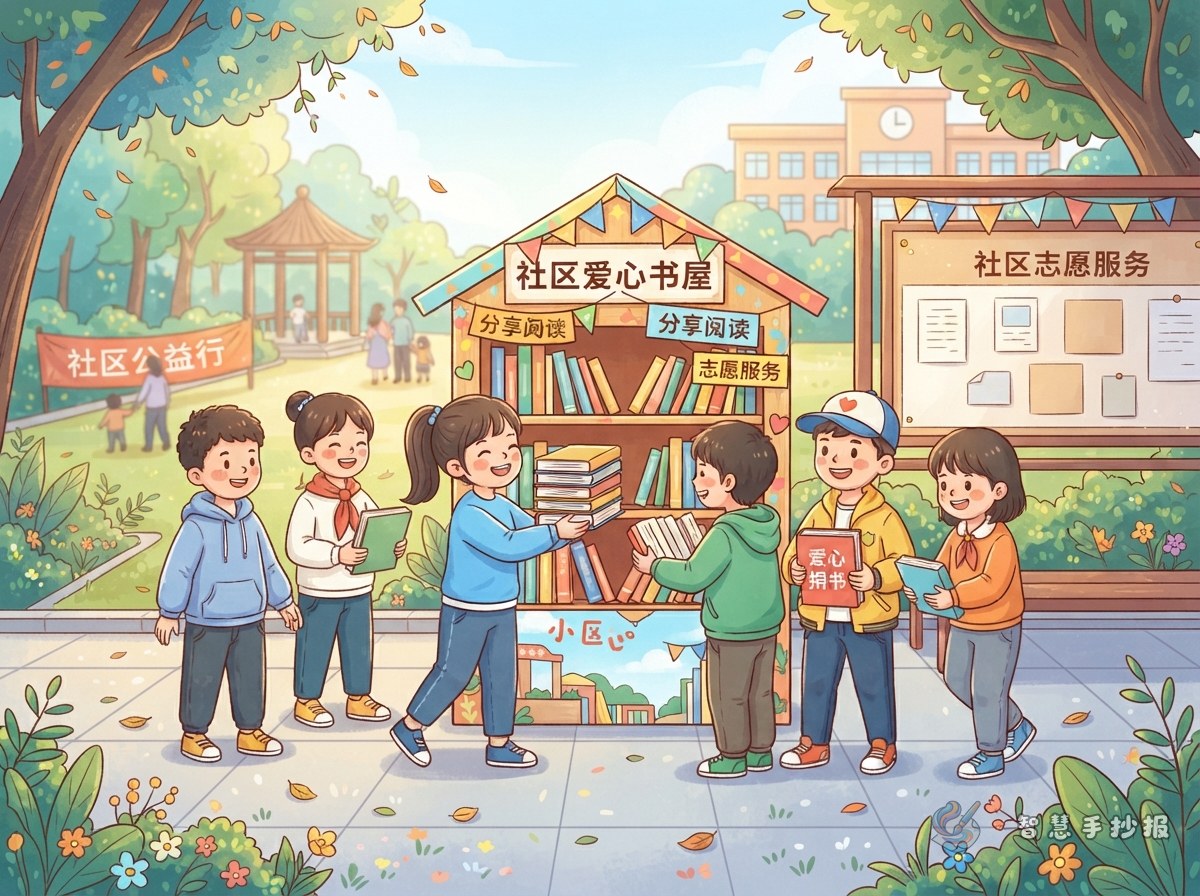
Community book donation usually follows a few steps: families sort out old books, books are brought to the collection point, volunteers check, clean and shelve them, and readers borrow them from the community reading corner. Once this journey is clear, the poster has plenty to say instead of repeating slogans.
Choose one main character first: a well-read storybook, or a pair of small hands passing a book forward. Every column can then support that character.
Five Columns That Fit This Theme
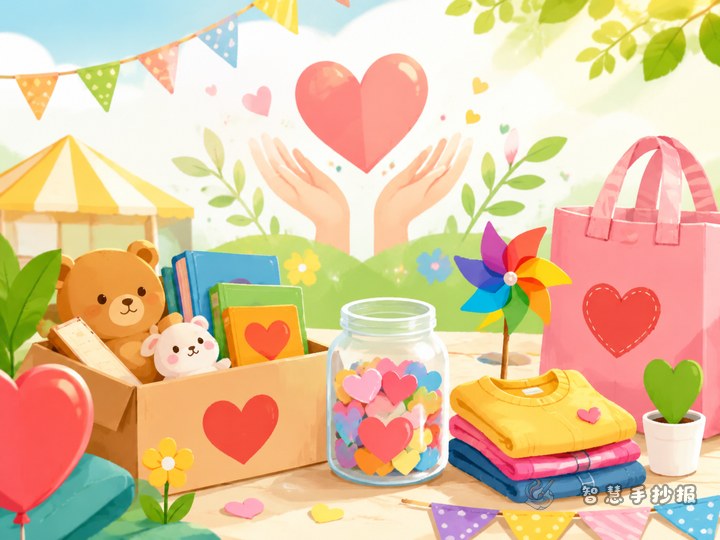
- The drop-off point: when and where to donate, and which books are welcome, with a box or a small shelf drawn beside it.
- One book's journey: an arrow route from home to the reading corner.
- What volunteers do: wiping shelves, writing labels, checking books, recommending stories to younger children.
- Donation reminders: clean, complete books that suit children; workbooks can be skipped.
- A message from me: one reading thought or blessing, written inside a bookmark shape.
Text You Can Copy Straight Onto the Page
Possible titles: "A New Home for One Book", "Let Books Keep Travelling", "Come and Sit in the Reading Corner".
- One old book, one new meeting.
- Pass the story you have read to the next person who loves reading.
- Shelves do not grow grass, but kindness grows.
- Short paragraph example: Our class tidied up storybooks from home, wiped the covers, added small labels and carried them to the community reading corner. Watching the empty shelf fill up felt like seeing many smiling faces.
- Short paragraph example: Donating a book is not throwing something away; it is sharing something good. So choose first, and give a book you still like and that is still in one piece.
Lay It Out in Three Clear Zones
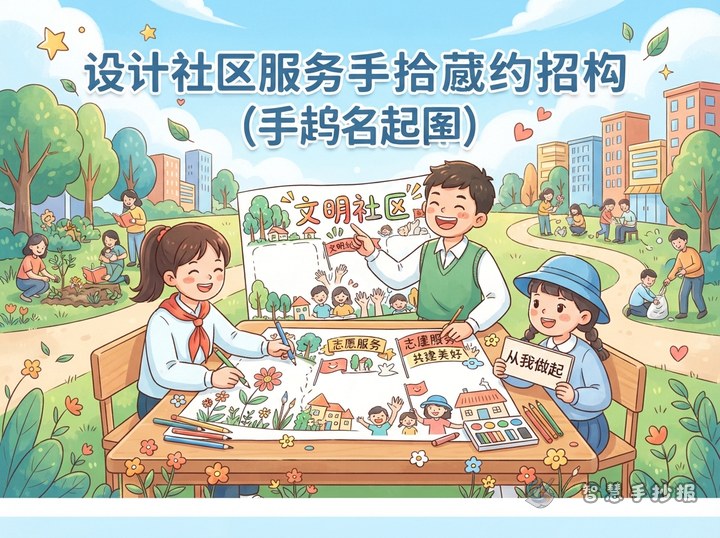
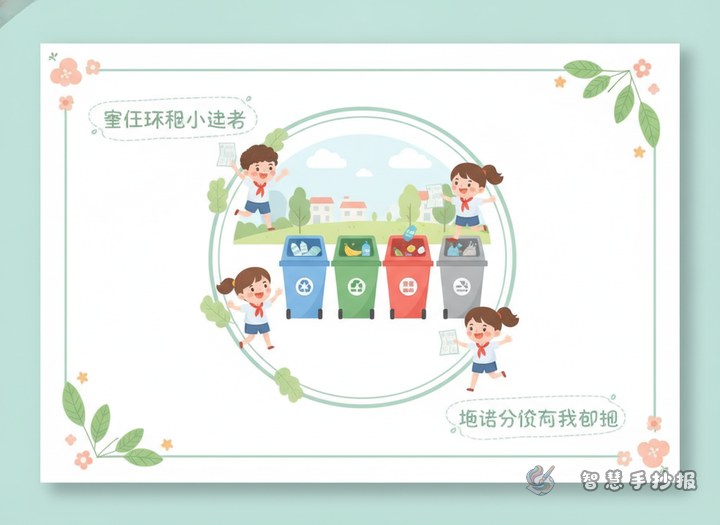
Divide the sheet into a title zone at the top, a main picture zone in the middle and a column zone at the bottom.
- Write the title at the top inside a book or bookmark frame, with larger letters.
- Draw the book's route in the middle, from a doorway all the way to the reading corner shelf.
- Place two small columns on each side below, leaving a narrow strip for grass, light bulbs or an open page.
- Keep to three or four colors: pale blue, pale green and warm yellow, with one darker outline color so everything stays readable.
Do not squeeze long text into a corner. A light background box behind the words gives the eye a place to rest.
Order of Work and Final Touches
Pencil the boxes lightly, write the text, then color last, so mistakes are easy to fix. Read the finished page once and check that it answers who is helping, what they do and why it matters. If layout feels slow, open the Smart Handwritten Newspaper mini program in WeChat, pick a volunteer service template, swap the text and adjust the panels, then copy the design onto paper.