Build the poster around one clear idea
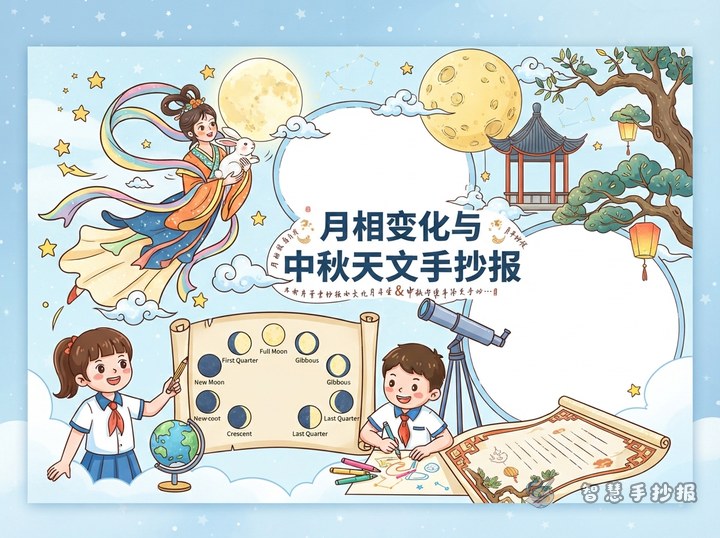
The easiest way to make this kind of handwritten newspaper is to follow one simple line of thought: why the moon changes shape and why people watch the moon during the Mid-Autumn Festival. This gives the poster both science content and festival meaning.
Good titles include “Moon Phases and Mid-Autumn Moon Watching,” “The Changing Moon,” or “Secrets of the Mid-Autumn Moon.” They sound natural and fit school projects well.
Four sections that work well on the page
1. A simple moon phase lesson
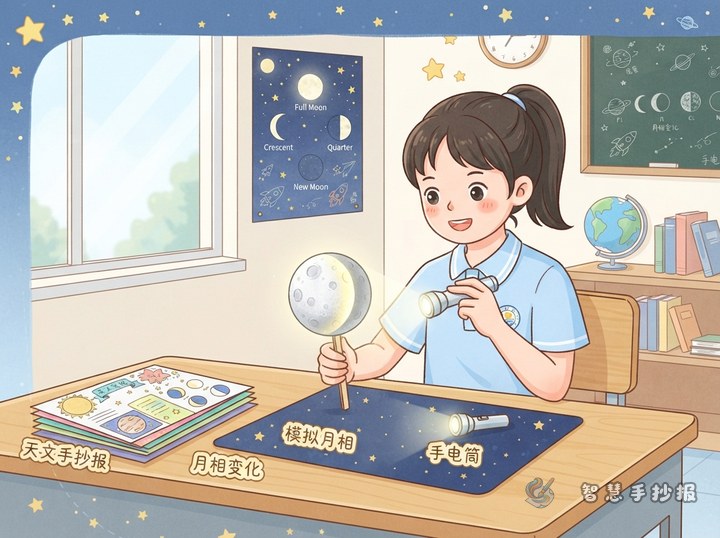
Write that the moon does not shine by itself. We see sunlight reflected from the moon. As the moon moves around Earth, the bright part we can see changes, and that is why moon phases appear different.
2. Common moon phase names
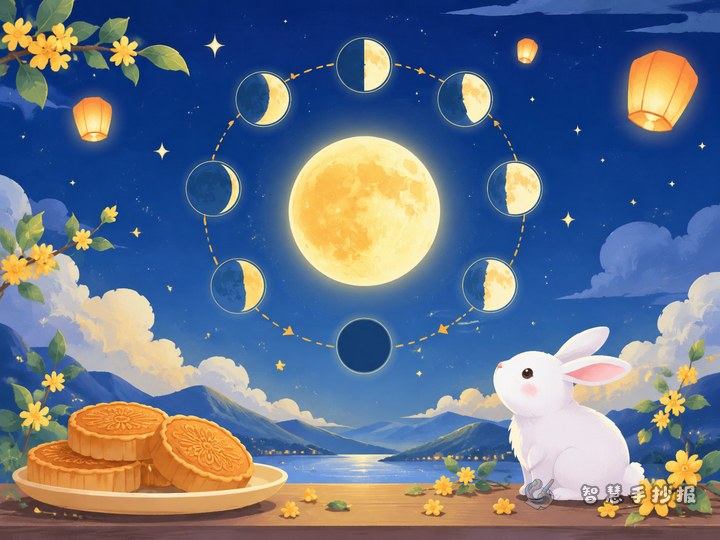
- New moon: the moon is very thin or hard to see.
- First quarter: the bright part becomes larger.
- Full moon: the moon looks roundest and is strongly connected with Mid-Autumn moon watching.
- Last quarter: the bright area becomes smaller again.
3. Mid-Autumn moon watching facts
The Mid-Autumn Festival is a traditional holiday. People watch the moon, eat mooncakes, and think about reunion and family. A full moon often stands for togetherness and warm wishes.
4. My own moon observation
This part helps the poster feel personal. Students can write lines such as “The moon looked like a little boat,” “The moonlight was soft,” or “I watched the moon with my family.”
Short text materials that are easy to copy
- Moon phases make the night sky look different each day.
- The moon shines because it reflects sunlight.
- Mid-Autumn moon watching carries hopes for reunion.
- A bright moon makes the festival night feel warm and peaceful.
- Watching the moon is a fun way to learn about the sky.
These short lines are useful when the poster space is limited and students need neat handwriting practice.
Layout ideas beyond a single big moon
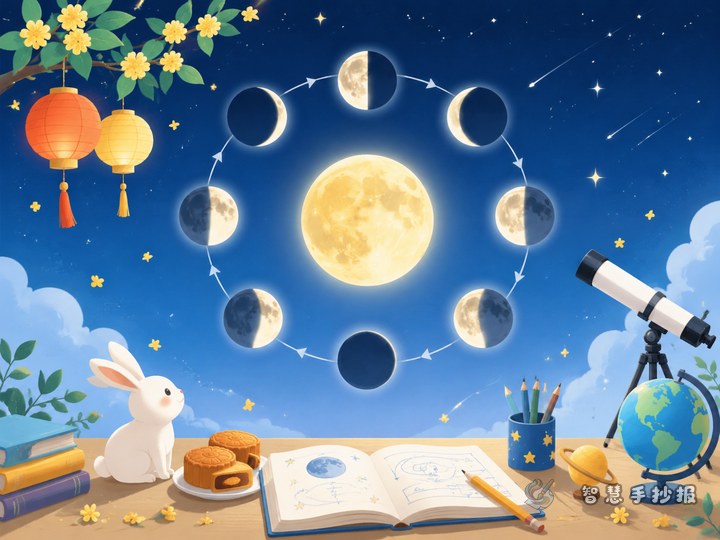
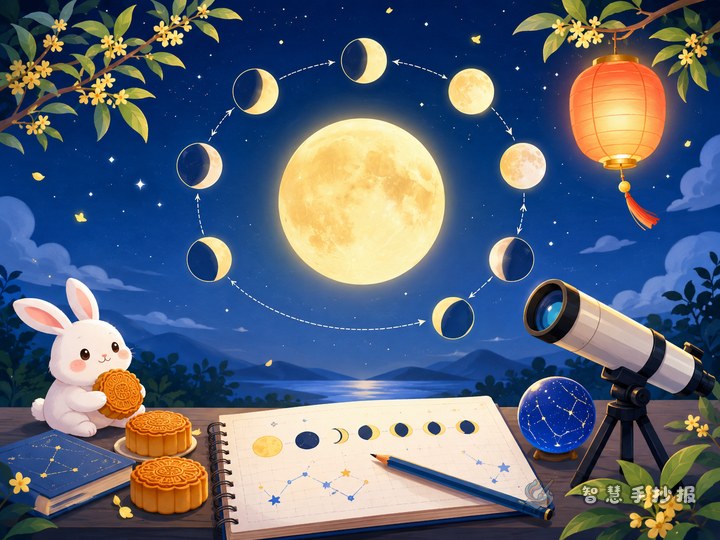
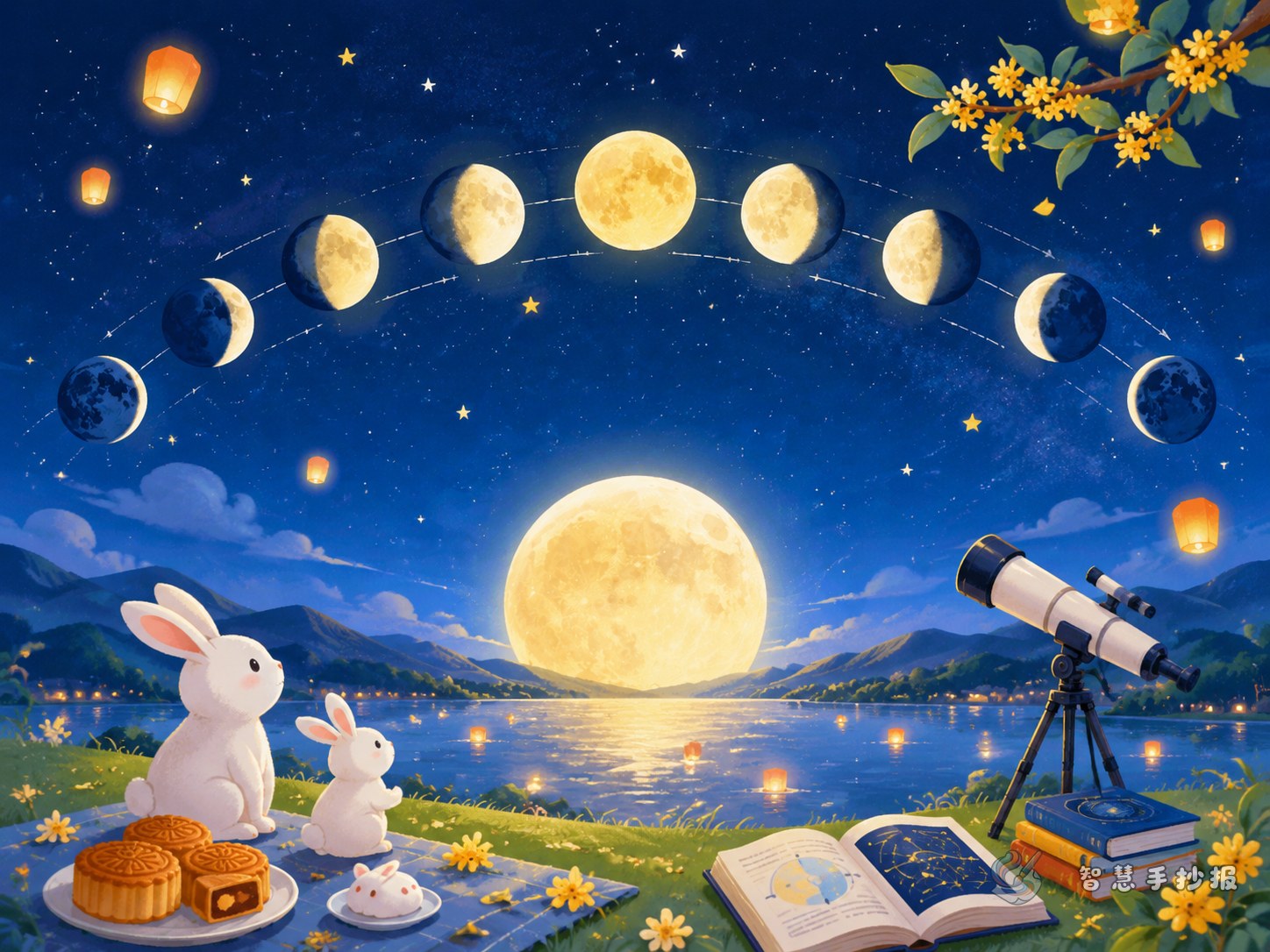
A moon phase theme looks best when the page shows movement. Draw a large full moon in the middle, then place smaller moon phase shapes around it in order. This makes the topic clear at first glance.
- Use a rounded headline style to match the warm festival feeling.
- Split the text into curved or side sections instead of one large block.
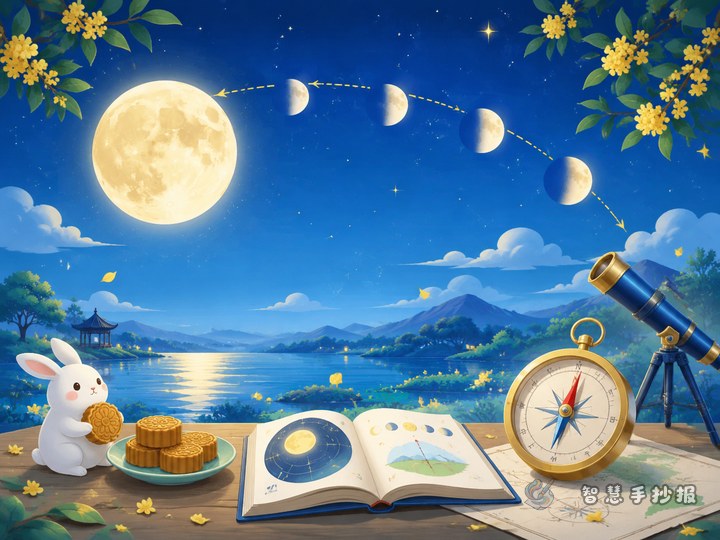
- Add stars, clouds, rabbits, mooncakes, or telescopes in the corners.
- Choose deep blue, pale yellow, and cream colors for a night-sky effect.
Small details that improve the final result
- Make sure the moon phase order is correct before copying the final version.
- Keep each section short so the page does not feel crowded.
- Use simple explanations that primary school students can understand.
- Balance science facts and festival culture on the page.
If you already have the topic but still want help with borders, lettering, section boxes, or full-page arrangement, you can continue designing in the Smart Handwritten Newspaper WeChat mini program.