Turn the Poster into a Moon Phase Calendar
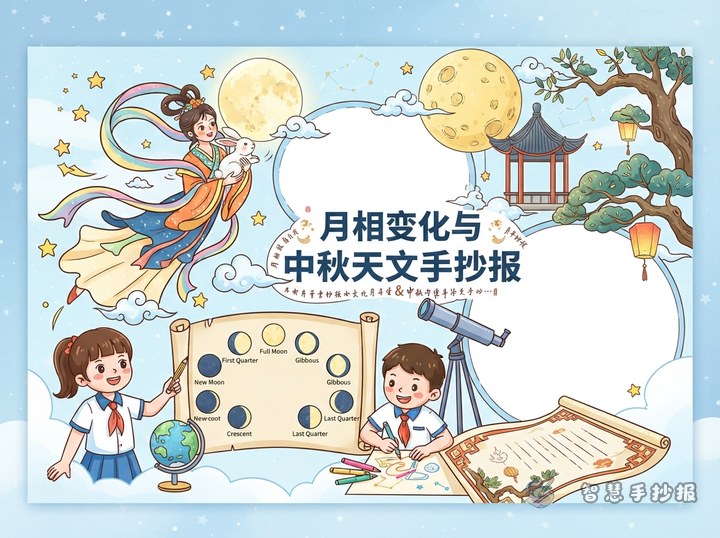
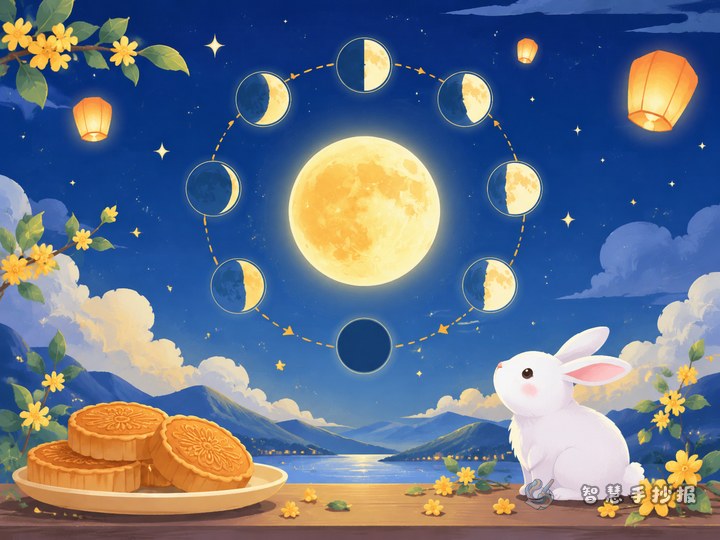
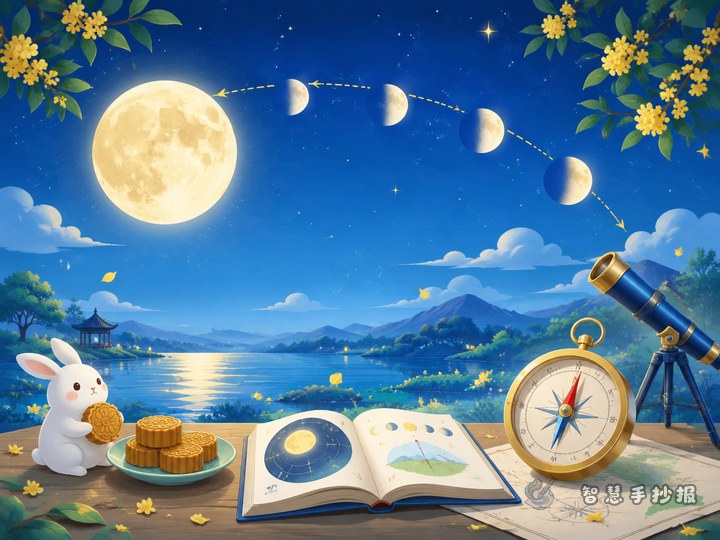
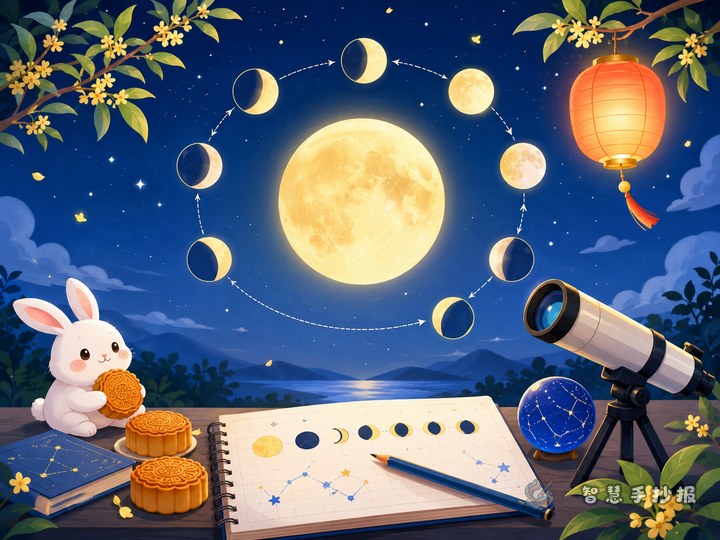
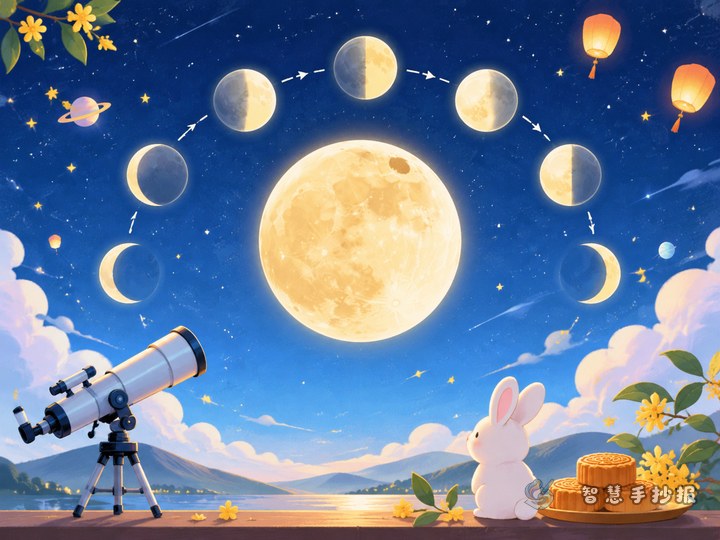
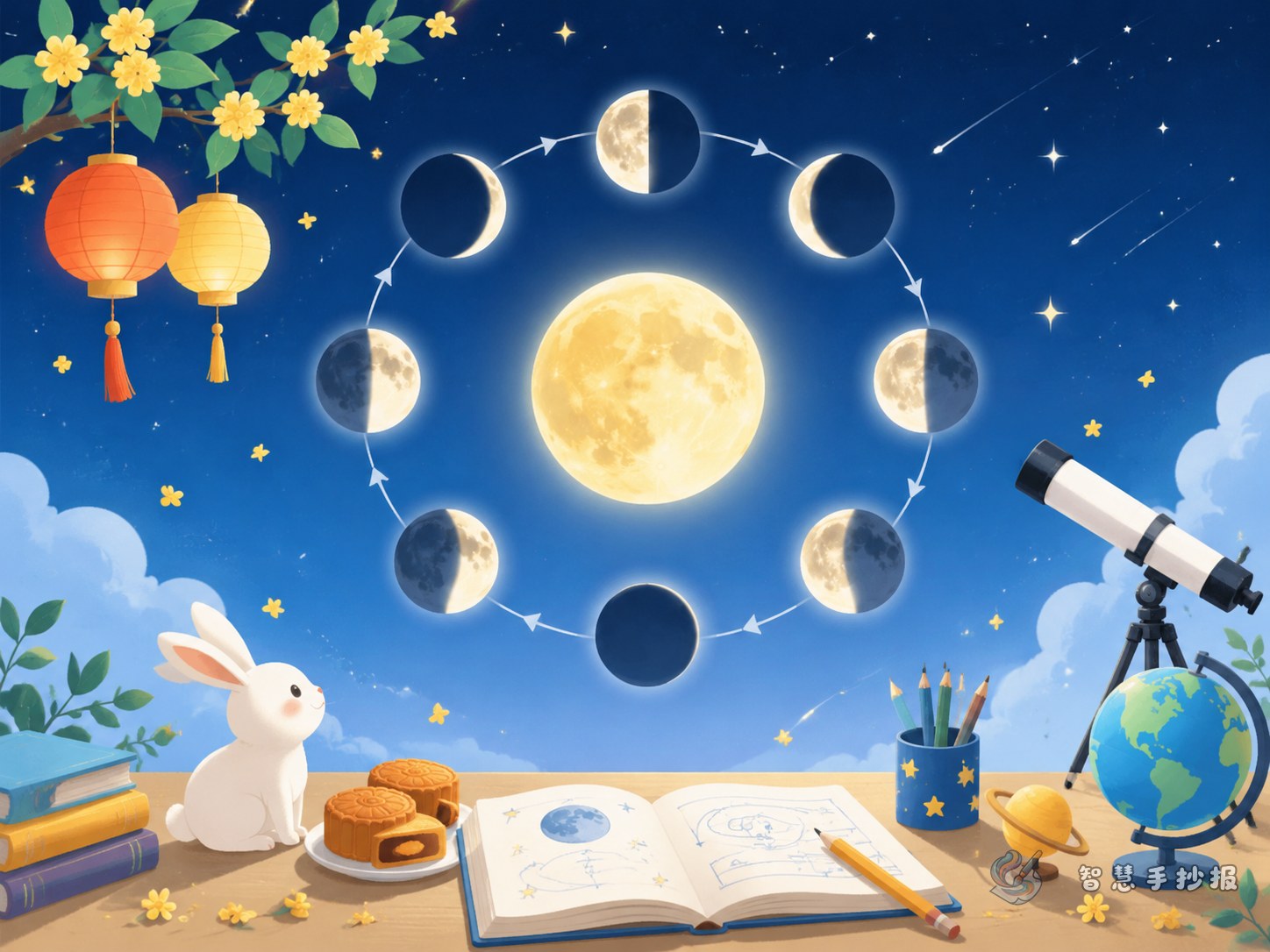
A strong idea for this handwritten newspaper is to show how the moon changes around the Mid-Autumn Festival. Students can draw a simple timeline or circular path, starting from a thin crescent, moving toward the full moon, and then showing the moon becoming smaller again.
The title may be placed at the top, such as “A Mid-Autumn Moon Phase Calendar”. Put the main moon phase drawings in the center, then add short astronomy facts, festival details, and a small observation box around them.
Short Text Materials to Add
Why the Moon Looks Different
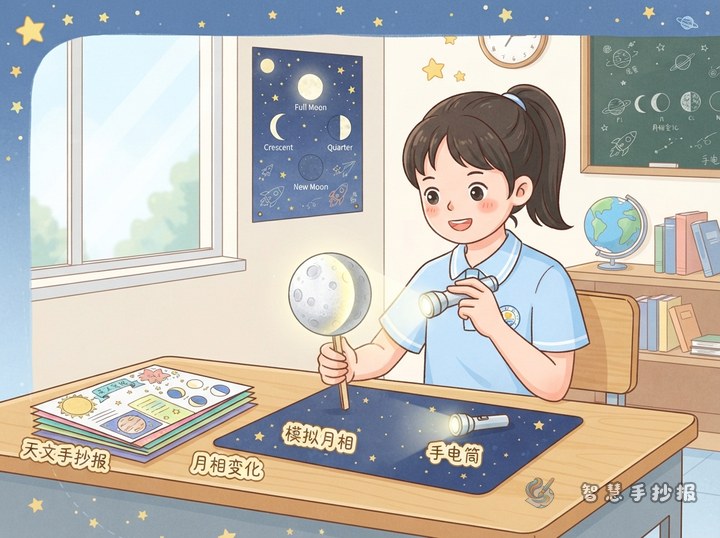
The moon does not make its own light. The moonlight we see is sunlight reflected by the moon. As the moon moves around Earth, we see different amounts of its bright side, so the moon appears to change shape.
Why the Mid-Autumn Moon Looks Round
The Mid-Autumn Festival falls on the fifteenth day of the eighth lunar month, a time that is usually close to the full moon. During a full moon, most of the sunlit side of the moon faces Earth, so it looks round and bright.
Simple Observation Notes
Students can record the date, weather, moon shape, where the moon appears in the sky, and one short feeling. If clouds hide the moon, that can also be written down as a real observation.
Useful Sections for the Page
- Moon Phase Calendar: Draw several moon shapes and label them as waxing, full, or waning.
- Astronomy Q and A: Add easy questions such as “Does the moon shine by itself?” or “Why does its shape change?”
- Mid-Autumn Corner: Include short festival phrases, mooncakes, lanterns, or osmanthus flowers.
- My Moon Watch: Leave a small table for date, weather, moon phase, and personal notes.
Layout Ideas for a Clear and Attractive Design
Try a “large full moon in the center” layout. Around the moon, draw smaller moon phases in an arc or circle. Place science notes on one side and Mid-Autumn customs on the other. Put the observation table at the bottom so the page feels complete.
Dark blue, pale yellow, white, and a little orange work well. Blue creates the night sky, yellow highlights the moon, and white keeps the text easy to read. Decorations such as clouds, stars, lanterns, and flowers should be simple, not too crowded.
Making Tips Before You Start Coloring
- Plan the title area, drawing area, text boxes, and observation box first.
- Keep the moon phase circles similar in size for a neat look.
- Write short sentences instead of long paragraphs.
- Use brighter colors only for the title and the moon so the key points stand out.
For more page ideas and ready-to-use theme inspiration, users can open the Zhihui Shouchaobao WeChat mini program and continue making a Mid-Autumn astronomy handwritten newspaper.