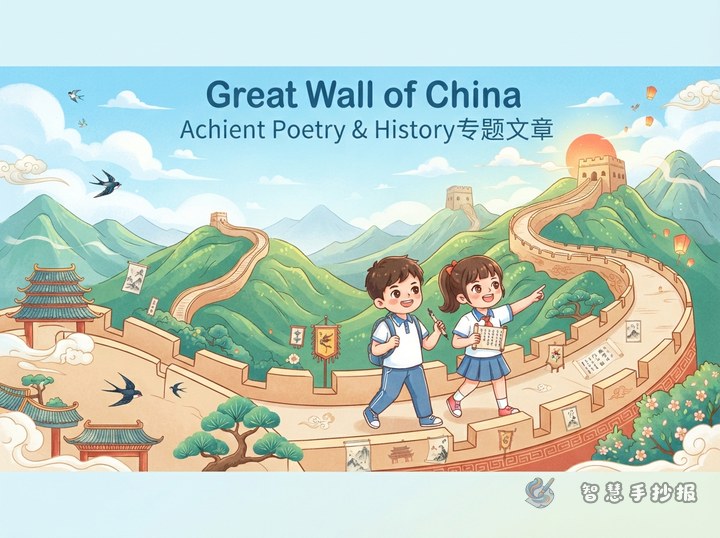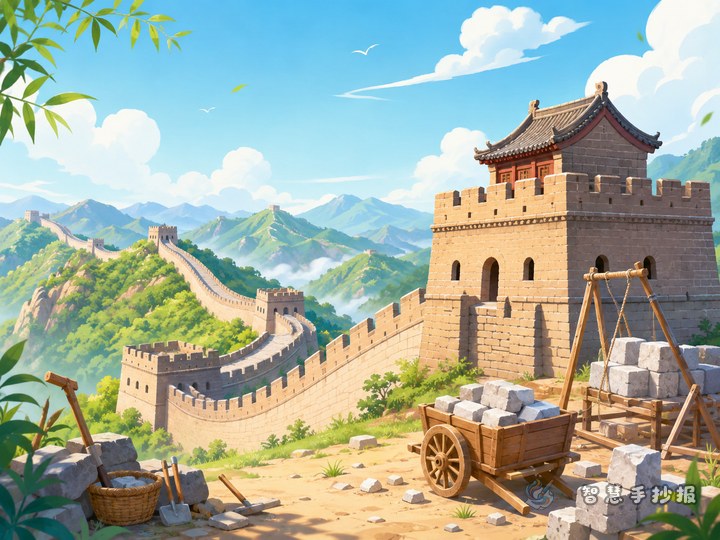
Start with the main question: why is it called the “Ten-Thousand-Li Great Wall”?
For this kind of handwritten newspaper, the most important step is answering the title itself. The phrase “ten thousand li” is not meant as an exact number. In traditional language, it describes something very long, grand, and impressive. That is why people use this name for the Great Wall.
A strong main heading could be “Why Is the Great Wall Called the Ten-Thousand-Li Great Wall?” A smaller subtitle such as “Learning Great Wall history and Chinese culture” can make the page feel more complete.
Ready-to-use writing materials for students
Section 1: The meaning of the name
The Great Wall was an important military defense project in ancient China. It was built over a long period and across a wide area. The name “Ten-Thousand-Li Great Wall” is a way to praise its great length and majestic scale.
Section 2: The Great Wall is more than one wall
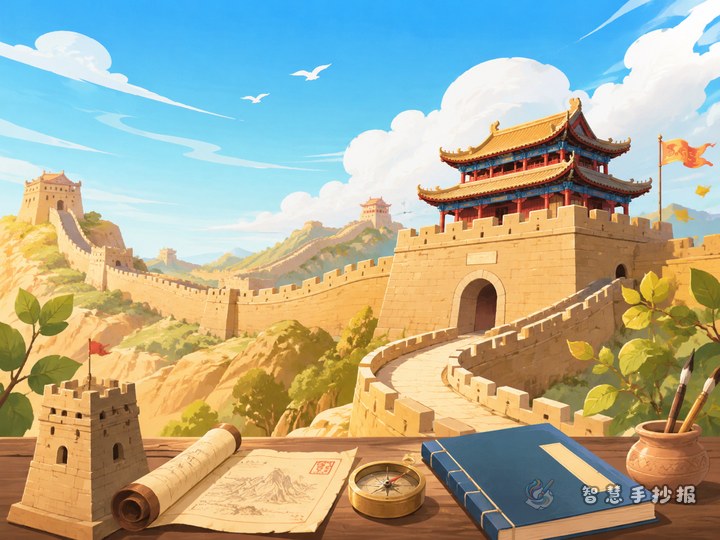
The Great Wall was not only a single long wall. It also included passes, watchtowers, beacon towers, and other structures. These parts worked together for defense, warning, and communication.
Section 3: Why the Great Wall matters
The Great Wall reflects the wisdom and effort of people in ancient times. Today, it is also seen as a symbol of perseverance, unity, and cultural heritage.
Section 4: My message about the Great Wall
The Great Wall stretches across mountains and plains like a giant dragon. It reminds us to respect history, protect cultural treasures, and learn from the spirit of determination.
Make the newspaper feel more creative with small sections
If the page has only long paragraphs, it may look heavy and crowded. Breaking the content into short sections makes it easier to copy by hand and easier to read.
- One-minute Great Wall facts: explain the name in two or three simple sentences.
- Parts of the Great Wall: introduce the wall, passes, and beacon towers.
- History in brief: mention that the wall was built and expanded over different periods.
- Key spirit words: perseverance, unity, wisdom, protection.
- My reflection: write a short personal feeling about history and culture.
Design tips: focus on the feeling of length and history
This topic works best when the layout shows both distance and an ancient atmosphere. Place the title at the top center and shape it like bricks or stone blocks. Draw a winding line across the middle of the page to suggest the path of the Great Wall and separate the content areas naturally.
- Top: main title with small flags, clouds, or mountain lines.
- Left side: the origin of the name and basic facts.
- Right side: meaning, spirit, and personal reflection.
- Bottom: a short conclusion or protection message.
Good color choices include earthy yellow, brick red, dark green, and light blue. Border decorations can use brick patterns, tower silhouettes, or mountain shapes to strengthen the historical theme.
Short closing lines students can use
- The Great Wall is long in distance and even longer in history.
- The name “Ten-Thousand-Li Great Wall” shows both grandeur and cultural pride.
- Learning about the Great Wall means learning to respect and protect history.
After finishing the text, families and teachers can continue organizing the page in the Zhihui Shouchaobao WeChat mini program to polish titles, section balance, and the final handwritten newspaper design.