A narrow topic can make the page stronger
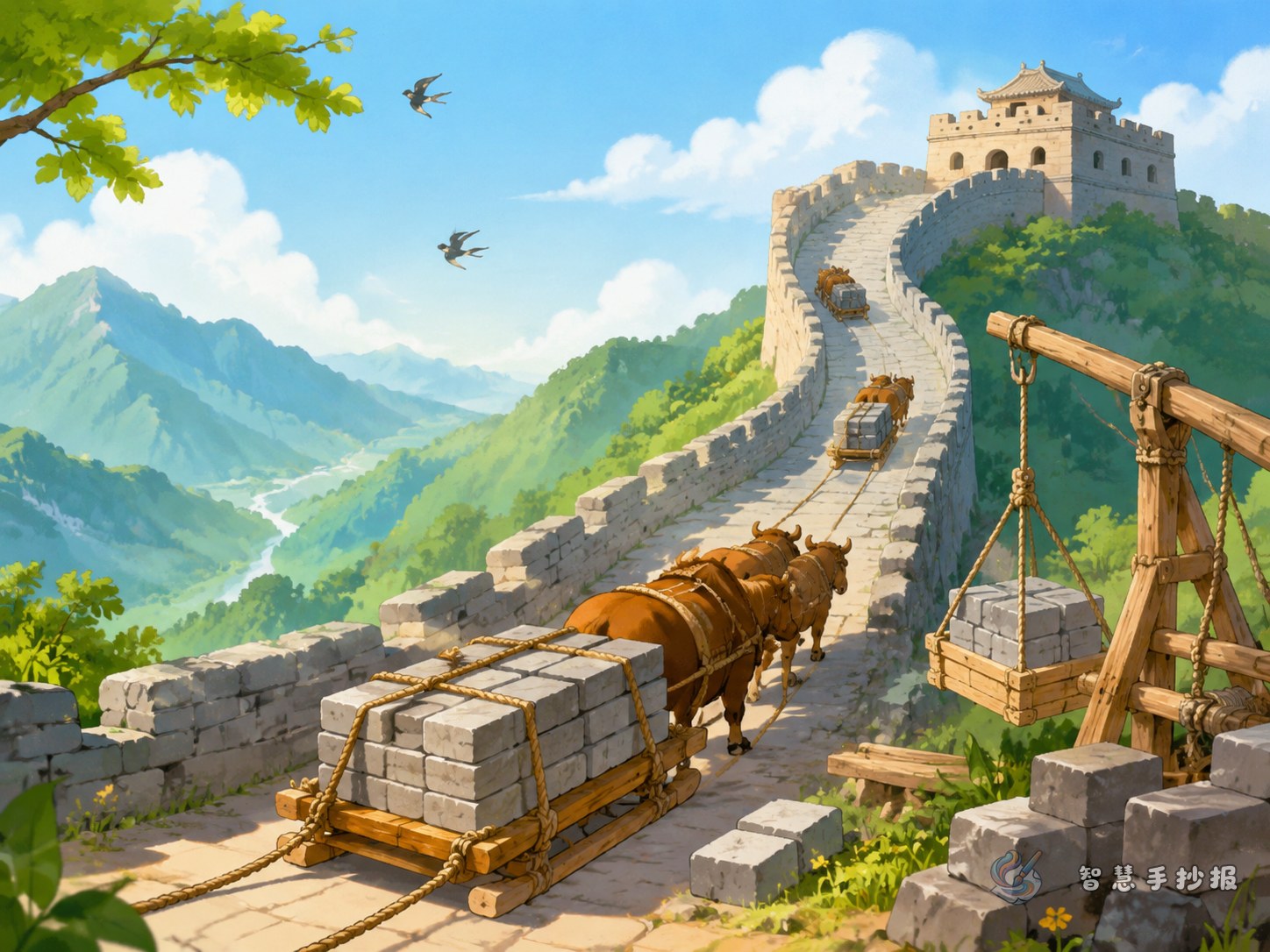
Many students make a Great Wall handwritten newspaper that feels too broad. A more focused question like How were Great Wall bricks carried up the mountains? gives the page a clear story. Readers naturally want to know how people moved heavy materials over steep hills without trucks or cranes.
You can keep the main title as a question, or add a subtitle such as The wisdom behind every brick to make the theme more vivid.
Key text students can use directly
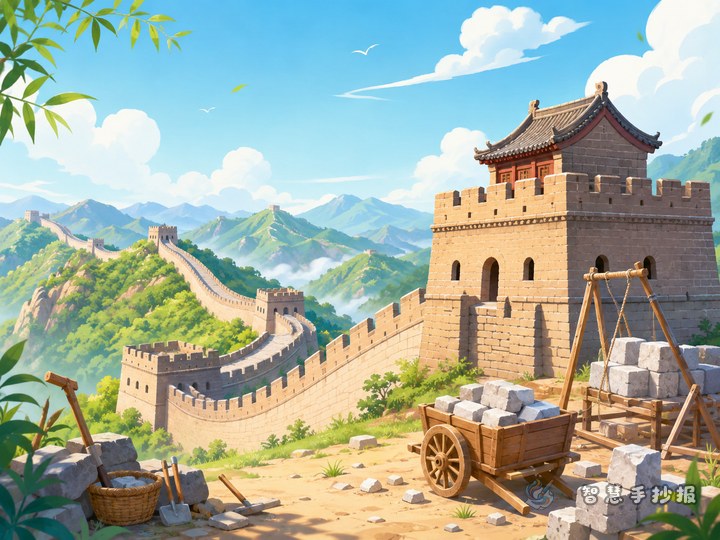
Transporting materials for the Great Wall was one of the hardest parts of construction. In flatter areas, people could use simple carts or animals such as horses and donkeys. On steep mountain roads, workers often had to carry bricks and stones by hand. In some places, builders used nearby stone or local soil to reduce the distance materials needed to travel. This showed practical wisdom and adaptation to the land.
The Great Wall was not built all at once. Different sections were repaired, connected, and strengthened in different periods. Workers faced mountains, cold weather, limited water, and long working distances. That is why the Great Wall represents not only a famous structure, but also effort, cooperation, and endurance.
Four useful sections for the page
- Ways of Transport: human carrying, animal help, simple tools, local materials.
- Building Difficulties: steep roads, cold weather, heavy loads, long projects.
- History Corner: different periods and different building materials.
- My Thoughts: respect for workers and the spirit of perseverance.
If there is extra space, students can add a small box called If I Were There and imagine how they would help move materials in ancient times.
Write with scenes, not just facts
This topic works well when students describe a scene. They can picture a long line of workers moving along a winding mountain path, carrying bricks step by step. In some places no cart could pass, so everything had to be lifted by people. In other places stone could be taken directly from the mountain nearby. This kind of writing is easier to read and more suitable for a school newspaper page.
A helpful sentence for the ending is this: the greatness of the Great Wall comes not only from its length, but also from the wisdom, teamwork, and determination behind it.
Layout ideas with a mountain-road feeling
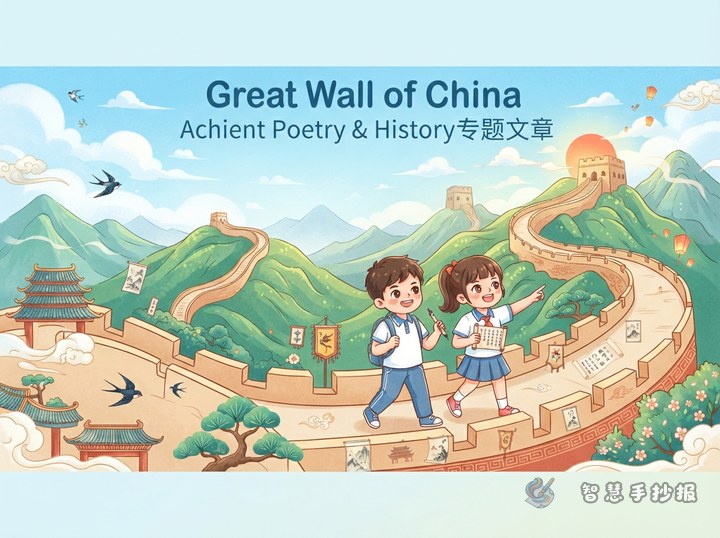
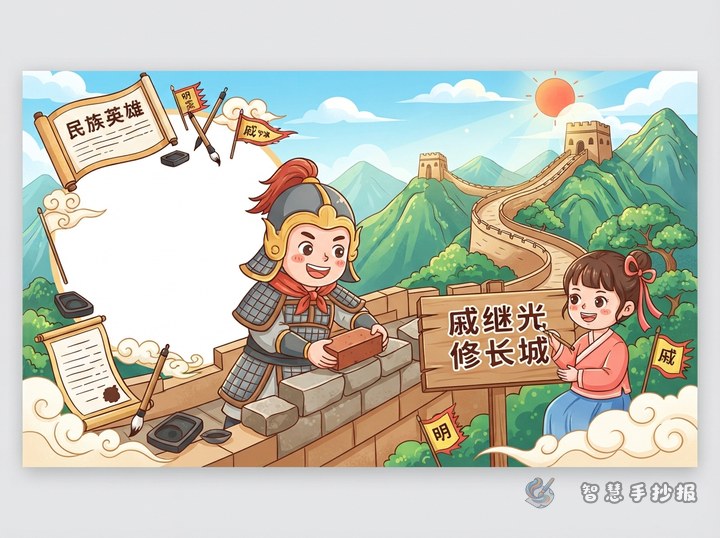
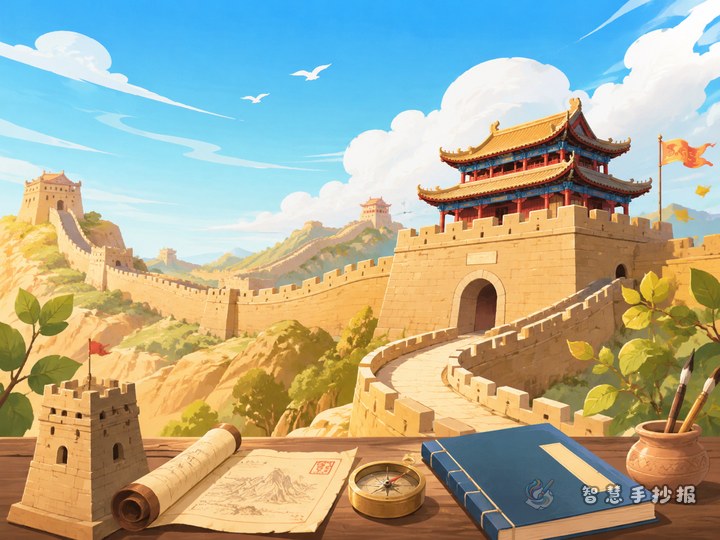
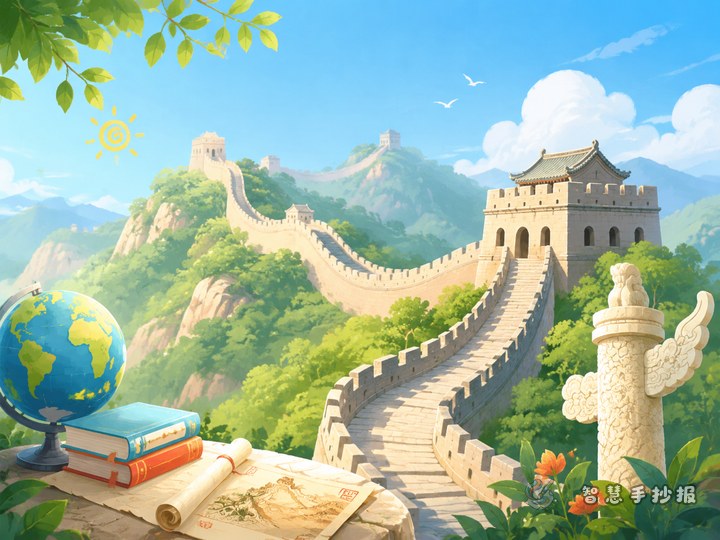
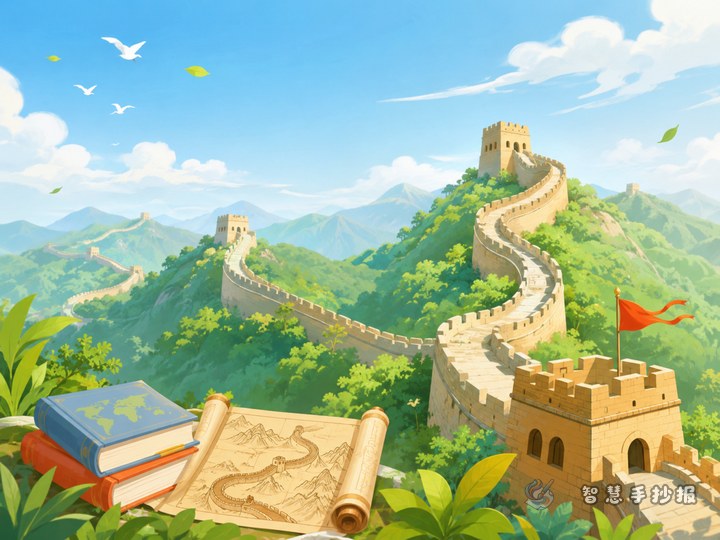
This topic fits a diagonal or climbing-style layout. Put the main title at the top, draw a winding mountain road or a wall outline through the middle, and place text boxes on both sides. Decorations can include bricks, battlements, flags, and mountain sketches.
- Use gray, earthy yellow, and brick red as the main colors.
- Make the title bold so it feels strong like stone.
- Separate sections with brick-shaped frames.
- Add small drawings of baskets, carrying poles, mountains, or animals.
After drafting the text, students can continue arranging the page in the Zhihui Shouchaobao WeChat mini program to organize sections and improve the final look.
A short but meaningful ending
A good ending can be simple: Every brick of the Great Wall reflects human hands, wisdom, and persistence. When we learn about the Great Wall today, we admire not only its size, but also the hardworking spirit behind it.
This kind of ending matches the topic well and gives the newspaper a strong final message.