Start with a calm and respectful theme
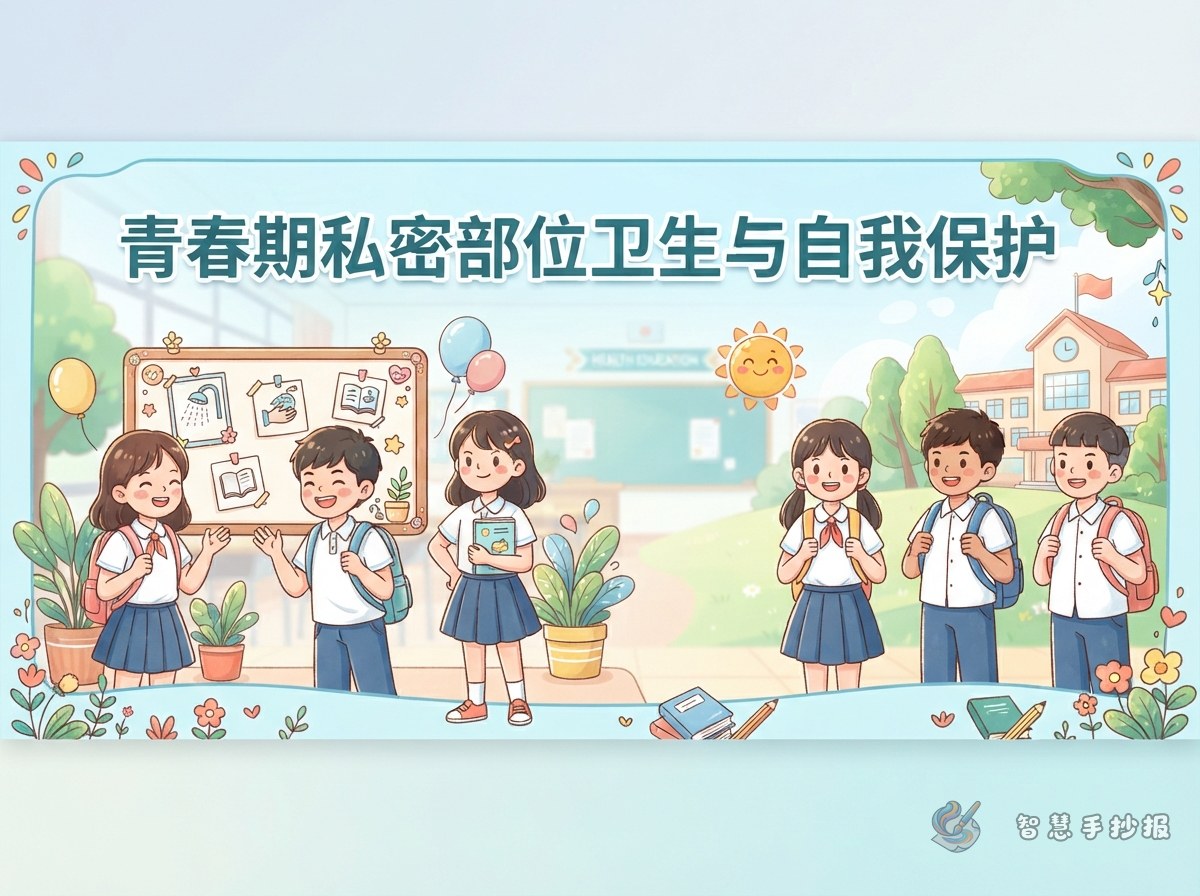
A poster about private hygiene and self-protection should feel clear, gentle, and age-appropriate. It can be built around four key ideas: cleanliness, respect, boundaries, and asking for help. This helps students understand that taking care of the body also means protecting personal safety.
- Title ideas: My Body Deserves Care, Healthy Habits for Growing Up, Respecting Body Boundaries.
- Color ideas: light blue, soft green, cream, and pale orange create a clean health-education look.
- Illustration ideas: a sink, clean towel, folded underwear, a heart-shaped shield, or a small help notebook.
Four content cards to include
Cleanliness card: keep the body fresh
During puberty, sweating may increase, so the private area should be kept clean and dry. Students can write: bathe or wash the body regularly, change sweaty clothes after exercise, change underwear often, wash it well, dry it in the sun when possible, and do not share towels or close-fitting clothing.
Comfort card: choose breathable clothing
The poster can remind students to choose underwear that is soft, well-fitting, and breathable. Avoid wearing very tight trousers for long periods. Girls should change menstrual products on time, and boys should also pay attention to clean close-fitting clothing.
Boundary card: every body deserves respect
Use simple and clear sentences: areas covered by a swimsuit are private body parts. Others should not touch, photograph, or joke about them. Students should also respect other people’s body boundaries and should not tease classmates about appearance or body changes.
Help card: speak up when something feels wrong
If there is pain, itching, an unusual smell, unusual discharge, or any touch or request that feels scary or uncomfortable, tell a parent, teacher, school nurse, or another trusted adult. A good poster sentence is: Asking for help is a way to protect yourself.
Short lines students can copy
- Hygiene line: Change underwear often, keep dry, and wash close-fitting clothes carefully.
- Respect line: Everyone grows at a different pace, so do not compare, tease, or spread rumors.
- Boundary line: My body belongs to me, and I can say no when I feel uncomfortable.
- Help line: If my body feels wrong or my heart feels scared, I should tell a trusted adult.
- Reminder line: Learning about puberty means learning both hygiene and self-protection.
A clear layout idea for the page
Use a center title, two side columns, and a reminder strip at the bottom. In the middle, draw a heart shield or a small growing tree to show care and protection. Put hygiene habits on the left, body boundaries on the right, and help reminders along the bottom.
- Sketch the title box and four content cards with pencil first.
- Write only three to five sentences in each section to avoid crowding the page.
- Use small icons to connect ideas, such as a water drop for cleanliness and a shield for protection.
- Check that the wording is gentle, accurate, and suitable for school display.
What to avoid in this type of poster
Do not include classmates’ personal experiences, embarrassing drawings, or frightening language. Keep the focus on science, health, respect, and seeking help. This makes the poster informative while still comfortable to read.
If you want to turn these ideas into a printable poster layout more quickly, you can continue in the Zhihui Shouchaobao WeChat mini program, choose a theme, adjust sections and colors, and add age-appropriate text.