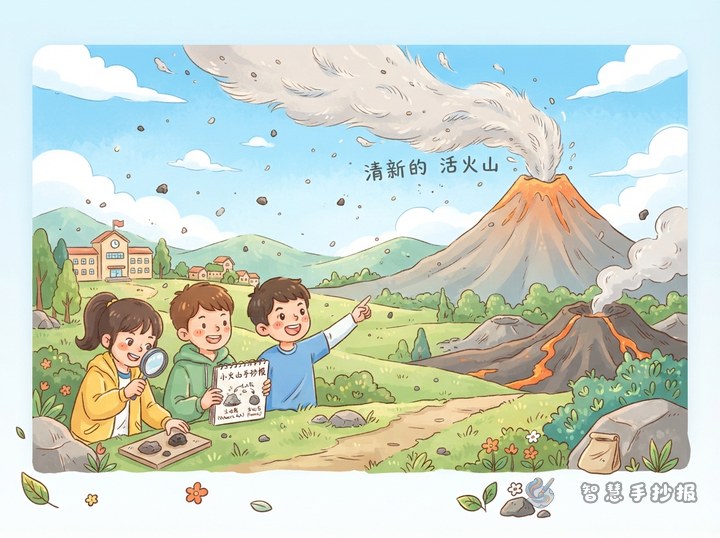
Start with the idea of a lake inside a volcano
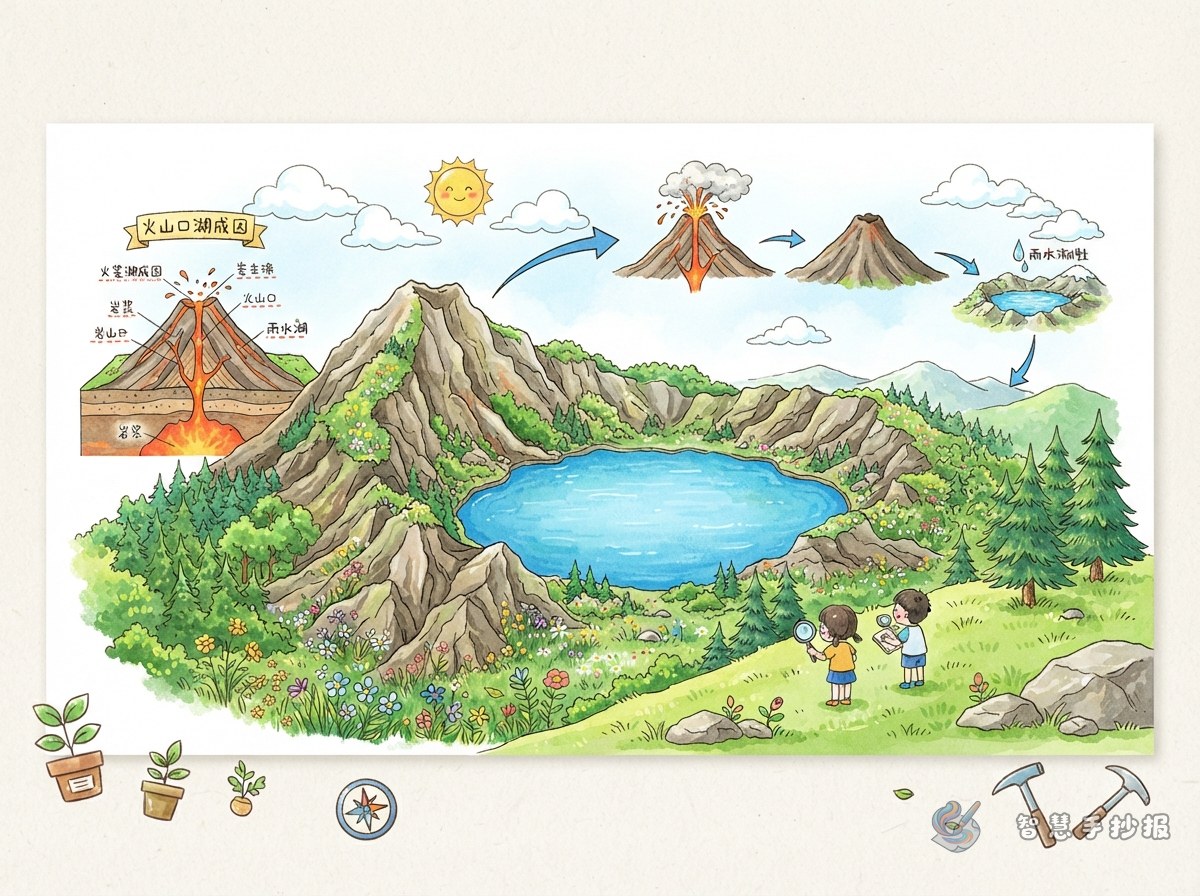
This poster topic should not focus only on danger. A clearer angle is to show how a crater lake forms, what it looks like, and how to observe volcanic landscapes safely. In the title area, draw a round volcanic crater with blue water inside, then add arrows for “eruption,” “collapse,” and “water collects.”
A useful opening sentence is: A crater lake is a special landform left by volcanic activity. It often forms in a volcanic crater or a collapsed volcanic basin and looks like a mirror set into a mountain.
Explain the formation in three simple steps
- Volcanic eruption: Magma, ash, and gas erupt from the vent, leaving a hollow area near the top.
- Collapse or enclosed basin: After the eruption, the crater may become deeper or wider, forming a bowl-shaped low area.
- Water collects over time: Rainwater, melted snow, or groundwater flows into the hollow, gradually creating a lake.
Use words such as “first,” “then,” and “finally” to make the explanation easy to read. Small icons and arrows will help younger students understand the process quickly.
Short science sections to add
Crater Lake Fact Card
- Location: Often found in volcanic craters, volcanic cones, or collapsed volcanic basins.
- Shape: Usually round or oval, but sometimes irregular because of the surrounding terrain.
- Water source: Mainly rainfall, melted snow, and groundwater.
- Color: Some lakes look blue or green because of depth, minerals, and light.
Rock and mineral notes for the side panel
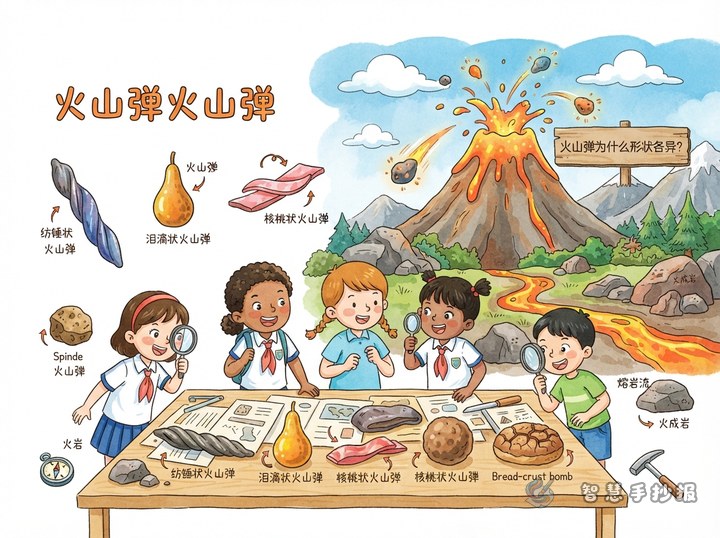
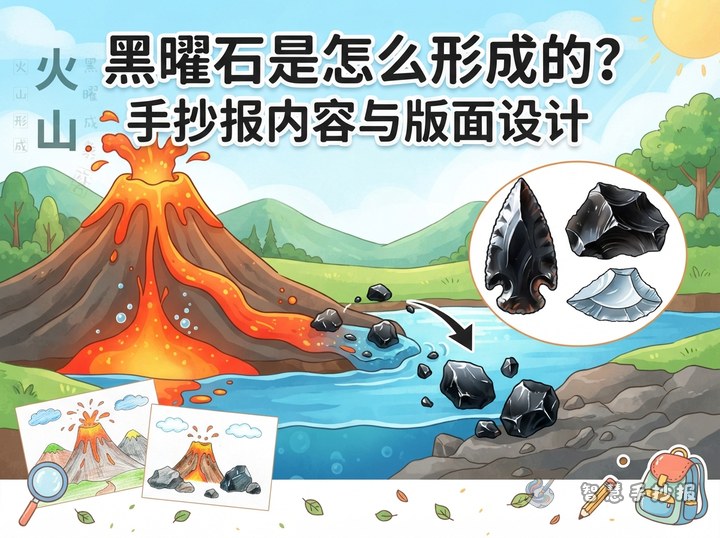
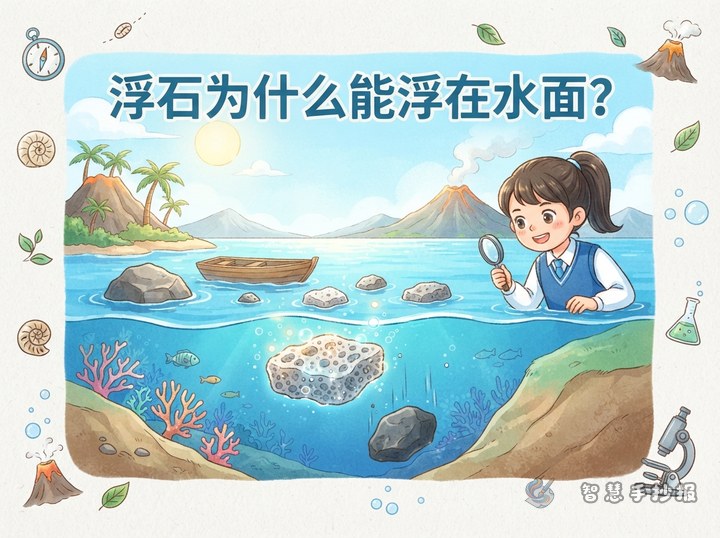
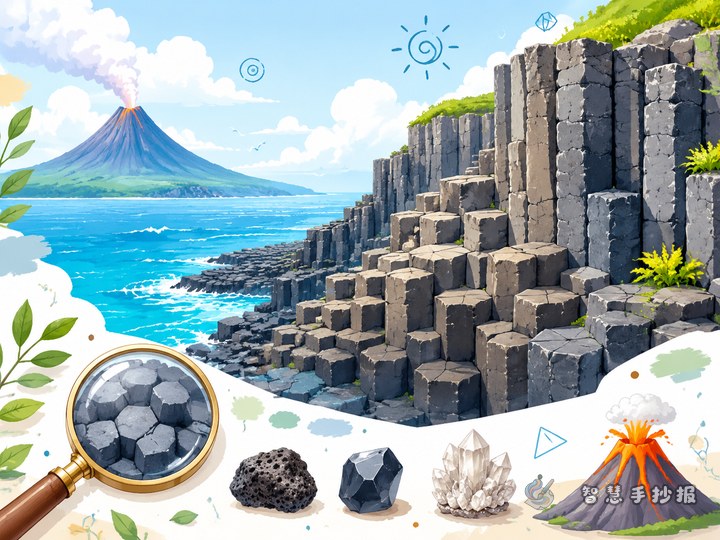
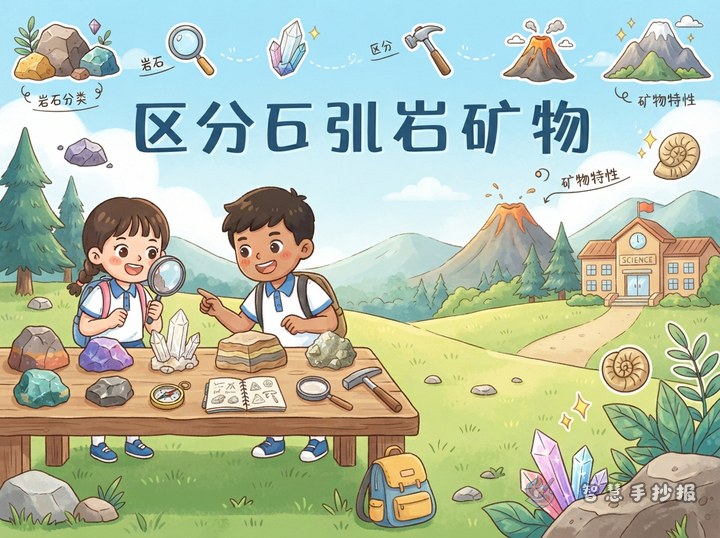
You can also introduce pumice, obsidian, and basalt as “rock friends of volcanoes.” Pumice is full of holes and can be very light. Obsidian looks like natural glass. Basalt is usually dark and forms when lava cools.
Make the layout look like a geography field notebook
- Top left: Place the main title and a large crater lake illustration with a bright blue water surface.
- Top right: Add a three-step formation diagram with numbers 1, 2, and 3.
- Center: Draw a cross-section of a volcano and label the crater, lake water, rock layers, and volcanic cone.
- Bottom: Divide the space into “Volcanic Rock Cards” and “Safe Observation Tips.”
Use orange-red for volcanic activity, blue-green for the lake, and gray-black for rocks. Rock-shaped borders can look lively, but keep the writing areas clean and easy to read.
Add safety and respect for nature
A good ending sentence is: When visiting volcanic landforms, follow marked paths, stay away from unsafe water areas, and do not collect rocks or minerals without permission. A crater lake may be beautiful, but it is also a trace of Earth’s inner activity.
If you want to organize the title, sections, and page layout more quickly, you can continue creating your poster in the Zhihui Shouchaobao WeChat mini program and combine “crater lake,” “formation process,” and “rock and mineral cards” into a complete page.