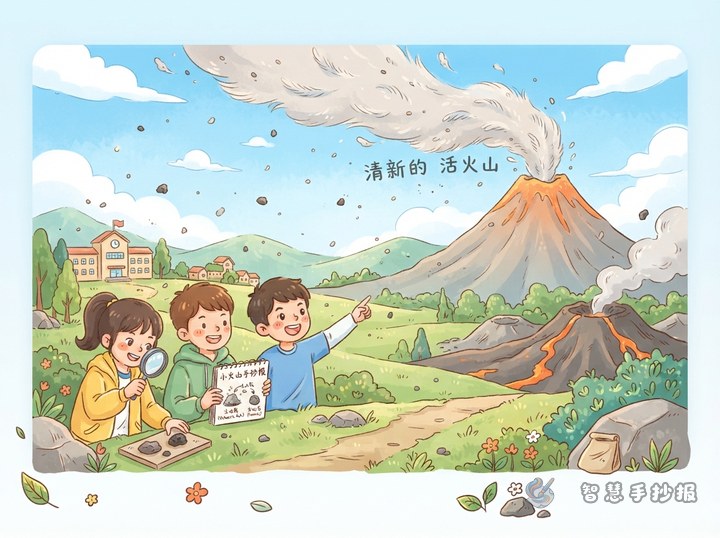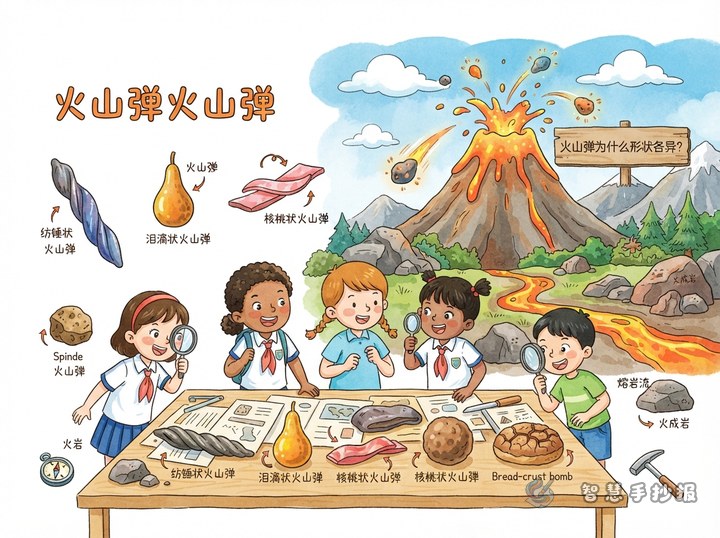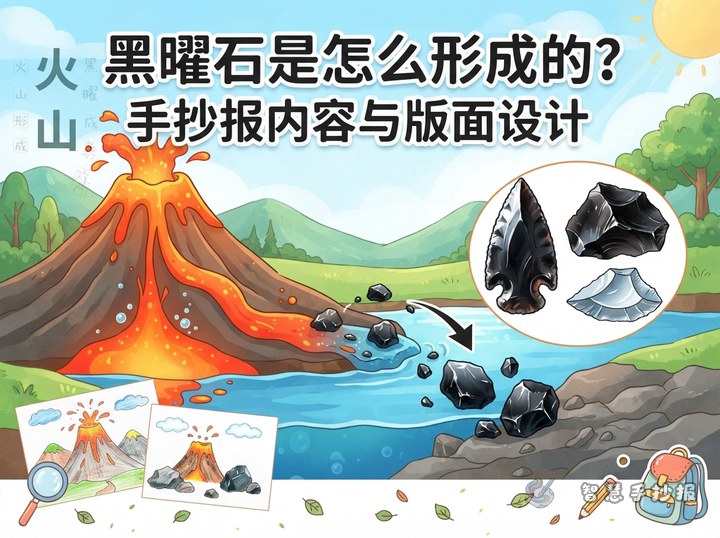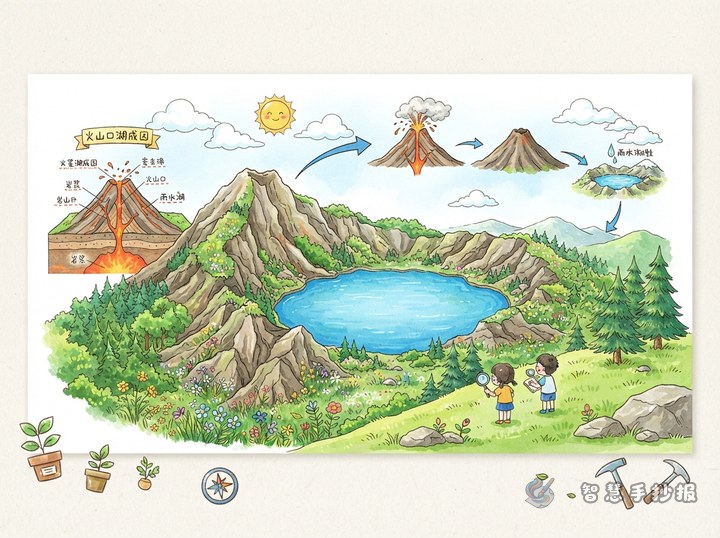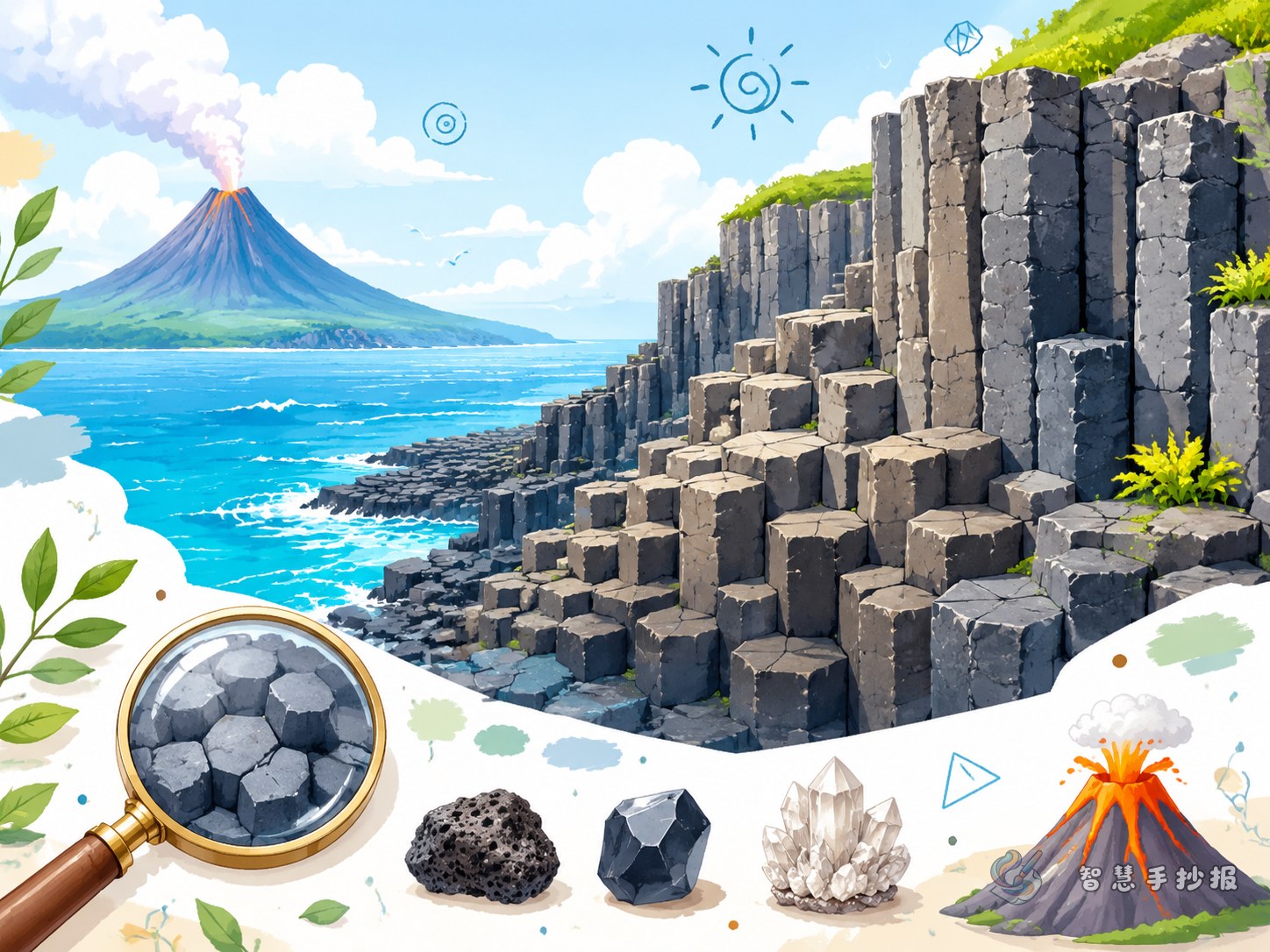
Start with the idea of a stone forest made by lava
Basalt columnar joints look like rows of natural stone pillars, so they make a strong and memorable topic for a handwritten newspaper. A simple opening sentence can be: When lava from a volcano cools and shrinks, it may crack into tall polygon-shaped columns.
For young students, the topic can be built around three key words: lava cooling, shrinking cracks, and stone columns. This keeps the science clear and gives the page a distinctive picture to draw.
Short text materials students can use
What is basalt?
Basalt is a common volcanic rock. It is usually formed when lava reaches the surface and cools down. Basalt is often dark in color and quite hard, and it can be found in many volcanic areas and island landscapes.
How do columnar joints form?
Hot lava slowly contracts as it cools. When the contraction creates cracks, the cracks may spread through the rock and divide it into many polygonal columns. A group of columns can look like a natural stone organ or a forest of rocks.
Observation notes
- The columns are often hexagonal or polygonal, but they are not all perfectly the same.
- The direction of the columns is related to the way the lava cooled.
- Columnar joints show that nature can create amazing geometric shapes.
A page layout that looks full and clear
Divide the page into four parts: a main drawing area, a science card area, a formation process strip, and a question corner. In the main drawing, show dark gray columns of different heights. Add a small volcano or a cooling lava flow in the background to connect the scene with the topic.
- Top left: Place a title such as “The Secret of Volcanic Stone Columns.”
- Right side: Draw a three-step process: lava flows out, lava cools, cracks form columns.
- Bottom area: Add a “Rock Observer” card with the color, hardness, and shape of basalt.
- Blank spaces: Use small question bubbles, such as “Are they carved by people?” and “Why do they look like hexagons?”
Use colors that show the feeling of rock
Good colors for this topic include dark gray, light gray, black, orange-red, and pale blue. Gray and black show basalt, orange-red shows hot lava, and pale blue makes the page brighter. The border can be designed with polygon rock blocks or simple crack lines.
Students do not need to draw the columns perfectly. Start with tall rectangles of different heights, change the tops into pentagons or hexagons, and add short lines for cracks and shadows. This is easy to draw and still shows the main landform feature.
End with curiosity and protection
A good closing paragraph can say: Learning about basalt and columnar joints is not just about remembering a geology term. It also teaches us to observe nature carefully. When visiting geological landscapes, we should not scratch, break, or take away rocks, so more people can enjoy nature’s work.
To organize the title, columns, and layout more quickly, users can open the Zhihui Shouchaobao WeChat mini program and continue creating a handwritten newspaper with keywords such as volcano landforms, rocks and minerals, or basalt.