Open with a surprising question
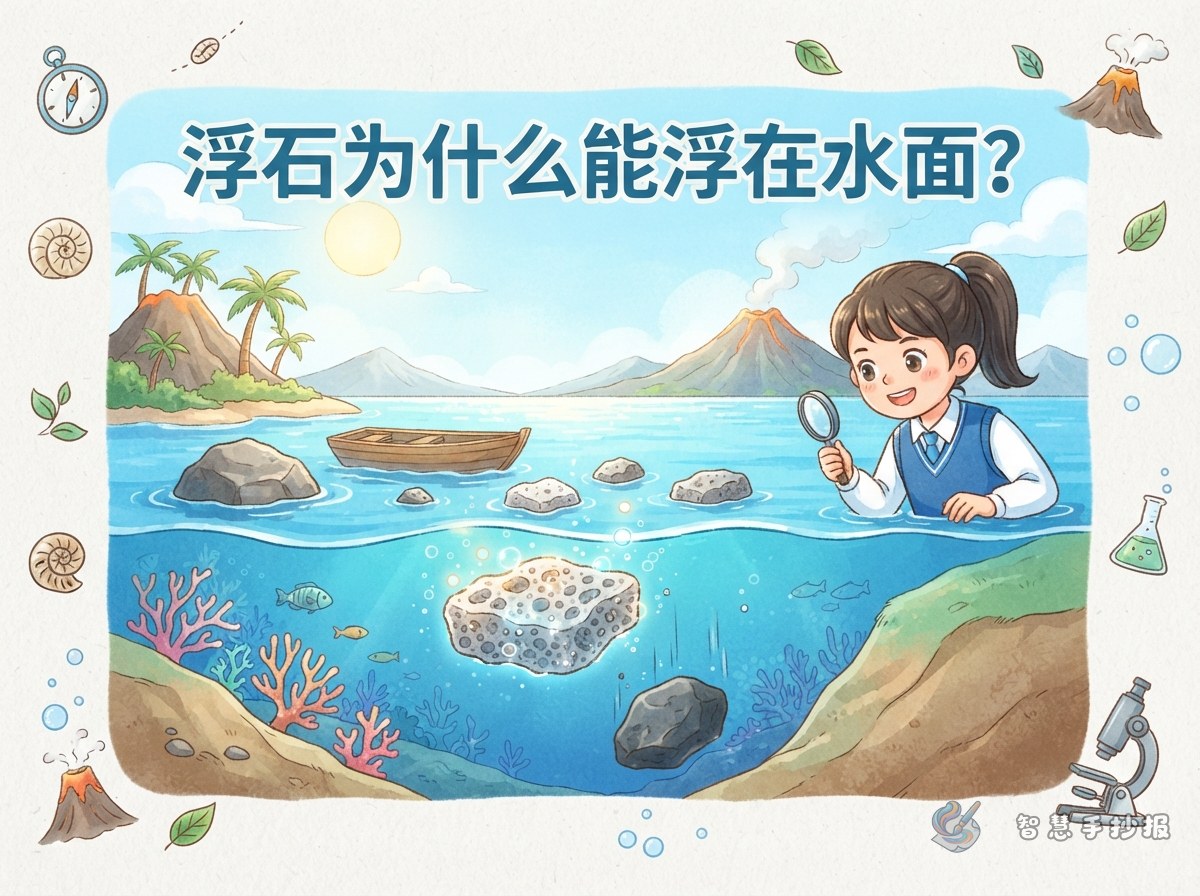
Most rocks sink, so why can pumice float? Pumice is a porous volcanic rock formed during an eruption. As gas-rich magma rises and pressure drops, bubbles expand inside it. The frothy material is then ejected and cools so quickly that many holes remain. These pores can lower the rock's overall density enough for some pieces to float.
Tell the rock's story in four frames
- Magma rises: Gas-bearing magma moves toward Earth's surface.
- Bubbles expand: Lower pressure allows bubbles to grow throughout the magma.
- Material erupts: Frothy fragments are thrown from the volcano.
- Pumice forms: Rapid cooling preserves the holes left by the bubbles.
Connect the frames with arrows and label the magma, bubbles, eruption, and pores. This visual sequence explains the process more clearly than one long paragraph.
Add facts that support the main idea
What pumice looks like
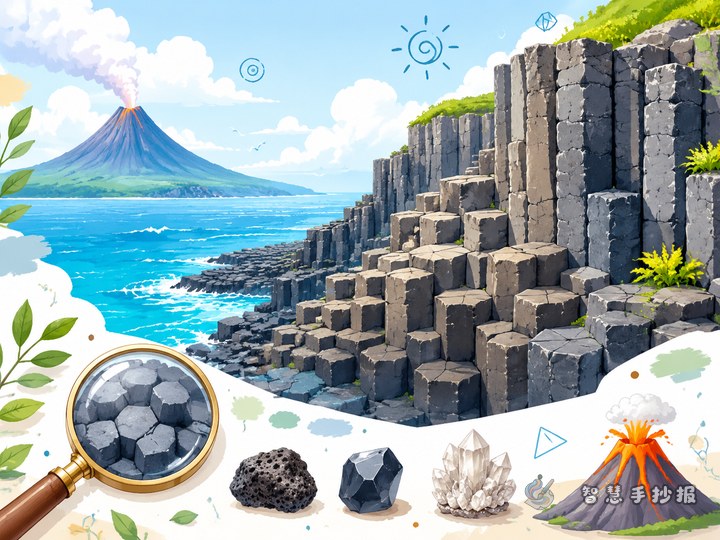
Pumice has a rough surface filled with holes and is often pale gray, off-white, or light yellow. It may look like solid rock foam, although its pores do not necessarily hold trapped air forever.
Why floating is not permanent
Whether a piece floats depends on its porosity, size, structure, and how much water enters its pores. Some pumice eventually becomes waterlogged and sinks. Avoid claiming that every piece of pumice will float forever.
A simple observation activity
With an adult or teacher supervising, place a safe pumice sample gently into a clear cup of water. Record what happens immediately and after some time. Do not handle sharp or unidentified rocks, taste a sample, or rub it forcefully.
Build the page around a bubbling volcano
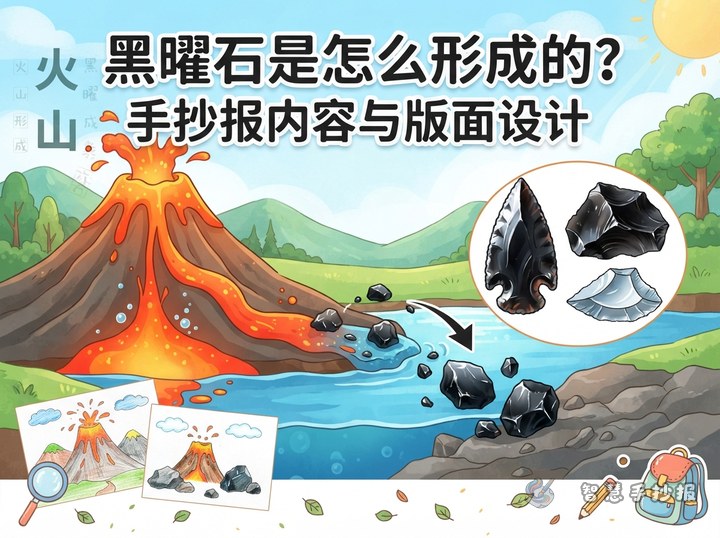
Place the title inside a cloud above the volcano. Use the center for a volcano cutaway and the four-stage formation diagram. A “Pumice Profile” box can go at the lower left, while a “Float or Sink?” observation box fits on the lower right. Orange-red can represent magma, pale blue can mark water, and gray can define the rocks.
- Add small holes to the title letters without reducing readability.
- Create a border from bubbles, tiny pumice pieces, and flowing lava lines.
- Highlight key terms with color blocks and keep paragraphs short.
- Leave open space so illustrations do not crowd the writing.
Check the science before finishing
Make sure the poster connects three ideas: a porous structure, lower overall density, and the possibility of sinking after absorbing water. Check that arrows point in the right direction and that headings remain easy to read. Once the notes are ready, open the Smart Handwritten Newspaper WeChat Mini Program to choose a layout, arrange the sections, and continue creating.