Why rhymes and playground games deserve their own page
When students write about local culture, they usually reach for famous people, old streets or food, so many projects end up looking the same. Nursery rhymes and traditional games are different: they live in grandparents' memories and on the school playground, which makes the page feel personal and genuinely local.
They are also easy to lay out. A few lines of rhyme plus a simple drawing of chalk squares can carry a whole section.
Where to collect your material
Rhymes your family remembers
Ask grandparents and parents three things: what they sang, when they sang it, and who taught them. Write the words down exactly as they say them; the original phrasing is far more interesting than a polished rewrite. If a line is unclear, mark it and ask again later instead of inventing something.
Games played during break time
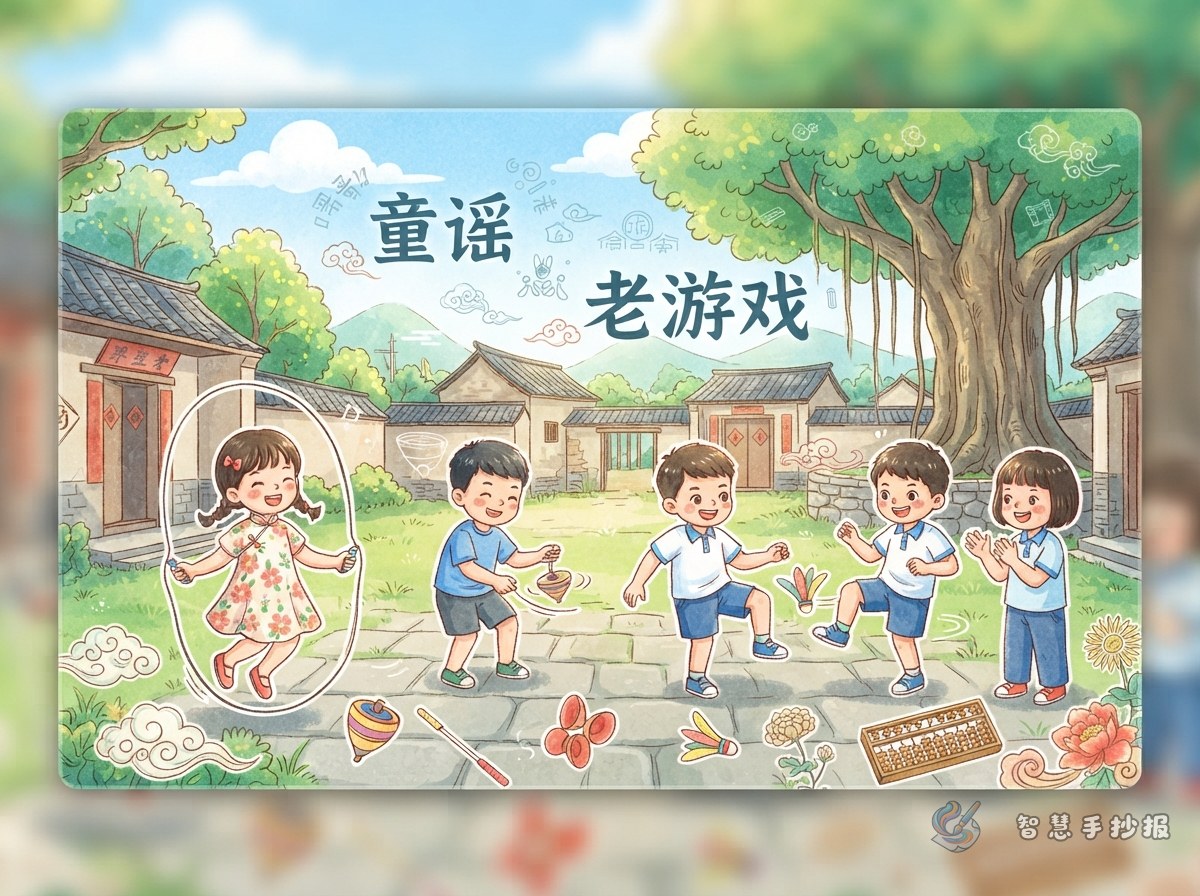
Games like hide-and-seek style chasing, elastic rope jumping, cat's cradle and chalk-square hopping are played differently from place to place, which is exactly what you want to show. Record how many players join, what equipment is needed, how the game starts and how someone wins.
The chant or call used in the game
Many games include a shout or counting chant in local dialect. Write it down and add a small note explaining the meaning in standard language. This is usually the detail a teacher notices first.
Four sections that turn small notes into a full page
- Rhyme corner: the rhyme text in slightly larger handwriting, framed with a simple border so it reads like a little broadcast window.
- Game instructions: the rules as a numbered list, one step per line.
- My playing memory: two or three sentences about something that happened while you played, so the page includes you.
- Local word glossary: three to five dialect words in two columns, the local word on the left and its meaning on the right.
Layout order and drawing details
- Sketch the zones lightly in pencil, putting the rhyme corner where the eye lands first, usually the upper half.
- Leave two or three gaps in the text areas, then fill them with line drawings of chalk squares, elastic rope, a knotted string or a shuttlecock.
- Write the main title by hand with an outline or a colored block behind it; add a smaller subtitle naming the place the rhyme and game come from.
- Rule faint guide lines before writing so the lines stay level and the spacing stays even.
- Color last, using two or three main colors and keeping illustrations lighter so they do not compete with the text.
Small touches that make the page memorable
- Add a rhythm hint beside the rhyme, such as clap or stamp marks, so readers know how it should be chanted.
- Write key rule words with a slightly thicker pen, such as blindfolded or hop on one foot, so the page can be scanned quickly.
- Put a small box in the corner recording who you interviewed and when, which shows care and adds a documentary feel.
Three common mistakes to avoid
First, cramming in seven or eight rhymes so each one gets a single line. Second, copying only text with no drawings, which turns the page into an essay. Third, coloring before writing, which leaves the words hard to read on top of busy color blocks. Avoid these three and the page will already look organized and local.
If you want to try another layout or change the number of sections, you can open the Smart Handwritten Newspaper mini program in WeChat, choose a hometown culture template, and fill in the rhymes and game notes you have collected before printing or copying by hand.