Start with a clear focus: make opera costumes the main idea
If you want a handwritten newspaper that feels traditional and also stands out, choose Chinese opera costumes as the core topic. Compared with introducing only one opera genre, this angle is broader and easier to organize. You can connect Peking opera, Kunqu, Yue opera, and other forms through clothing, colors, roles, and stage aesthetics.
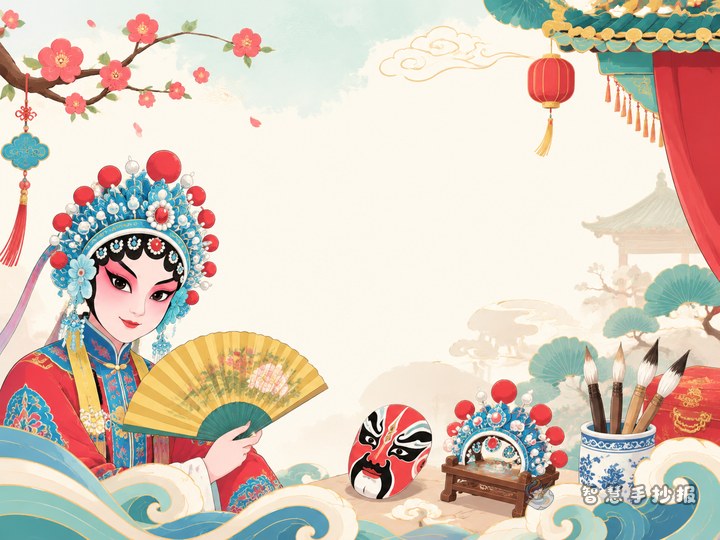
Your main title can be something like “The Beauty of Chinese Opera Costumes” or “What Can Costumes Tell Us in Opera?” Add small decorative elements such as long sleeves, headpieces, boots, banners, or cloud patterns around the title to make the page more vivid and easy to understand.
What to include in the main sections
1. Features of opera costumes
You can summarize them with a few key ideas: showing identity, distinguishing roles, bright colors, and rich decoration. Opera costumes are not ordinary clothes. They are part of the performance and help the audience understand the character more quickly.
2. What different roles usually wear
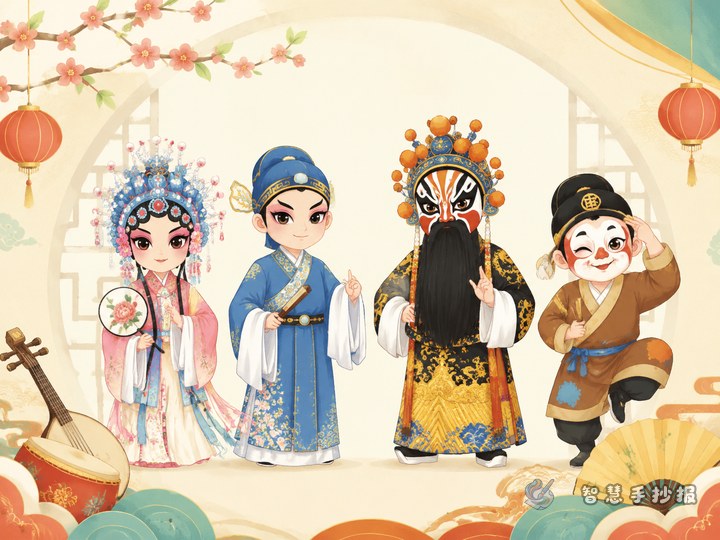
- Sheng: usually male roles, with costumes that look dignified and steady.
- Dan: usually female roles, often wearing softer and more elegant clothing.
- Jing: bold and powerful characters, often dressed in striking costumes.
- Chou: comic or lively roles, with more flexible and playful costume styles.
This part works well as small information boxes. Each role can have one short explanation, which is easy for students to copy and arrange on the page.
3. What colors and patterns mean
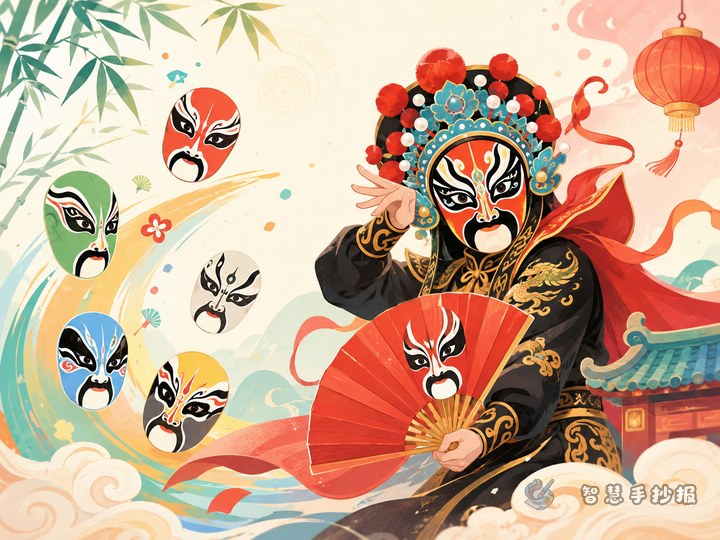
You can mention dragons, phoenixes, flowers, clouds, and wave patterns, and explain that these designs reflect traditional Chinese aesthetics. For colors, introduce red, yellow, blue, black, and white, and describe how they create different stage impressions. Keep it simple and focus on the idea that costume colors and patterns are chosen with meaning.
Short text materials you can use directly
A good handwritten newspaper needs short and meaningful lines. These examples can be used directly:
- Opera costumes are a silent language on the stage.
- A costume is not only beautiful; it also shows identity and emotion.
- Flowing sleeves and moving robes reveal the charm of traditional art.
- The beauty of Chinese opera lies not only in singing and acting, but also in costume and color.
You may also add a short introduction: Chinese opera costumes combine weaving, embroidery, color, and performance art, and they are an important part of traditional Chinese culture. This works well as an opening or closing paragraph.
How to design the page layout
A practical layout is a central title with sections around it. Put the main title in the middle, then divide the page into four areas: “Role Costumes,” “Colors and Patterns,” “Interesting Facts,” and “My Thoughts.” This makes the structure clear and easy to read.
- Top: write a large title and add decorative borders such as sleeves or head ornaments.
- Left side: introduce role categories with short lines and small icons.
- Right side: write costume features, patterns, and color meanings.
- Bottom: include your conclusion and feelings about traditional opera culture.
If you have extra space, add a small section called “My Favorite Opera Costume” and write two or three personal sentences. That makes the work feel fuller and more original.
Small details that can improve the final work
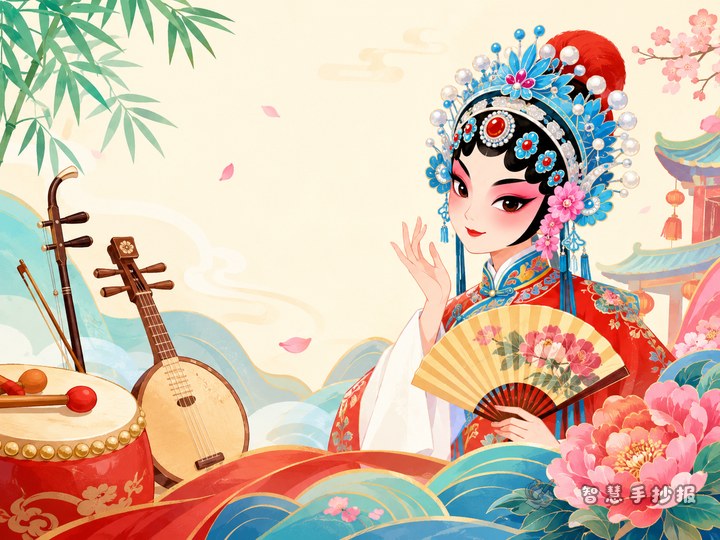
- Do not make the border too crowded. Use traditional elements such as cloud patterns, folding fans, stage frames, or floral lines.
- Main colors can be red, gold, blue, or black to create a classical feeling.
- Do not write too much in each section. Three to six lines per block usually looks better.
- The title can be decorative, but the main text should stay neat and easy to read.
If you already have the topic but still need help with layout, color matching, or section ideas, you can continue designing in the Zhihui Shouchaobao WeChat mini program and finish a cleaner, more polished handwritten newspaper.