Start with a clear idea: a character-based theme is easier to organize
Traditional Chinese opera is a broad topic, so a handwritten newspaper can easily become messy if the theme is too wide. Choosing Peking opera characters gives students a clearer focus and makes it easier to combine writing with drawings. You can frame the page as Getting to Know Opera Characters, A Closer Look at Peking Opera Roles, or My Favorite Peking Opera Character.
A character theme works well because readers can quickly understand who the page is about, what makes that role special, and why it matters in opera culture.
How to divide the page into useful sections
Instead of filling the page with long paragraphs, break it into short sections that are easy to read.
- Character Profile: name, opera piece, identity, and personality traits.
- Role Type Facts: explain whether the character belongs to sheng, dan, jing, or chou and what that means.
- Stage Style: describe signature movements, expressions, or vocal style.
- Why I Like This Character: add a short personal reflection to make the page more lively.
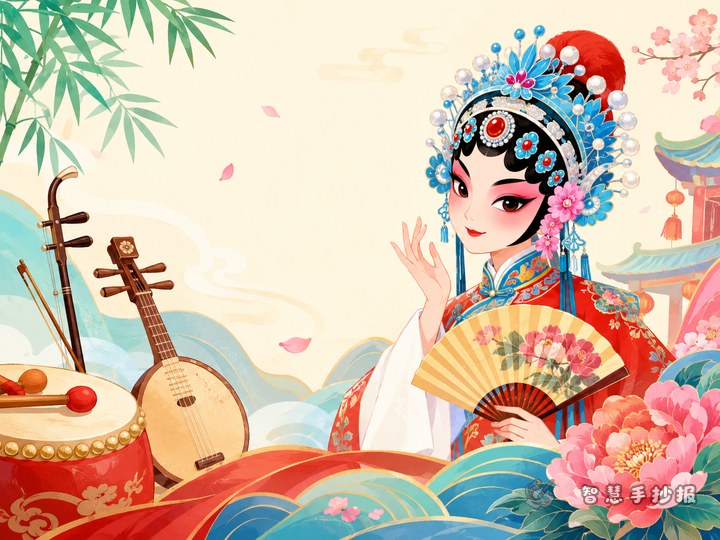
If you have more space, add a small section about stage elements such as percussion, costumes, water sleeves, or headwear.
Ready-to-use text ideas
Sample character introduction
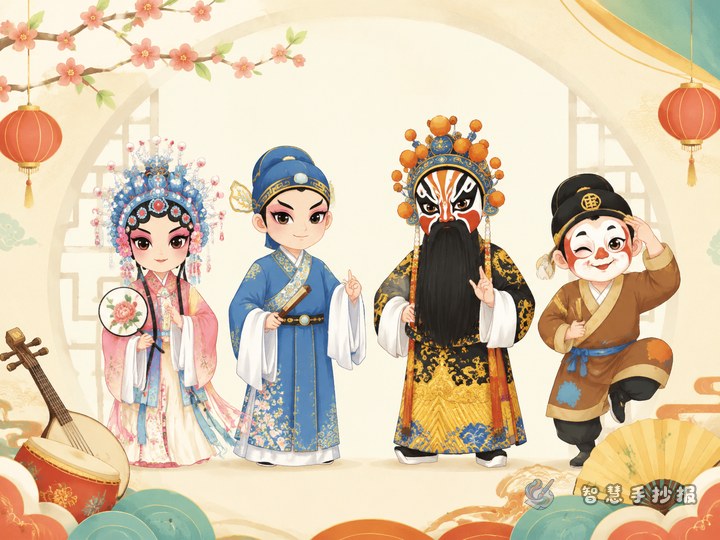
Peking opera characters are vivid and memorable. Different roles show different costumes, movements, and personalities. Some are brave and loyal, some are wise and quick-minded, and some are humorous and playful. Audiences can understand the story not only through singing, but also through gestures, facial expression, and costume design.
Sample role-type introduction
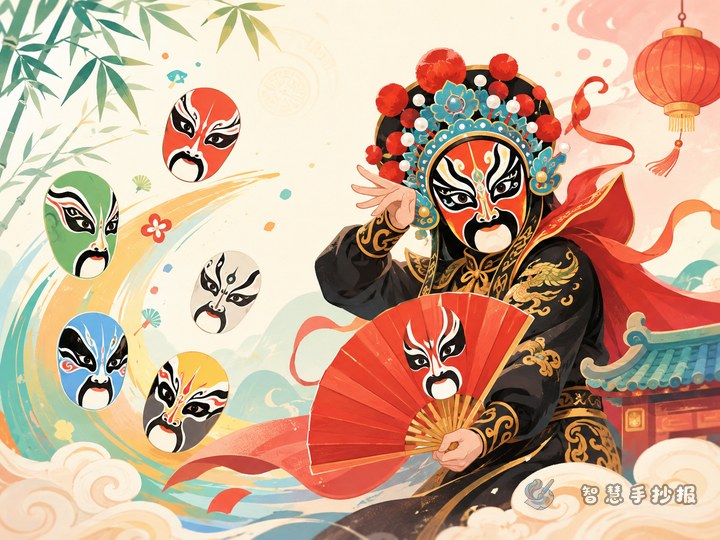
Peking opera roles are commonly grouped into four main categories: sheng, dan, jing, and chou. Sheng usually refers to male roles, dan to female roles, jing to bold and powerful painted-face roles, and chou to comic roles. Through makeup, colors, and body language, each role creates a distinct stage image.
Sample personal reflection
What interests me most about Peking opera characters is that each one has a strong identity as soon as they appear on stage. Some look heroic, some graceful, some serious, and some funny. By making this handwritten newspaper, I can better appreciate the beauty of traditional Chinese opera culture.
How to make the layout feel more theatrical
A character-themed page should have a stage-like atmosphere. Put the main title at the top center and make it bold, like a sign above a traditional stage. Place character drawings or opera-inspired decorations on the sides, with the main text in the center.
- Use red, gold, and black as main colors for a classic opera feeling.
- Add borders inspired by stage curtains, clouds, fans, drums, or water sleeves.
- Keep section headings short, such as “Character Card,” “Role Secrets,” or “Stage Highlights.”
- Do not overcrowd each section; short blocks of text look cleaner and easier to read.
If drawing a full figure feels difficult, you can focus on headdresses, facial details, costume patterns, or props.
Good character choices for students
Choose a role that is easy to recognize and simple to explain. Bao Gong can highlight fairness and justice, Mu Guiying can show courage and determination, and Sun Wukong can bring energy and cleverness. These characters are familiar and help make the handwritten newspaper more vivid.
You can also use a “one main character plus two supporting examples” method: introduce one character in detail and briefly mention two others for comparison. This makes the page richer without becoming too difficult.
What to check before finishing
- Make sure the title clearly mentions Peking opera characters or opera roles.
- Check whether the page includes character facts, role-type knowledge, stage elements, and personal ideas.
- Keep the colors consistent and avoid too many unrelated shades.
- Make sure the text is divided clearly and not crowded into one area.
- Use decorations that match the opera theme rather than random patterns.
If you already know which character to feature but still need help with layout and wording, you can continue in the Zhihui Shouchao Bao WeChat mini program to refine your handwritten newspaper.