Build the Theme Around the Phoenix and Five Colors
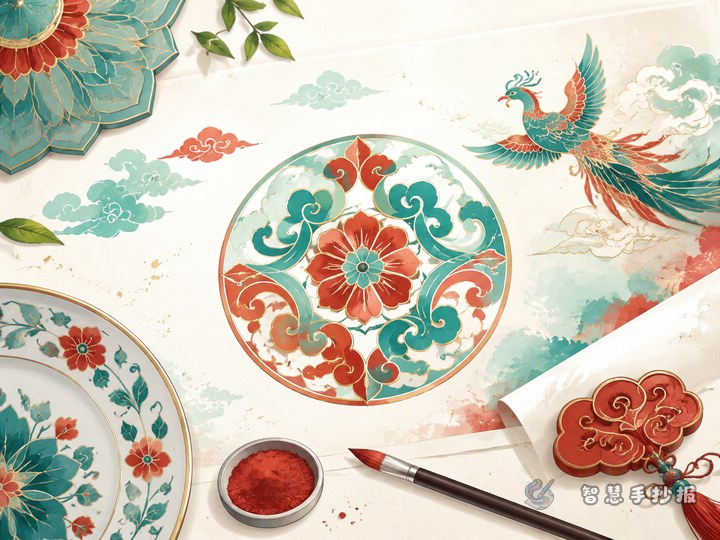
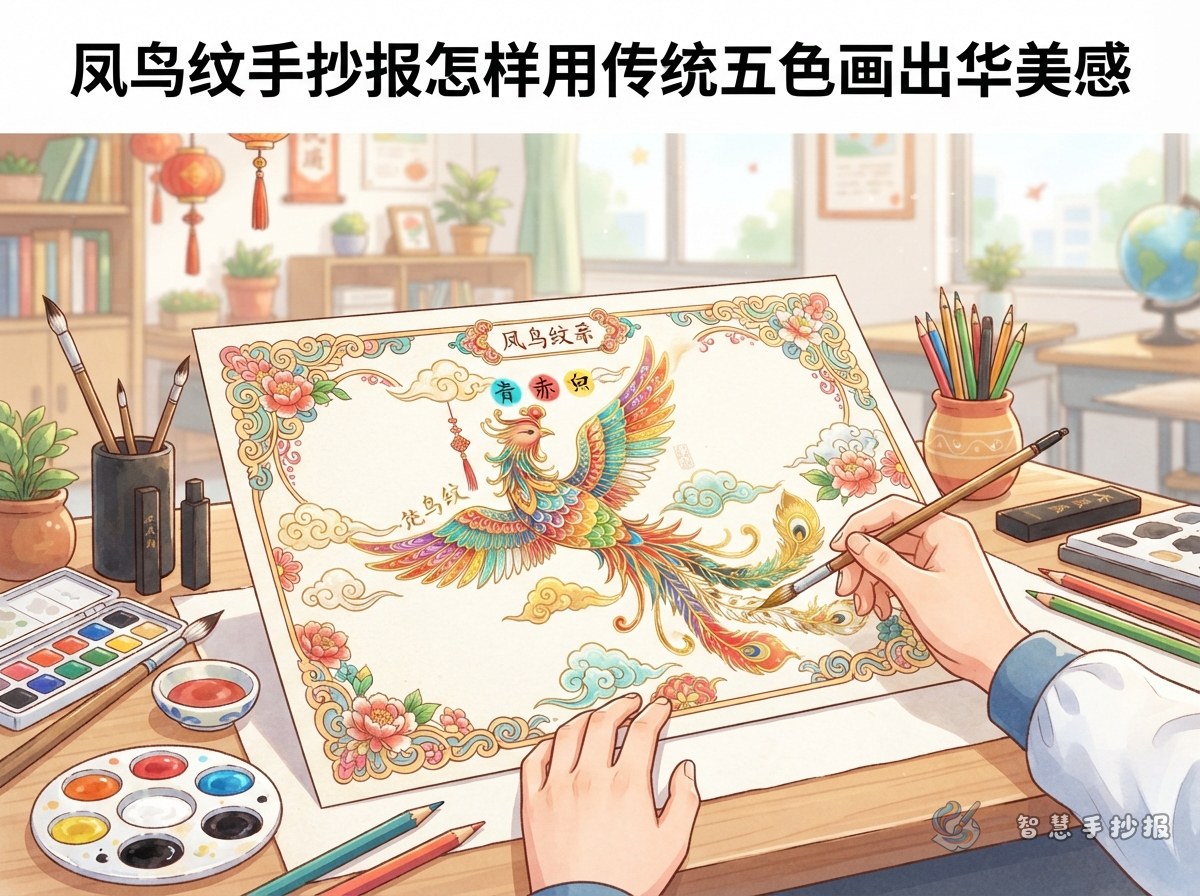
This hand-copied poster can connect the graceful form of the Chinese phoenix motif with the traditional colors of blue-green, red, yellow, white, and black. A raised head, open wings, and flowing tail feathers give the phoenix an elegant upward movement, while a controlled color plan keeps the page lively without making it crowded.
Possible headings include “Phoenix in Five Colors,” “Auspicious Feathers,” or “Colors of the Chinese Phoenix.” Keep the main idea clear: show what the motif looks like, what its colors express, and how students can draw it.
Choose Four Short and Useful Content Blocks
- Meet the phoenix motif: Describe its crest, curved beak, open wings, and ribbon-like tail feathers.
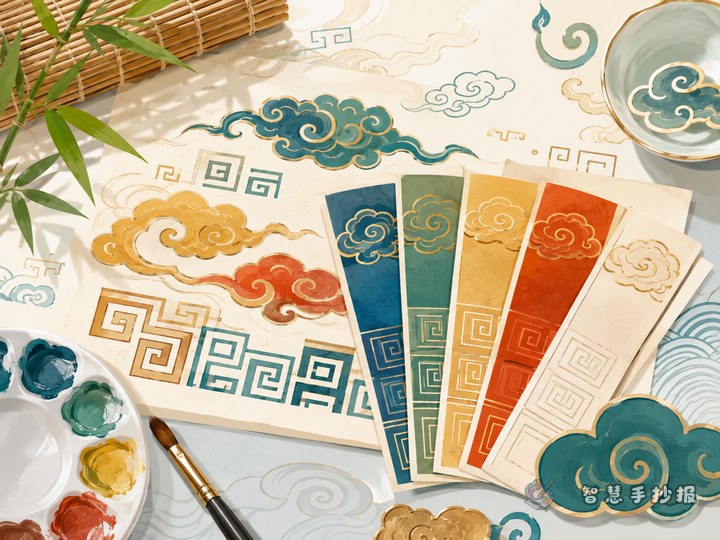
- Understand the five colors: Present blue-green as fresh, red as energetic, yellow as bright, white as pure, and black as steady.
- Explore motif pairings: Add small clouds, leaves, flowers, or sun patterns without filling every gap.
- Draw it step by step: Explain how to sketch the outline, divide the feathers, add color, and finish the lines.
Ready-to-Use Notes for the Poster
The Shape of a Phoenix Motif
A traditional phoenix motif is not simply a realistic picture of a bird. It is an imaginative decorative design. Its lifted head, spreading wings, and long curling tail create a light, splendid, and confident appearance.
A Balanced Five-Color Plan
The five colors do not need equal space. Red or yellow can lead on the body, blue-green can brighten the wings and tail, black can define the edges, and white can remain around the writing. This creates clear layers and protects readability.
An Auspicious Meaning
The phoenix is often associated with good fortune, beauty, and harmony. Placing it at the center of a school poster brings together cultural meaning, decorative pattern, and traditional color in one strong visual idea.
Let One Phoenix Guide the Layout
- Draw one large side-facing phoenix in the center or on the right, allowing its tail to curve through open space.
- Place the title above its head and use clear, slightly flowing lettering.
- Arrange three or four text sections around the tail instead of using identical rectangular boxes.
- Add only a few clouds, leaves, or dots in the corners so the phoenix remains the focus.
A central illustration with surrounding notes works well, but a diagonal composition can also create movement. Keep text areas white or very pale, and use red, blue-green, and yellow only for section headings.
Create Richness Through Small Details
Begin with a light pencil sketch, then trace the outer shape with a dark pen. Limit large areas to two or three colors and reserve the remaining colors for the crest, feather tips, and tiny accents. Thin white gaps between neighboring colors make the feather layers easier to see and color neatly.
After preparing the notes and rough sketch, students and parents can continue in the 智慧手抄报 WeChat Mini Program to select a layout, adjust content sections, and develop the final hand-copied poster.