Build the Design Around Bronze-Age Symmetry
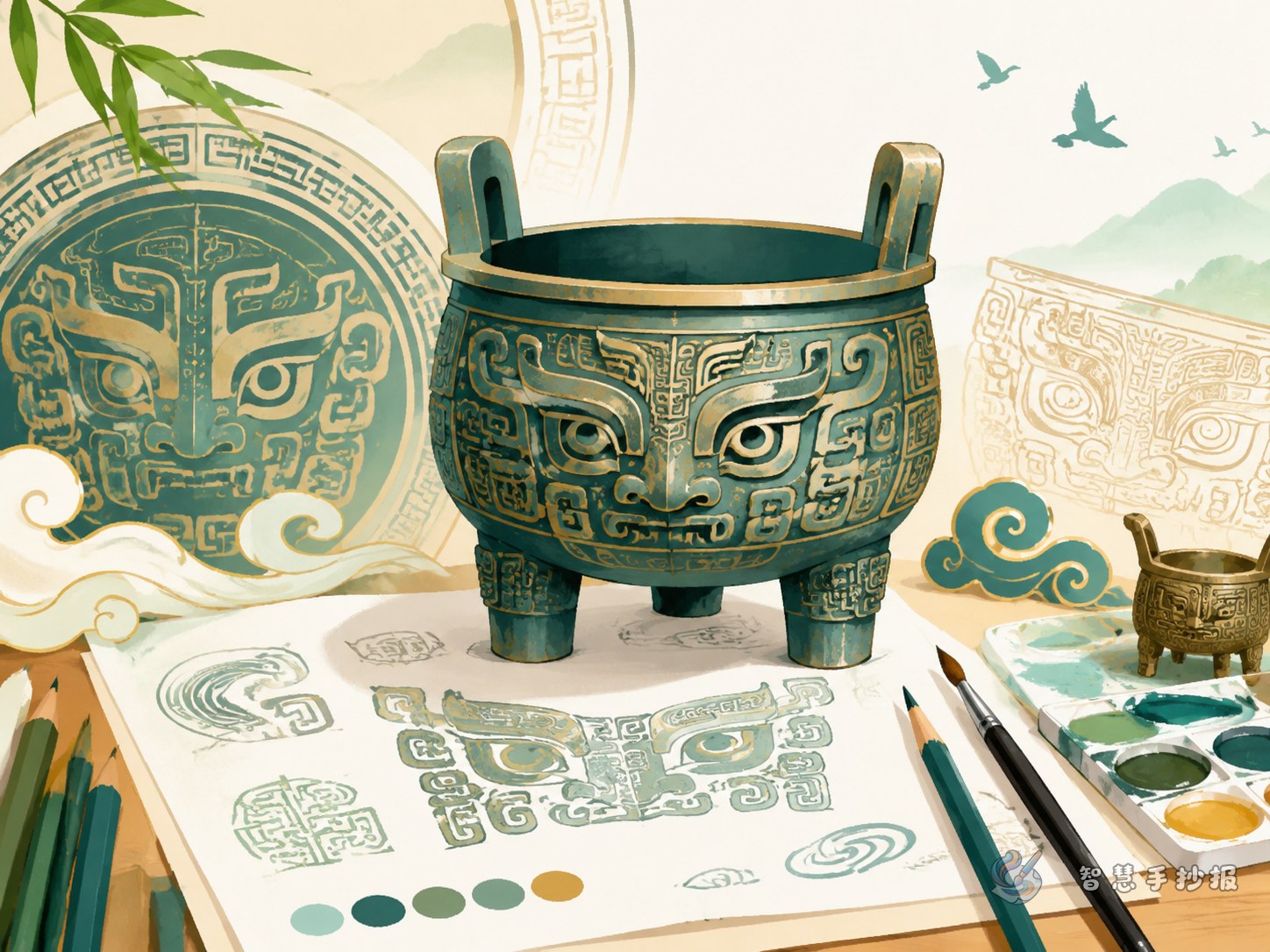
This handwritten newspaper can focus on the taotie motif found on ancient Chinese bronzes. Its strong central axis, bold eyes, curling lines, and balanced shape create a solemn historical look. Suitable headings include “Echoes of Ancient Bronze,” “Imagined Creatures in Traditional Patterns,” and “Discovering the Taotie Motif.”
Draw the Motif in Four Manageable Steps
- Mark the axis: Draw a light vertical line so both sides can be planned together.
- Place the eyes: Add two large circles or ovals at equal distances from the center.
- Develop the features: Draw the brow, horns, nose bridge, and a few curling lines on each side.
- Strengthen the outline: Trace the main shapes in dark brown while leaving small light spaces between details.
Short Text Blocks for the Page
A Motif Profile
The taotie motif appears on many ancient Chinese bronze vessels. It is often shown from the front, with prominent eyes and an approximately symmetrical arrangement of horns, curves, and other imagined features.
Why Symmetry Matters
The pattern offers a clear example of visual balance in traditional Chinese decoration. The two sides answer each other across a central axis, making a complex design feel stable and orderly.
The Colors of Time
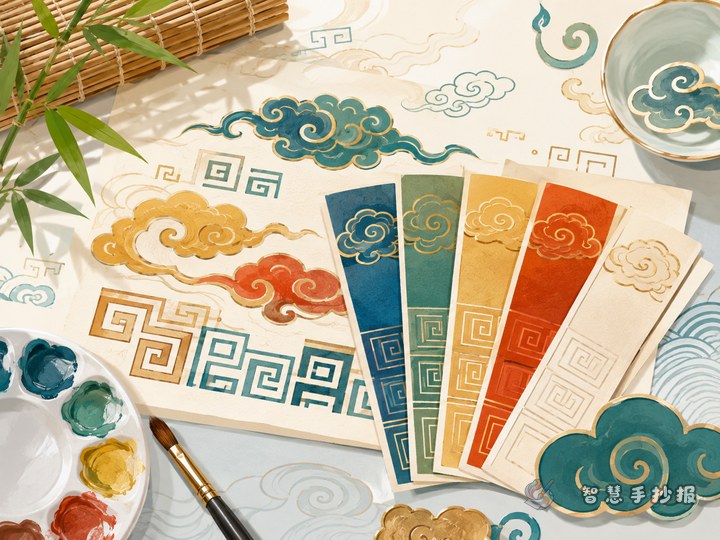
Ancient bronzes were not necessarily green when they were made. Green and blue-green surfaces developed gradually through age and environmental change. On a school project, verdigris green can suggest time, while ochre and dark brown add warmth and depth.
Create an Aged-Bronze Palette
- Main color: Use verdigris green for large motifs, headings, and section lines.
- Supporting color: Add ochre or muted yellow-brown to suggest the metal beneath the aged surface.
- Outline color: Use dark brown or black for the eyes and key contours.
- Reading space: Keep text panels pale and uncluttered so the writing remains easy to read.
Arrange the Page Along a Central Axis
Place the title at the top center and draw one half of the taotie design on each side. A wide central panel can hold the motif profile, while smaller side sections explain symmetry and color. Put the drawing steps along the bottom. Simplified bronze-inspired curls can decorate the borders, but one or two repeated elements are enough.
Sketch the axis and text areas in pencil first, then add the pattern, write the content, trace the final lines, and apply color. To continue refining the title, sections, or layout, open the Smart Handwritten Newspaper WeChat Mini Program.