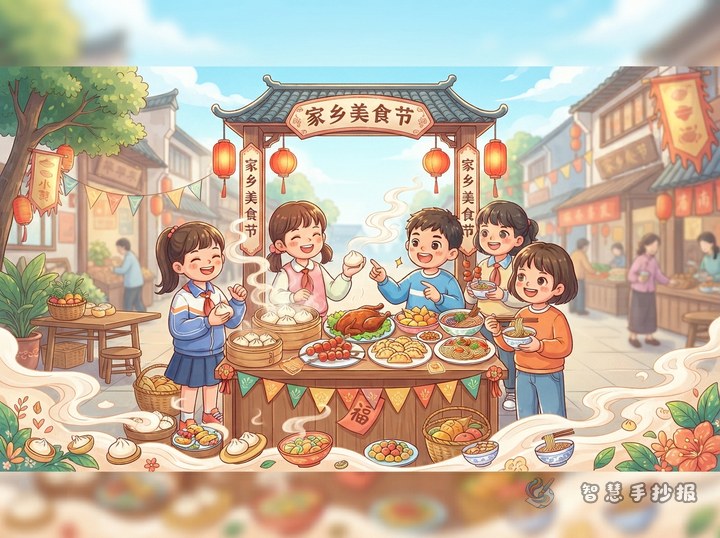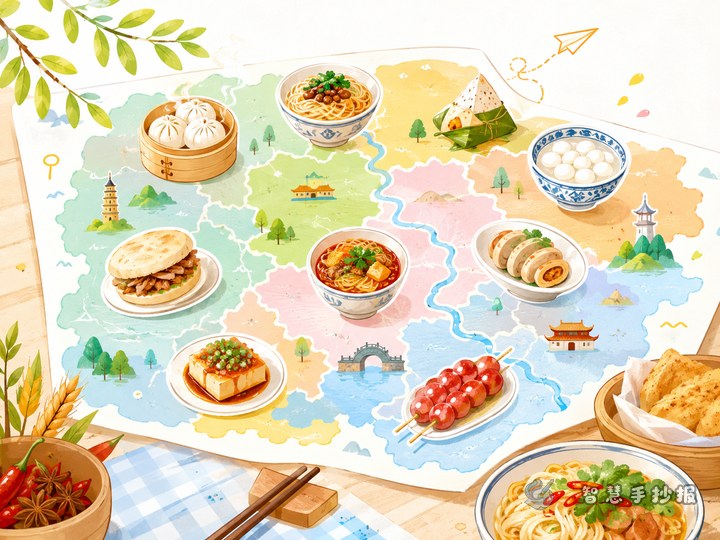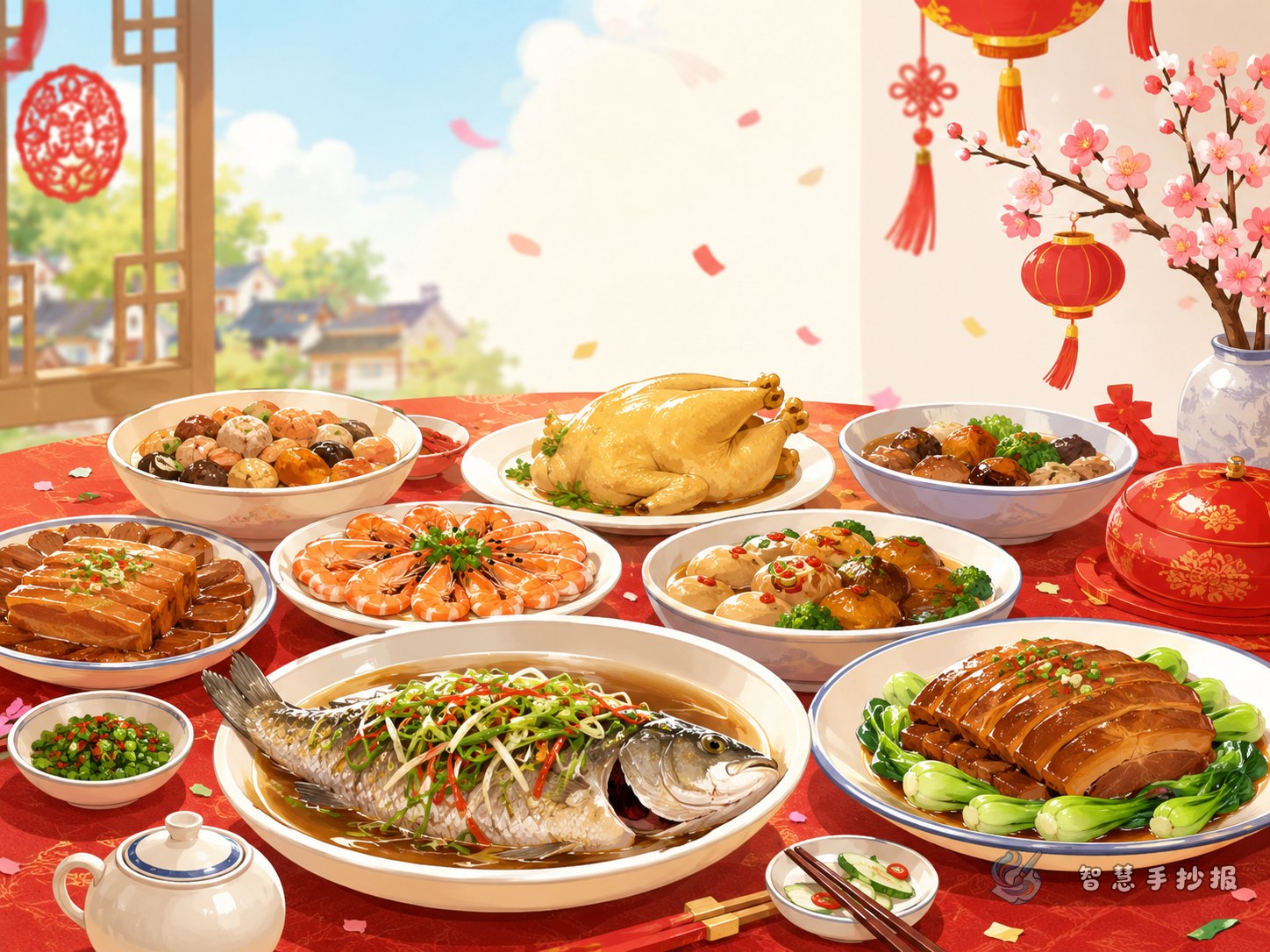
Build the theme around “The Taste of Home at the Family Table”
For this kind of handwritten newspaper, do not stop at listing food names. A better approach is to connect one signature hometown banquet dish with local customs, family memories, and festive dining scenes. This gives the page both food appeal and cultural meaning.
You can open with a short idea like this: hometown food is not only delicious, but also carries traditions, family warmth, ways of welcoming guests, and memories of reunion. This angle works especially well for elementary students because it is easy to write and easy to illustrate.
Try a layout with one main dish and several supporting sections
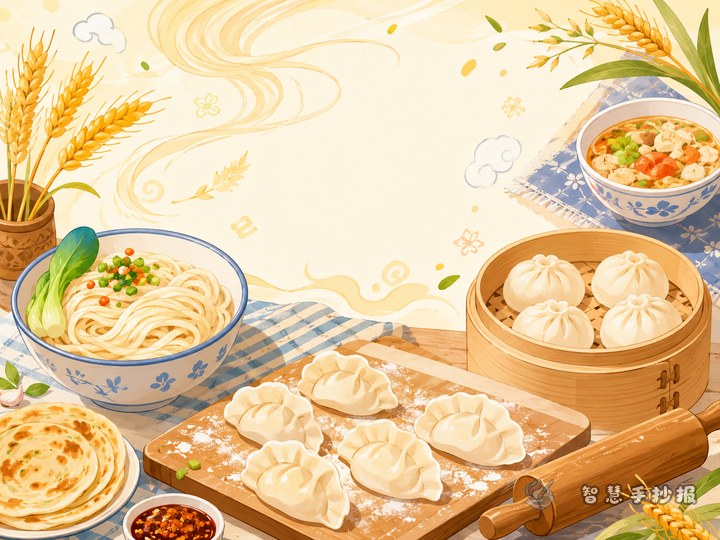
Place the drawing of one representative banquet dish in the center of the page. Around it, create three or four smaller content blocks instead of dividing the paper into equal parts.
- Main title area: use a question-style or theme-style heading.
- Food profile section: name, ingredients, taste, and simple cooking features.
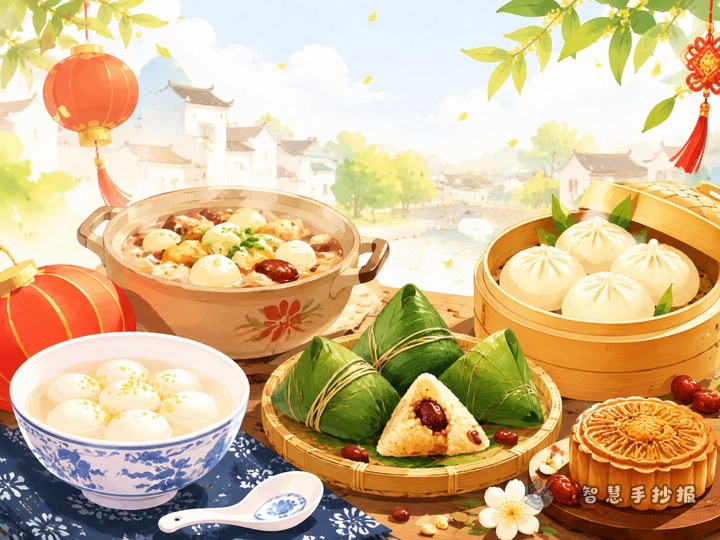
- Festival table section: explain when people usually eat it, such as Spring Festival, weddings, or family gatherings.
- Local custom section: describe hospitality, table manners, or sayings from elders.
- My memory section: write about a real moment with family around this dish.
Decorations can include chopsticks, bowls, steam lines, baskets, peppers, or grain patterns. Warm yellow, soft red, brown, and green are good color choices for a cozy food culture theme.
Ready-to-use writing material for students
1. Intro paragraph
The taste of my hometown is more than flavor. It holds family reunion, local traditions, and the daily life of the people who live there. Every traditional dish tells a story about the seasons, festivals, and old recipes passed down in the family.
2. Food description sample
In my hometown, one special banquet dish often appears on important family occasions. It looks inviting, smells wonderful, and makes people gather around the table with excitement. When everyone shares it together, the meal feels warm and meaningful.
3. Food culture sample
People in my hometown value lively family meals. Some foods stand for reunion, some bring good wishes, and some are made only during special festivals. These habits show the charm of hometown food culture.
4. Ending sample
I love the food of my hometown, and I love the feelings and traditions behind it. Putting these ideas into a handwritten newspaper is like keeping the taste of home on paper.
How to make the page feel more cultural, not just tasty
Many students only write that a dish is famous or delicious. To make the work stronger, add these angles:
- When it is eaten: New Year, weddings, harvest season, family visits.
- Who eats it together: grandparents, relatives, neighbors, or the whole family.
- Why people serve it: for celebration, reunion, or good luck.
- How the tradition continues: recipes passed down by elders and prepared before special days.
This helps the handwritten newspaper show not just a dish, but also a way of life in your hometown.
Easy drawing and finishing tips for students
If drawing food feels difficult, use a simple top view of a large plate, then add steam, chopsticks, small bowls, and side decorations. It will still look lively and clear.
- Keep each text block short, with two to four sentences.
- Highlight key phrases such as “reunion,” “hospitality,” “traditional recipe,” and “festival custom.”
- Repeat two or three food-themed visual elements for a neat style.
- If you want to keep improving the layout, title style, and colors, you can continue making your work in the Zhihui Shouchaobao WeChat mini program.